Tag Archives: Christianity

The Last Prophet

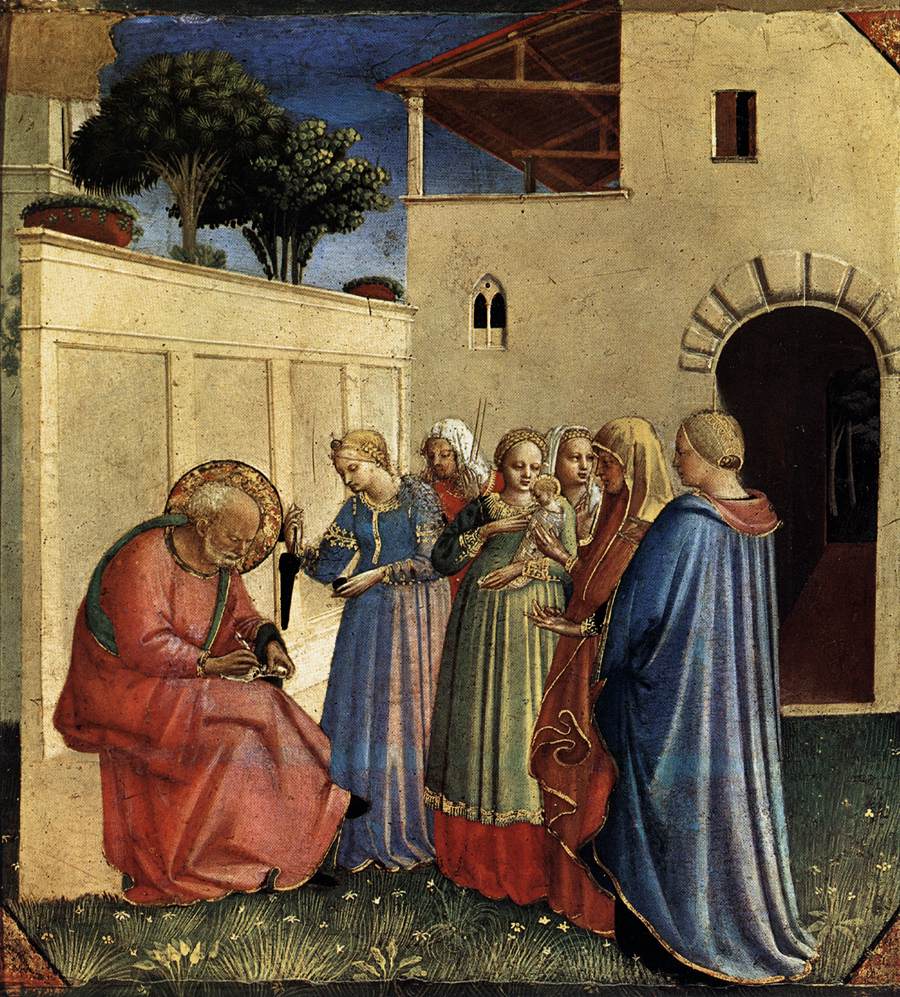
Now the time came for Elizabeth to give birth, and she bore a son. Her neighbors and relatives heard that the Lord had shown his great mercy to her, and they rejoiced with her.

On the eighth day they came to circumcise the child, and they were going to name him Zechariah after his father.  But his mother said, ‘No; he is to be called John.’  They said to her, ‘None of your relatives has this name.’Then they began motioning to his father to find out what name he wanted to give him.He asked for a writing-tablet and wrote, ‘His name is John.’ And all of them were amazed. Immediately his mouth was opened and his tongue freed, and he began to speak, praising God.  Fear came over all their neighbours, and all these things were talked about throughout the entire hill country of Judea.  All who heard them pondered them and said, ‘What then will this child become?’ For, indeed, the hand of the Lord was with him.  Luke 1:57-68.

In today’s Gospel reading in the Daily Office, we find the story of the birth and naming of John the Baptist.  This bit of Scripture provides us with a wonderful Advent reflection on  John, who our Orthodox brothers and sisters call The Forerunner.  It’s a remarkable story.

As you’ll remember, John’s father (Zechariah) was a priest.  The angel Gabriel appeared to Zechariah, explaining that his wife Elizabeth would bear a son named John, a son who would turn the people of Israel’s hearts to the Lord.  When Zechariah expressed his disbelief, he was struck dumb. 

For months, Zechariah remains dumb-struck in this God-imposed silence.  (Sometimes, it seems, even God wants priests to remain silent.)  We shouldn’t judge Zechariah too harshly, though, because nothing that was happening was….well, natural. I sometimes think Zechariah was struck dumb mostly because he continued to cling to his hopelessness, even when his better angels told him there was good cause to trust God and hope for a better world.

Although tradition dictated that the child would bear a family name, Zechariah insistently scribbled on a writing-tablet:  “His name is John.”  Scripture teaches that Zechariah’s speech returned immediately, and he proclaimed that God’s redemption of his people was at hand.

The story provides several important Advent messages.  First, Elizabeth (who was elderly and barren) will produce a child, just as a world which had become stale and ordinary and barren of meaning will produce something completely new.  Zechariah, speechless through his disobedience, recovers all that he has lost by listening to the Lord.  (He recovers his speech at his son’s circumcision, a rite which operated as a sign of the covenantal relationship between the people of Israel and the God who chose them.)   Within the loving covenant God calls us into, life springs up in the desert, and all we’ve lost will be recovered.

The story serves as an extended metaphor for what’s going on in the Incarnation.  God is breaking into this broken, handicapped, barren world.  He is re-defining what is “natural”; in other words, re-making all of creation.  This isn’t just an ocasional miracle in a world that otherwise remains the same.  With apologies to the advertising industry, “This changes everything.”

The birth of John, often referred to as the last of the Old Testament prophets, signals that God is redeeming and reclaiming all of creation.  It teaches that we cannot rely on the old rules or our old expectations anymore.  Thus, during this time of year when the days are shorter and the darkness seems to dominate time itself, we light an Advent candle.  We know things are about to change.

Shabbat shalom,

James R. Dennis, O.P.

© 2011 James R. Dennis

Taking Nothing

Then Jesus called the twelve together and gave them power and authority over all demons and to cure diseases, and he sent them out to proclaim the kingdom of God and to heal. He said to them, “Take nothing for your journey, no staff, nor bag, nor bread, nor money — not even an extra tunic. Whatever house you enter, stay there, and leave from there. Wherever they do not welcome you, as you are leaving that town shake the dust off your feet as a testimony against them.” They departed and went through the villages, bringing the good news and curing diseases everywhere. Luke 9: 1-6.

If we’re willing to listen, I believe this passage of Scripture can teach us a good deal about how we should approach Advent.  For most of us, accustomed to succeeding through diligent preparation, Jesus’ suggestion that the disciples “take nothing” seems a little odd. We wonder why Jesus did not want the disciples to bring along a few supplies, a little extra cash or some snacks.

First, I think the answer lies in understanding the context.  In this passage, for the first time, Jesus inaugurates the notion of what it means to be an apostle.  (That word comes to us from the Greek apóstolos, which translates as “one who is sent out”.)  Thus, following Christ will require that they leave their rabbi behind and take their own journey.  It will require the same of us. No longer would the disciples simply stand around and watch Jesus’ miracles and ministry. Jesus taught them, as he teaches us, that the Christian life was not a spectator sport.

So, why would Jesus send his disciples, his friends, out without any tools, equipment or provisions?  I don’t think Jesus wanted the disciples to be unprepared.  I think rather that Jesus was telling them, “None of that stuff is what you need.  In fact, it will only get in your way.”  The disciples needed to trust that God would give them everything they needed to do the work he wanted them to do.  When they learned to use God’s resources, rather than their own, they were capable of far more than they imagined.

That’s not a bad notion for us to carry forward into our journey through the season of Advent.  We will need to leave a lot of stuff behind.  Mostly, we’ll need to leave behind the illusion of self-reliance that we’ve come to accept.  We need to learn to trust God and trust that God will give us the tools for His work.  We may also need to leave behind our notion of who we are, and what we’re capable of doing.  The real question we should ask during Advent inquires where God is sending us, and what He can accomplish through our lives.

Have a good and holy Advent,

James R. Dennis, O.P.

© 2011 James R. Dennis

Advent (Learning to Wait)

O that you would tear open the heavens and come down,
        so that the mountains would quake at your presence–
as when fire kindles brushwood
        and the fire causes water to boil–
to make your name known to your adversaries,
        so that the nations might tremble at your presence!
When you did awesome deeds that we did not expect,
you came down, the mountains quaked at your presence.
Is. 64: 1-3.

In our world today, most of us have concluded that the problem with instant gratification is….it takes too long.  We aren’t accustomed to waiting:  for the economy to recover, for our children to figure out how to behave, for a new car, or for God to fix things.  The Psalm for today reflects exactly that kind of impatience.  The reading perfectly explores our Advent expectations, as we ask God, “Where, exactly, have you been?  Have you even noticed what’s going on down here?”

Many of the Advent readings address exactly this deep longing within the Jewish people, as they waited for someone to lead them out of slavery in Egypt, as they bore the shame of the Exile, and as they waited for God to redeem this world that just wasn’t working.  They had waited for thousands and thousands of years and they knew that something had to change.

The season of Advent centers on precisely this deep, overwhelming conviction that something must change, and only God can make a difference in this situation. This notion leads us to the second Advent impulse:  our need to prepare ourselves for this coming change.  Thus, we sometimes refer to Advent as “the little Lent.”

We listen to John the Baptist calling us to “make straight the path of the Lord.”  John warns us that we aren’t ready for God’s arrival into our lives, that we cannot begin to understand the radical difference Jesus will make in the world.  The Baptist cautioned the first century Palestinians that only repentance would prepare them for the cataclysmic difference that Jesus would make.  Only that repentance would prepare them for the truth of Christ.  He is still warning us of that today.

Rowan Williams once said, “During Advent, we try to get ourselves a bit more  used to the truth – the truth about ourselves, which is not always very  encouraging, but the truth about God above all which is always  encouraging. The One who comes will come with a great challenge. It will  be like fire on the earth as the Bible says. And yet the One who comes  is coming in love. He’s coming to set us free. And that’s something well  worth waiting for.”

I wish you a very holy season of Advent.  Shabbat shalom,

James R. Dennis, O.P.

© 2011 James R. Dennis
Giving Thanks

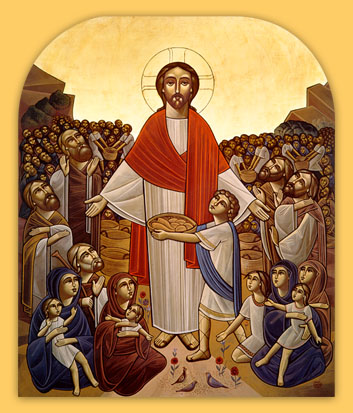
Then Jesus took the loaves, and when he had given thanks, he distributed them to those who were seated; so also the fish, as much as they wanted.  John 6: 11.

I love the Thanks-giving holiday for a lot of reasons.  First, I think few things are more important for our spiritual lives than learning to approach God and His world with gratitude.  I have known several people in my life who just had that aura of holiness about them, and without exception they all had the gift of gratitude.  Secondly, I think we find ourselves very near to the Sacred when we join with friends and family and collectively recall our gifts.  Finally, as we stand on the cusp of the season of Advent and prepare to celebrate the gift of the Incarnation, giving thanks just feels like the right thing to do.

I ran across this Orthodox prayer the other day, and it struck me as ideal for giving thanks for all our gifts:

“Glory to You who have called me forth into life;
Glory to You who have revealed the beauty of the universe to me;
Glory to You who have opened  both heaven and earth to me as an eternal book of wisdom;
Glory to Your eternity in the midst of this temporal world;
Glory to You for Your mercies known and unknown;
Glory to You for every sigh of my sorrow;
Glory to You for every step in my life, and for every moment of joy;
Glory to You, O God, unto the ages!”

God give us all grateful hearts,

James R. Dennis, O.P.

© 2011 James R. Dennis

Looking For the Kingdom

Then the king will say to those at his right hand, ‘Come, you that are blessed by my Father, inherit the kingdom prepared for you from the foundation of the world; for I was hungry and you gave me food, I was thirsty and you gave me something to drink, I was a stranger and you welcomed me, I was naked and you gave me clothing, I was sick and you took care of me, I was in prison and you visited me.’  Then the righteous will answer him, ‘Lord, when was it that we saw you hungry and gave you food, or thirsty and gave you something to drink?  And when was it that we saw you a stranger and welcomed you, or naked and gave you clothing?  And when was it that we saw you sick or in prison and visited you?’  And the king will answer them, ‘Truly I tell you, just as you did it to one of the least of these who are members of my family, you did it to me.’  Then he will say to those at his left hand, ‘You that are accursed, depart from me into the eternal fire prepared for the devil and his angels;for I was hungry and you gave me no food, I was thirsty and you gave me nothing to drink, I was a stranger and you did not welcome me, naked and you did not give me clothing, sick and in prison and you did not visit me.’ Then they also will answer, ‘Lord, when was it that we saw you hungry or thirsty or a stranger or naked or sick or in prison, and did not take care of you?’  Then he will answer them, ‘Truly I tell you, just as you did not do it to one of the least of these, you did not do it to me.’  Matt. 25: 34-46.

By now, we Christians should be accustomed to the notion of an invisible reality.  We believe in an unseen God at work in the world, that simple bread and wine are transformed every week into the body and blood of Jesus, and that the Church operates as the mystical body of Christ today.  So, the reading from today’s Lectionary shouldn’t surprise us:  Christ tells us that somehow our works of charity reveal and reflect His presence in the world.

Charity doesn’t mean simply rich people writing checks to poor people, and it’s quite different from what we think of as philanthropy.  It’s Latin root is caritas, meaning loving-kindness.  In Greek the word is agape, and in Hebrew, the word is chesed.  The ancient Christian virtue of charity both glorifies and reflect’s God’s love.  In no small measure, charity is less about what we do and more about who we are.

Let’s return to the notion of this invisible reality about which Jesus is teaching us.  He tells us that our charity (our ability to love our ability to see his love and be his love) to those on the margins of society actually reveals our love for Him.  This is the tricky part:  “Just as you did it to one of the least of these who are members of my family, you did it to me.”  Jesus tells us that through the mystery of the  incarnation, every one of us can still encounter the Living Christ.  Our compassion for the hungry, the stranger,  the sick and the prisoners will allow us to find Jesus.  If we take Scripture seriously, we are all compelled to accept this mystical reality.

This entire discussion takes place within the context of Jesus telling us that our ability to love without flinching provides the standard by which the sheep and the goats will be separated.  Our salvation depends on our charity.  Jesus offers all this as an explanation of what the Kingdom is like. 

I don’t think Jesus is simply talking about heaven, or about some distant time when we’ll find out what it’s like to see the face of God.  Remember, Jesus also told us, “the kingdom of God is among you now.”  Luke 17:21. 

I know:  the world today doesn’t look much like the Kingdom.  That sick lady in the hospital, that homeless smelly old man, and that tattooed gang member in the County Jail:  they just don’t seem to have much in common with the Son of God.  But I believe in the invisible reality that Jesus told us we couldn’t yet see.  And I believe that our charity will  form our souls and will reveal the kingdom among us.

Shabbat Shalom,

James R. Dennis, O.P.

© 2011 James R. Dennis
Becoming a Prayer

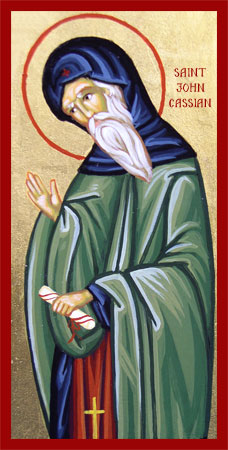
 In fact, everything that we have in our minds before the time of prayer is inevitably brought back by memory when we are praying.  So whatever kind of people we want to be in our prayer time, we want to be before we begin to pray.  St. John Cassian, Conferences.

I found  this quotation from Cassian in today’s reading in a wonderful little book, Drinking from the Hidden Fountain: A Patristic Breviary.  In The Conferences (written between 426 and 429 A.D.), Cassian surveyed much of the work of the Desert Fathers.  The Desert Fathers, along with Cassian, provided the foundation of the monastic movement.

St. Cassian reminds us that we cannot separate our prayer life from the balance of our lives.  We cannot separate the way we pray from the way we live.  If our lives are rushed, jumbled and frantic, our prayers will reflect that.  If our lives are self-centered or consumed by pettiness, our prayer lives will not be much different.  If our relationships with our brothers and sisters are shallow and insincere, our relationship with the One God will reflect that as well.

We work so hard to compartmentalize our lives.  We tell ourselves: “This is the face I show at work; this is the way I act with my friends; and this is the kind of person I want to project at prayer.”  Ultimately, I think we’ll find that God sees through these persona, sees beyond the walls we try to build.  We can trust that His love exceeds even our capacity to fool ourselves.  Rabbi Heschel wrote that “To pray is to dream in league with God, to envision His holy visions.”

Cassian rightly notes that as we approach the Almighty in prayer, we bring our lives before Him, whether we intend to or not.  Thus, the Christian life calls us into that process of continual conversion, until our daily lives perfectly reflect the kind of person we want to bring to God in prayer, a person who can rightly share in God’s “holy visions”.  We are all already in a conversation with God, whether we know it or not.  Cassian asks how authentic, how honest and how loving we want that conversation to be.

God watch over thee and me,

James R. Dennis, O.P.

© 2011 James R. Dennis

Marked as Christ’s Own Forever

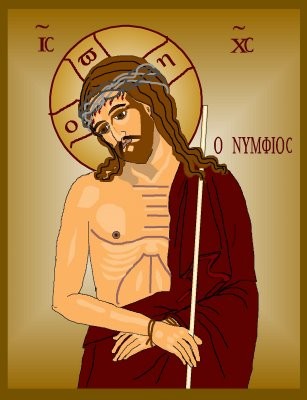
Heavenly Father, we thank you that by water and the Holy Spirit you have bestowed upon these your servants the forgiveness of sin, and have raised them to the new life of grace. Sustain them, O Lord, in your Holy Spirit. Give them an inquiring and discerning heart, the courage to will and to persevere, a spirit to know and to love you, and the gift of joy and wonder in all your works. Amen. You are sealed by the Holy Spirit in Baptism and marked as Christ’s own for ever. Amen. The Book of Common Prayer.
This past Sunday at my parish we baptized two children into the family of God.  Not twenty minutes earlier, I had taught a Sunday school class in which the discussion centered on the story of a judge in Rockport, Texas who had been captured on video in the process of “disciplining” his 16 year-old daughter.  The stark contradiction between that story and the sacrament of Holy Baptism left me astonished and wondering:  “How did we get from here to there?”

The video of the Texas judge and his daughter has now gone “viral.”  (I think one could make a pretty good argument that there was something viral in this family dynamic long before the release of the video.)  In case you haven’t seen it,   the video reveals a brutal, sadistic, beating of a teenage girl. The judge’s wife appears to encourage and facilitate the beating. It lasts for almost seven minutes, and I must confess that I was able to watch only about two minutes of it. Two observations emerge from watching this video.  First, this was not the first time this had happened.  This savage beating clearly occurred as part of a pattern of violence in the life of this family.  Secondly, this family did not honor or practice the rubric that one should never strike one’s children in anger.

I don’t think we get very far by simply observing that this was a bad man, or a dysfunctional family, or an instance of genuine evil.  (As I’ve said before, I try to make it a practice not to judge the content of a another man’s soul. Jesus taught us to pray for these people, and I have and will continue to do so.)  Rather, I want to pose a different question.

Knowing the Texas judiciary as I do, I’m fairly certain that this man, that this family, sat in some church in the area pretty regularly.  Whether they did or not, we should all ask ourselves how people can sit in our pews, nod their heads, and then go home to their families and beat, abuse and neglect our children.  Aren’t these the same children that we, at some point, presented for their baptism?  That strikes me as the real question.

I’m familiar with the biblical text in proverbs which seems to condone, and perhaps even recommend, the corporal punishment of children.  I’m also familiar with a good deal of literature and the testimony of several friends that corporal punishment does not work.  (Actually, it actually might work to change behavior in the very short-term, but we should rightly wonder whether it also fosters a culture of violence in our families and our children.)  But more importantly, Jesus said: “Truly I tell you, just as you did it to one of the least of these who are members of my family, you did it to me.”  Matt.  25:40.  I don’t think the Savior was foolin’ around.

In my legal practice, I have volunteered as an attorney representing children in cases where the State has intervened in cases of abuse and neglect.  I have seen the cycle of family violence repeat itself too often and seen the tragic results.  Our churches should, no, our churches must, take their teaching responsibilities in this area more seriously.  We could begin by starting a serious conversation about this issue, or by teaching new parents about other disciplinary practices they could add to their parenting toolboxes beyond corporal punishment.

As part of our promises during the sacrament of baptism, every member of our congregation agrees we will:  (1) “seek and serve Christ in all persons,” loving our neighbors as ourselves; and (2) “strive for justice and peace among all people, and respect the dignity of every human being.”  In those promises, we recognize the sacramental nature of our duty to keep our children safe.  I’m at a loss to reconcile those promises with what I saw in that video, and it’s well past the time that our churches did something about it.

Lord , make us instruments of your peace.

Pax,

James R. Dennis, O.P.

© 2011 James R. Dennis

Our Dangerous Habits

Jesus said, “Then the kingdom of heaven will be like this. Ten bridesmaids took their lamps and went to meet the bridegroom. Five of them were foolish, and five were wise. When the foolish took their lamps, they took no oil with them; but the wise took flasks of oil with their lamps. As the bridegroom was delayed, all of them became drowsy and slept. But at midnight there was a shout, `Look! Here is the bridegroom! Come out to meet him.’ Then all those bridesmaids got up and trimmed their lamps. The foolish said to the wise, `Give us some of your oil, for our lamps are going out.’ But the wise replied, `No! there will not be enough for you and for us; you had better go to the dealers and buy some for yourselves.’ And while they went to buy it, the bridegroom came, and those who were ready went with him into the wedding banquet; and the door was shut. Later the other bridesmaids came also, saying, `Lord, lord, open to us.’ But he replied, `Truly I tell you, I do not know you.’ Keep awake therefore, for you know neither the day nor the hour.”  Matt. 25:1-13.

In the Lectionary today, we encounter the Parable of the Bridegroom. The parable sounds a well-known warning to us:  “Keep awake therefore, for you know neither the day nor the hour.”  While Jesus is teaching us about the need for preparation, I think he’s also pointing out just how difficult the Christian life will be.

In the field of law, we have a doctrine called stare decisis.  It means that once a case has been decided a certain way, future cases that present similar facts should generally be decided the same way.  The doctrine allows for consistency (the hobgoblin of small minds), predictability and promotes a certain sense of fairness.

We apply a similar practice in our own lives.  Each of us have developed a habit, a rubric, for dealing with telemarketers, panhandlers on the street, or older people who corner us to talk about their aches and pains.  We have a formula for how we deal with the coworker who stops by our desk to talk about their family problems.  These rubrics, these habits, offer us a certain level of efficiency.  But they may also pose a danger to our spiritual lives because they prevent us from having to think about individual situations or feel compassion when confronted with a unique situation.

The great German philosopher Martin Heidegger called this “unreflective everydayness.”  I think, in part, that’s what Jesus was warning us about in the Parable of the Bridegroom.  By relying on our preprogrammed responses, we miss the opportunity to see the face of Christ in those around us, and perhaps, to be the face of Christ for them.  I do not know how often God intervenes in the world around us, but I suspect it’s a lot more than most of us realize.  Christ’s advice “Keep awake” may well offer the best cure for the spiritual doldrums that obfuscate  God’s presence in the world.

 To paraphrase one of  the great prophets of our age, Ferris Bueller, “The Christian life moves pretty fast. If you don’t stop and look around once in a while, you could miss it.”

Shabbat Shalom,

 James R. Dennis, O.P.

© 2011 James R. Dennis

Where, O Death, Is Thy Sting?

When this perishable body puts on imperishability, and this mortal body puts on immortality, then the saying that is written will be fulfilled: ‘Death has been swallowed up in victory.’ ‘Where, O death, is your victory? Where, O death, is your sting?’  1 Cor. 15:54-55.

Today, the Church marks the Feast of All Souls Day, which is the final day of the triduum (a three-day celebration) consisting of All Hallow’s Eve, All Saints Day and All Souls Day.  On All Souls Day, the Church recalls all the faithful departed.  We appropriately recall those we love who have crossed beyond that frightening door, and we know that for them it holds no fear anymore.  The Book of Wisdom teaches:

In the eyes of the foolish they seemed to have died,
and their departure was thought to be a disaster,
and their going from us to be their destruction;
but they are at peace. Wisdom 3: 2-3.

Thus, All Souls Day offers one of the great messages of the Church.  Those who have gone before us are not forgotten; actually, they’re not really “gone.” All Souls Day reminds us that our real home lies in that place where “Death will be no more; mourning and crying and pain will be no more…”  Rev. 21:  4.

There’s an old Polish custom of leaving their doors and windows ajar on the night of All Souls Day, as a sign of welcome.  I’m very fond of that notion, as a reminder to us that we invite those who have passed away back into our lives.  In my part of the world, November 2nd is the last day of the celebration of the Dia de los Muertos, the Day of the Dead.  It’s not uncommon for families to go to the graves of the dead with ofrendas (offerings), to have a picnic at the gravesite, or to build a shrine within the home.  These customs, and many others, serve to remind us of two vital lessons:  the dead remain with us, and death isn’t the end of the story.

There is nothing morbid, maudlin, or tragic about these traditions.  On the contrary, they serve as occasions of great joy and happiness.  They provide us with a foretaste of the reunion that our faith teaches, and toward which our hope directs us.

Now that’s “good news.”

Paz de Cristo,

James R. Dennis, O.P.

© 2011 James R. Dennis

Don’t You Think It’s Time?

On the third day there was a wedding in Cana of Galilee, and the mother of Jesus was there. Jesus and his disciples had also been invited to the wedding. When the wine gave out, the mother of Jesus said to him, “They have no wine.” And Jesus said to her, “Woman, what concern is that to you and to me? My hour has not yet come.” His mother said to the servants, “Do whatever he tells you.”  John 2: 1-5.

I absolutely love the story of the Wedding at Cana in the Gospel of St. John.  Among other things, I love the apparent reluctance of Jesus to begin his public ministry with this first miracle.  It’s as though Christ hesitated to begin the process of revealing his true nature to the world.  He tells Mary, “My hour has not yet come.”  And within the subtext of the story, we can almost see the Holy Mother nudging Jesus and whispering in his ear, “Don’t you think it’s time?”

I love this story, in part, because I had a mother like that.  Anne Dell Dennis died seven years ago tomorrow, on October 31, 2004.  At her funeral service, the priest remarked  that she died on the Eve of All Saints Day, and her funeral mass was said on All Souls Day.  Anyone who thinks that was a coincidence did not understand my mother’s life very well.

My mother came from a very long line of Irish Catholic women who attended Daily Mass because . . . well, because that’s just what they did.  She and my father did not always see eye to eye (a trait I happened to share with my father).  My mother was a force of nature:  faithful,  obstinate, charitable, and immovable.

At her gravesite, my brother Sean Michael observed that she and my father were like two tectonic plates.  Their collision, while not always fun to watch, generally produced some pretty spectacular results.

One of the most important lessons my mother taught me was that our generosity with God’s children bears directly on our relationship with the Almighty. The authentic Christian life must be lived charitably.  She also taught me that  our faith, our relationship with God, is a terribly important matter.  During my fairly lengthy periods of indifference toward the Church, my mother regularly suggested, “Don’t you think it’s time?”

So, for every mother who has nudged, prodded, cajoled, and even nagged her children into taking their spiritual life a bit more seriously:   Well done, and thanks.

Shabbat Shalom,

James R. Dennis, O.P.

© 2011 James R. Dennis