Tag Archives: Easter

The First Duty of Love


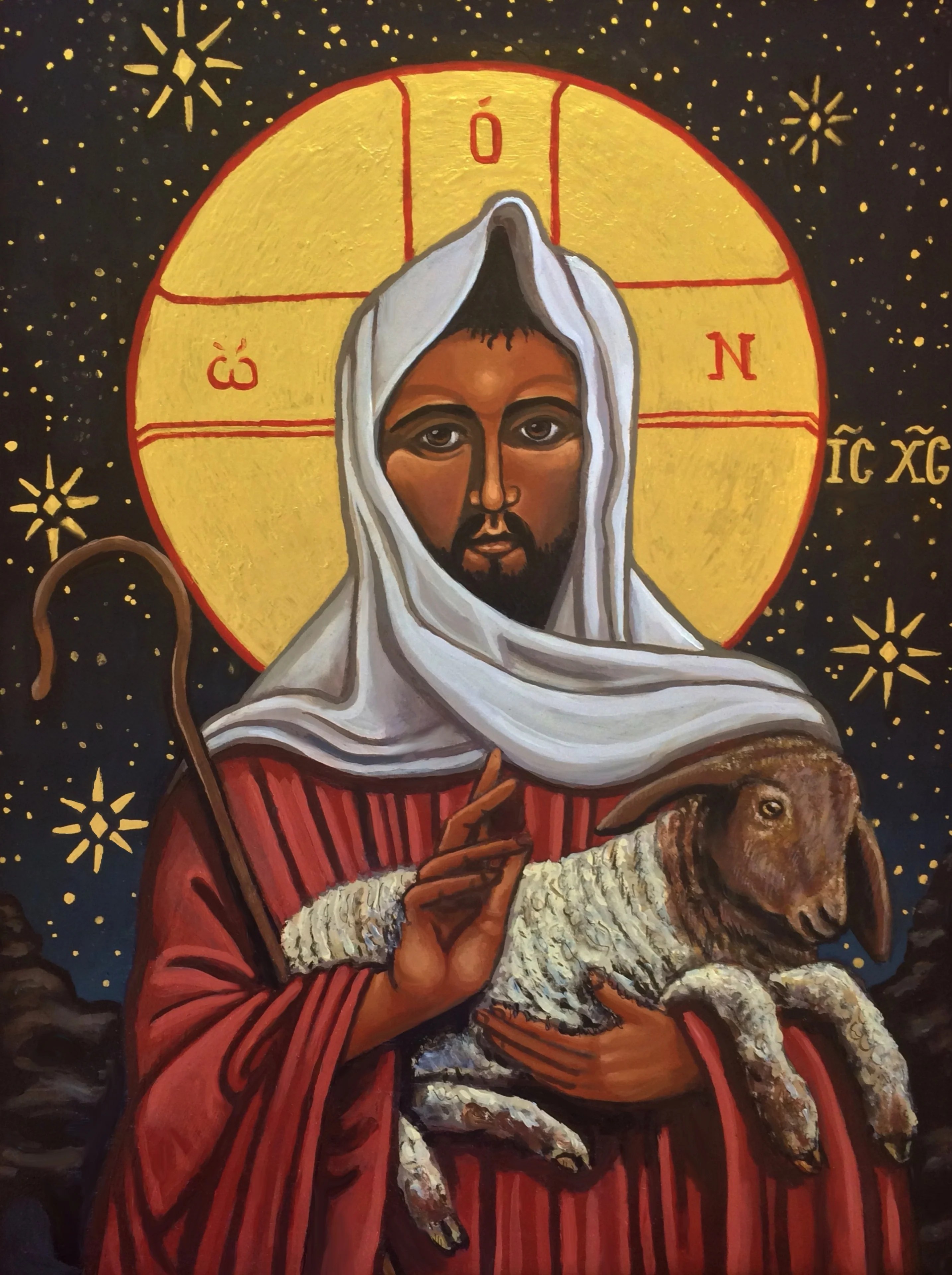
“I am the good shepherd. I know my own and my own know me, just as the Father knows me and I know the Father.” (The full readings for today can be found here.) In the name of the Living God, who is creating, redeeming, and sustaining us.

Well, good morning, everybody, good morning. You know, I’m not sure…no, I’m not sure at all. I’m not sure that I’m qualified to preach on this Good Shepherd Sunday. You see, my people were cattle people. They weren’t sheep people. And cattle people didn’t always get along with sheep people. By “not always,” I mean they never got along with each other.

And while there are a lot of differences between cattle and sheep, a couple of them come to mind. One of the biggest differences is that you can lead sheep, but you have to drive cattle. Unlike cattle, sheep will learn to follow. They build friendships and will stick up for one another. Like us, they are highly social animals, and when they are under stress or isolation, they become sad, and yes, even depressed. And they are very intelligent creatures; they recognize faces and voices. But like us, they will sometimes stray away from the herd, and need to be watched over.

In Jesus’ time, sheep were a mainstay of survival: they provided milk and cheese, and sometimes meat for the family and for sacrifices. They also provided wool for warm garments. But I think there’s something going on in John’s gospel than a discussion of first-century animal husbandry or livestock. I think this gospel reading is, at its core, about how we love, and how we are loved.

So, I think we should note a couple of things before we go on. And for this, I think we have to go all the way back to the beginning of John’s gospel, back to the very first time we meet this man called Jesus. You may remember that John was baptizing people in the river Jordan when he saw Jesus and shouted out: “Here is the lamb of God who takes away the sins of the world.” Now, lambs had been used as sacrificial animals for a long time by the Jewish people and were particularly associated with the holy feast of Passover.

We hear this same image, this same symbolic language in the last passage of John’s gospel, where the resurrected Jesus and Peter sit by a charcoal fire after breakfast.  And Jesus makes clear to Peter that Peter’s assurance of love carries with it a tender and sometimes difficult office, an obligation to feed his sheep. So, I want to suggest if we find this image being used in the beginning of John’s gospel, at the end of his gospel, and this morning pretty much in the middle of the gospel, we can probably safely assume that John thought this was important.

But as we read this, we might be forgiven if we have a moment of confusion. Is Jesus the lamb or the shepherd? Why is Peter feeding the sheep? Are we the sheep, or is Jesus the lamb? Quite frankly, it seems a bit complicated, and a little bewildering.

I think at least part of the answer lies, perhaps a bit veiled, in Jesus’ statement: “I am the good shepherd.” It’s one of what’s called the “I am” sayings of Jesus: you know, “I am the Bread of Life”, “I am the Light of the World”, “I am the vine,” and “I am the Good Shepherd.” In doing so, Jesus is aligning himself with a very old understanding of who God is. You remember the story from the Book of Exodus, when Moses asks God his name and God replies, “I am who I am.” For John, there is no difference between God and Jesus, the Word, the Logos. And for John, there is no difference between listening to Jesus and listening to God.

Jesus distinguishes his role from that of a hired hand. And at least part of the distinction has to do with how they react when the wolves come. Whether you’re a cattle person or a sheep person, you know about wolves. Lord have mercy, I believe we all know about wolves. You can find them in any walk of life—in business, in politics, and on our television screens. Sometimes those wolves come disguised as ambition or greed, sometimes as addictions, sometimes as failure, and sometimes as desperation.

You might argue that the distinction between the Good Shepherd and the hired hand is about their level of commitment. Perhaps the hired hand acts out of self-interest, while the Good Shepherd isn’t afraid of the wolves and understands his responsibilities. But I think there’s something more there. I think the Good Shepherd doesn’t run away when the wolves come because he acts out of something much more profound. Love, and only love, hangs around when the wolves come. Love, and only love, is willing to stand its ground when the situation gets risky. Only that kind of love is willing to lay down its life for the beloved.

Now, here’s the good news. We are the beloved. And Jesus is telling us that he loves us like that, that God loves us like that. And that kind of love doesn’t even ask what it costs, because it knows what it’s worth.
Later in this same Chapter of John, Jesus tells us “My sheep hear my voice. I know them, and they follow me.” I often wonder how well I’m listening for the voice of Jesus. When I get busy, when I get worried, or when I’m simply careless, it’s hard to hear.

You know, a very famous theologian named Paul Tillich said, “The first duty of love is to listen.” That’s worth repeating: “The first duty of love is to listen.” We have a lot of choices in this world as to which voices we’ll listen to. We can listen to the voices that tell us that our neighbors aren’t like us—voices that tell us that they’re not as smart as we are, or they’re freeloaders, or they’re dangerous. Or we can listen to the voices that tell us this world is full of risk and danger, that we might not have enough, or the voices that tell us that our lives will finally make sense if we just get that new car, that new outfit, that new iPhone, or earn enough to retire. We can listen to those voices that tell us that we’re not quite smart enough, not quite pretty enough, or not quite good enough.  

Or we can listen to the voice of the One who will never run away when the wolves come, the one who offers us forgiveness, the one who came to show us what an abundant life really looks like. We can listen to the One who laid down his life for us, who said he’d never leave us, who says he’s with us always, even to the end of time. That kind of voice, that kind of love, is hard to fathom; in fact, it’s one of life’s deepest mysteries.

We are sometimes told, “You are what you eat.” I think it’s equally true that we are what we listen to. The voices we hear can shape us in powerful ways. Genuine listening is an attitude of the heart, a vulnerability to the holy. If indeed the first duty of love is to listen, the choice we are compelled to make is which voice we are going to listen for. Maybe, just maybe, if we listen in love, we will hear the voice of the One who loves us limitlessly, who loves us fearlessly. Amen.

James R. Dennis, O.P. © 2024

Whom Are You Looking For? (An Easter Sermon)

Woman, why are you weeping? Whom are you looking for?” (The full readings for this morning can be found here.)

In the name of the living God, who is creating, redeeming, and sustaining us. Well, good morning, good morning. And, because we haven’t been able to say it during those long 40 days of Lent: Alleluia!

Don’t you hate it when you lose something? It’s very frustrating, it’s unsettling. Say, you have something very precious, or something terribly dangerous, and you lock it up and put it away where no one can get to it. You hide it, or seal it up, or bury it, and when you go back, it’s not there. You search and search, but it’s just not there anymore. But, I’m getting ahead of myself.

I want us to imagine the desperation of these disciples, particularly Mary Magdalene and the women who go to anoint Jesus’ body. They had lost just about everything you could lose. Some had betrayed him, some had denied him, many had run away, and almost none of them could bear to watch this horror show. They had lost their dreams of a life with God, their vision that finally someone was going to do something about the Romans and their brutal occupation. They had lost their hopes for a better world, and many of them lost their self-image, their idea of who they were. And so, these women come to anoint their dead friend, to honor their dead. As Henry Nouwen wrote, “Compassion asks us to go where it hurts…” Now, I don’t think those women went to the grave that morning out of a sense of religious obligation, or some concept of duty. I think they went there out of love for their friend.

Now, we humans have known something for a very long time. We have known it ever since we crawled or loped out of the savannah, ever since those prehistoric people left their handprints on the Cueva de los Manos in Spain. We have known that “dead is dead.” Science teaches it, our experience teaches it, and our feelings of loss teach it. Dead is dead. Our broken hearts have always instructed us about the finality of death. Death is the end of the story. Or, is it?

Today’s gospel calls that assumption into question. As these women go to mourn their losses, they find that the stone has been rolled away and the tomb is empty. Don’t you hate it when you’ve put something away for safekeeping and then it’s missing? And after the other disciples have confirmed that Jesus’ body is gone, Mary remains at the tomb weeping. And she doesn’t recognize Jesus at first. Grief is like that, clouding our vision and consuming our ability to focus on anything but loss. And it’s not until Jesus calls her by name that she recognizes him. My hope, no, my prayer for each of us is that we can hear God calling our names, calling us out of grief and loss and into new life.

Jesus then asks her a very pointed, and very important, question: “Whom are you looking for? In our world of heartache, loss, death, and empire, it takes a good deal of courage to go looking for Jesus. It takes a good deal of hope and strength to entertain the notion that death might not be the end of the story. Love is like that, you see. Love always goes looking for the beloved. Even when it’s scary, even when there are Roman guards there, even when it seems hopeless—love goes looking.

So, I want you to look here at the genius of John’s gospel. If you were with us for the Good Friday service, you’ll remember what John said. “Now there was a garden in the place where he was crucified, and in the garden there was a new tomb in which no one had ever been laid. And so, because it was the Jewish day of Preparation, and the tomb was nearby, they laid Jesus there.” Our story this morning is also set in that same garden.

If you were with us for the Vigil, you heard that story from Genesis of the very first day, the story of light coming into the world. So, I want us to look carefully at what that masterful poet John is telling us in his gospel this morning. John says these events took place “Early on the first day….” The first day. These events took place in a garden. The story of our creation takes place in a garden. This is no accident. There are no coincidences in John’s gospel. I think John is trying to tell us that the story of Jesus’ resurrection is the story of God recreating the world.  It’s the story of Jesus “making all things new again.”

Now, the forces of empire knew exactly where they had put Jesus. He was sealed in a tomb, safely locked away where he could not cause them any trouble. In this story, the might of empire is represented by the soldiers guarding the tomb. Look at the reversal that takes place when they are confronted with the power of resurrection, the power of new life. John says, “For fear of him the guards shook and became like dead men.”

God is in the business of creating life where there was no life before. St. Paul notes that the grave has lost its finality, writing: “O death, where is thy sting?” But I probably prefer the formulation of that fine mystic, the English poet John Donne, who said:

Death, be not proud, though some have called thee
Mighty and dreadful, for thou art not so;
For those whom thou think’st thou dost overthrow
Die not, poor Death, nor yet canst thou kill me.

Death is not the end of the story. It’s not even a period, not even a semicolon. Death is nothing more than a comma, a brief pause. You see, when Jesus walked out of the tomb, he didn’t come out alone. God’s love escaped from the tomb, escaped from the grave where the forces of empire tried to contain it.

So, we come back to these stories, these same stories, year after year at about this same time. The church calls them the stories of Jesus’ passion and resurrection. But in a broader sense, they are something more: they are love stories. In fact, they are our love stories. They are stories of God’s love for you and me, of God’s love for humanity.

This is our theology of hope; this is why we call ourselves an Easter People. Our gospel this morning teaches us that the forces of empire do not win. The powers of fear and intimidation and violence do not prevail. Death and grief do not have the last word. Darkness and the forces of hell do not win. Love always wins. Always. And even though we go down to the grave, we make our song: Alleluia, Alleluia, Alleluia!

James R. Dennis, O.P. © 2022

In the Beginning Again (Homily for the Great Vigil)

He is not here; for he has been raised, as he said. Come, see the place where he lay. (The full readings for today can be found here.)

            Good evening, my friends, good evening. And welcome to the Great Vigil of Easter.

Did you notice that opening line of that very first reading? It’s such a fabulous first line, a cardinal statement: “In the beginning when God created the heavens and the earth, the earth was a formless void and darkness covered the face of the deep, while a wind from God swept over the face of the waters. Then God said, ‘Let there be light’; and there was light. And God saw that the light was good; and God separated the light from the darkness.”

But we might well wonder, Why is the Church giving us that story this evening, as we celebrate the great vigil? What does this have to do with Easter—with the empty tomb? It’s almost as if the Church were trying to tell us something, as if the Church were offering a glimpse into the nature of God through the lens of these readings. I think the Church is trying to give us some insight into God’s professional life, God’s business. You see, I think God is in the business of creating life where there was no life before. And there’s only one reason for that sort of creative impulse, that need to form and shape something new. But I’m getting ahead of myself.

So, I want us to imagine the state of mind of the disciples, particularly these women, going to anoint Jesus’ body for his burial. Not only have they witnessed the brutal horror of Jesus’ death, not only have they lost their friend and teacher, but they’ve also seen a dream die. They had dreamed of a life with Jesus, of a life filled with God’s love; they had dreamed of a better world. So they went to the tomb to honor their friend, to honor their loss, to honor the dead.

But they didn’t find any death there, because our God is not the God of the dead, but of the living. Our God, as we said earlier, is in the business of new life. Our God is in the business of calling light out of the darkness, of creating new life out of nothing more than His love.

We see that new life happening this evening, right before our eyes. God is on the loose again tonight at St. Christopher By the Sea, doing that God thing. God is about to make a new thing, another Genesis story, in the baptisms of Addison and Wayne. And, while we don’t know yet what paths they will walk down in their lives to come, we know who will always walk with them.

Looking back to the readings tonight, I’m pretty sure that the forces of empire were certain that the story of Jesus was over. In fact, they were certain he was not only dead, but buried. But God, like love, is never static; neither God nor love will be contained. And I want to suggest to you that something more than Jesus escaped from that grave—pure love rolled away the stone, unadulterated love walked out of that tomb, and love told those dear women that he would meet them again in Galilee.

Many of us have tried to keep God in a box. We try to create a spiritual ghetto—over here is where I keep my work life, and over here is where I keep my family stuff, and this box here is where I keep my religion. That box we try to keep God in, well, it’s nothing more than a grave, a tomb. And if today’s Gospel teaches us anything, it teaches us that God will not stay where we put Him. This is our hope; this is why we call ourselves Easter people, my friends. He is not dead; he is risen. Alleluia!

James R. Dennis, O.P. © 2022


St. Boniface: A Homily

Boniface

Then he said to them, ‘These are my words that I spoke to you while I was still with you—that everything written about me in the law of Moses, the prophets, and the psalms must be fulfilled.’ Then he opened their minds to understand the scriptures,and he said to them, ‘Thus it is written, that the Messiah is to suffer and to rise from the dead on the third day, and that repentance and forgiveness of sins is to be proclaimed in his name to all nations, beginning from Jerusalem.You are witnesses of these things. And see, I am sending upon you what my Father promised; so stay here in the city until you have been clothed with power from on high.’ Then he led them out as far as Bethany, and, lifting up his hands, he blessed them.While he was blessing them, he withdrew from them and was carried up into heaven. And they worshipped him, and returned to Jerusalem with great joy;and they were continually in the temple blessing God. Luke 24: 44-53.

He said to them, ‘Thus it is written, that the Messiah* is to suffer and to rise from the dead on the third day, 47and that repentance and forgiveness of sins is to be proclaimed in his name to all nations, beginning from Jerusalem. 48You are witnesses* of these things.

In the name of the living God, Father, Son and Holy Spirit.

          Good morning, good morning. And welcome to you all as we celebrate the feast of St. Boniface, a great saint of the Church. He was born somewhere around 675 A.D. in Wessex. At birth, he was given the name of Winfred, but later took the name of Boniface, probably when he was ordained a bishop. In 716, he set out as a missionary for Frisia, in modern-day Germany.

          There’s a wonderful old legend about St. Boniface. They say that one winter he came across some men who were about to offer up a child sacrifice to the pagan god Thor. Boniface stopped the murder of this child by going over to an oak tree and striking it. The tree fell to the ground. When all the snow, they saw a small fir-tree there. Boniface pointed to the tree, which was green in the dead of winter and announced, “That is the tree of life and this boy is to live not die.” He then pointed at the tree again and said, “This tree does not die in winter like others but lives and it symbolizes the eternal life offered to you through Jesus Christ.” He then noted that the shape of the fir-tree is triangular and thus represents the Trinity of God. Upon this declaration, the men repented and gave their hearts to Jesus and they spared the boy’s life.

          So, what’s the point of that story? You know, neuro-psychologists have described something called a perception bias. It’s sometimes called selective perception. It’s the tendency of the brain to seek out what it’s looking for, and to disregard all the other noise around it. It explains how we do those Where’s Waldo puzzles, and how the brain finds what it’s looking for and sets aside everything else. It explains why we see the good in people if we’re looking for it and why, if we go searching out the ways in which people can be selfish and cruel, we’ll find that, too.

          What does that have to do with the story about St. Boniface? I think it explains the reason St. Boniface saw eternal life in Christ when he looked at the evergreen fir-tree. And it explains why he saw the life of the Trinity when he noticed the triangular shape of the tree. He saw those things because he was looking for them. And that’s why St. Chrysostrom observed that unless you can see Christ in the face of the beggar on the street, you’ll never find Him in the chalice.

          And so, we come to today’s Gospel reading. This reading comes right after the story of the road to Emmaus. And we wonder, “Why didn’t the disciples recognize Jesus? How could they not see him, right beside them?” I think part of the answer is that they didn’t see Him because they weren’t looking for him. They thought he was dead; there was no reason to look for him. But in today’s Gospel, Jesus tells the disciples, tells us, that we are to be his witnesses. We are to see and hear, and speak of what we’ve seen and heard: that Jesus is risen, that he preached repentance, and promised forgiveness. And that He’s still with us.

          So, what are we supposed to be looking for? He told us: “Seek ye first the kingdom of God.” If we follow Jesus, that’s our perception bias. I pray that we’ll look for it, because He promised that if we did, we’ll find it. Amen.

James R. Dennis, O.P.

© 2014 James R. Dennis

The Feast of Mary Magdalene: A Sermon

Mary MagdaleneMary stood weeping outside the tomb. As she wept, she bent over to look into the tomb; and she saw two angels in white, sitting where the body of Jesus had been lying, one at the head and the other at the feet. They said to her, “Woman, why are you weeping?” She said to them, “They have taken away my Lord, and I do not know where they have laid him.” When she had said this, she turned around and saw Jesus standing there, but she did not know that it was Jesus. Jesus said to her, “Woman, why are you weeping? Whom are you looking for?” Supposing him to be the gardener, she said to him, “Sir, if you have carried him away, tell me where you have laid him, and I will take him away.” Jesus said to her, “Mary!” She turned and said to him in Hebrew, “Rabbouni!” (which means Teacher). Jesus said to her, “Do not hold on to me, because I have not yet ascended to the Father. But go to my brothers and say to them, `I am ascending to my Father and your Father, to my God and your God.'” Mary Magdalene went and announced to the disciples, “I have seen the Lord”; and she told them that he had said these things to her.  John 20:11-18.

It’s a pleasure to be with you this morning as we celebrate the Feast of a great saint of the Church, Mary Magdalene. Magdalene: the first witness to the resurrection, Mary, who had her heart broken and then restored.  So, I thought I’d borrow very liberally this morning from a sermon first preached by Meister Eckhart, one of my Dominican brothers, around the thirteenth century.

“Mary stood at the sepulchre weeping ….”

A wonder that in such sore distress she was even able to weep. She stood there because she loved, she wept because she mourned. She approached and looked into the sepulchre. She was looking for a dead man: she found two living angels and the living son of God.

Origen says: “She stood – why did she stand when the Apostles had run away?’ Because she had nothing to lose. Everything she had was lost with Him. When He died, she died as well. When they buried Him, they buried her with Him. So she had nothing to lose.

She moved on. Then he met her. She thought it was the gardener, and said “Where have you put Him?’ Anxious for Him, she does not answer His question; just, ‘Where have you put Him?’ Those were her words. Then He showed her plainly Who He was. Had he announced Himself straight away while she was in the throes of longing, she would have died of joy.

If the soul knew when God would come to her, she would die of joy! – and if she knew when He would leave her, she would die of grief. She knows neither when He comes nor when He goes: she knows well when He is with her. It is said, “His comings and goings are hidden; His presence is no secret, for He is Light, and by its very nature Light is Manifestation.”

Mary sought God and only God. That is why she found Him, because she desired God and nothing else.

While we didn’t get to hear this part of the story, unlike the other gospels that begin the story of the resurrection at dawn, John begins this chapter “while it was still dark.” Of course, the opening phrase of John’s gospel is: “In the beginning.” John wants to take us back to the moment of creation, to another garden from which we were cast out. And the contrast of the darkness of a world without Jesus, and the light we encounter with Jesus: well, that’s quintessentially John.

It’s interesting to note that the very first words Jesus says in John’s gospel are a question directed to the followers of John the Baptist: “What are you looking for?” Here, Jesus repeats almost exactly the same question, asking “Who are you looking for?” It’s a question we should each consider. Who are we looking for? It’s also important that Mary does not recognize Jesus until he calls her by name. I’m wondering whether we can hear him calling our names as well.

In that moment as Jesus calls her name,”Mary”, she knows Him just as He knows his own. And she knows that death has not taken her teacher, her friend, that death has no claim on Him any longer, nor those who follow Him. And that morning, sadness had no more claim on her life, and I pray that it has no more claim on ours.

Mary saw it: the kingdom of God had broken into the world. The kingdom of God is coming into the world. The kingdom of God will come into the world. Amen.

James R. Dennis, O.P.

© 2013 James R. Dennis

A Study of Wisdom

     Augustine said:      “The wise will shine like stars and those who can make others wise will be bright with eternal splendour.”      “Feed your soul on divine readings; they will prepare for you a spiritual feast.”  
Jerome said:
     “It is much better to speak the truth clumsily than to wax eloquently with a lie.”
Gregory said:      “Wisdom is to fear God and keep far from evil.”
“The beginning of wisdom is to avoid evil:  the second stage is to do good.”
     “Whoever wants to understand what he is hearing must hasten to translate what he has already heard into action.”
     Isadore said:      “Simplicity joined with ignorance is called stupidity: simplicity joined with prudence is called wisdom.”

Defensor Gramaticus Book of Sparkling Sayings, 18

Again, I found this piece in today’s readings from Drinking From the Hidden Fountain.  From a very early age, I have been attracted to the notion of wisdom, particularly as distinct (although not always separate) from intellect.  Wisdom seems to call for a special kind of “knowing”, and implies patience, simplicity, kindness, and carefulness.  In my experience, although intellect may be a personal quality, wisdom most often comes from community.

In the spiritual setting, that community involves listening creatively to the voices around us, including the voices of the past.  Holy Scripture, when read carefully, offers us the collective wisdom of the Church. That “great cloud of witnesses”, the saints who have gone before us, they get a vote, too.  Similarly, the we sometimes locate wisdom collective voice of the Church.

I particularly like the quotation from Gregory, suggesting that our notion of wisdom is always incomplete if we simply try and avoid evil.  Real wisdom lies in seeking out the good.  Rather than simply avoiding sin, we are called to make this world a better place:  alleviating suffering, helping out the poor, visiting those who are sick or in prison, and binding up the brokenhearted.  Perhaps there we will find wisdom, in the translation from a good idea to a committed heart.

God watch over thee and me,

James R. Dennis, O.P.

© 2012 James R. Dennis

A Study of Wisdom

Augustine said:
     “The wise will shine like stars and those who can make others wise will be bright with eternal splendour.”
     “Feed your soul on divine readings; they will prepare for you a spiritual feast.”
Jerome said:
     “It is much better to speak the truth clumsily than to wax eloquently with a lie.”
Gregory said:
     “Wisdom is to fear God and keep far from evil.”
     “The beginning of wisdom is to avoid evil:  the second stage is to do good.”
     “Whoever wants to understand what he is hearing must hasten to translate what he has already heard into action.”
Isadore said:
     “Simplicity joined with ignorance is called stupidity: simplicity joined with prudence is called wisdom.”
Defensor Gramaticus
Book of Sparkling Sayings, 18

Again, I found this piece in today’s readings from Drinking From the Hidden Fountain.  From a very early age, I have been attracted to the notion of wisdom, particularly as distinct (although not always seperate) from intellect.  Wisdom seems to call for a special kind of “knowing”, and implies patience, simplicity, kindness, and carefulness.  In my experience, although intellect may be a personal quality, wisdom most often comes from community.

In the spiritual setting, that community involves listening creatively to the voices around us, including the voices of the past.  Holy Scripture, when read carefully, offers us the collective wisdom of the Church. That “great cloud of witnesses”, the saints who have gone before us, they get a vote, too.  Similarly, the we sometimes locate wisdom collective voice of the Church.

I particularly like the quotation from Gregory, suggesting that our notion of wisdom is always incomplete if we simply try and avoid evil.  Real wisdom lies in seeking out the good.  Rather than simply avoiding sin, we are called to make this world a better place:  alleviating suffering, helping out the poor, visiting those who are sick or in prison, and binding up the brokenhearted.  Perhaps there we will find wisdom, in the translation from a good idea to a committed heart.

God watch over thee and me,

James R. Dennis, O.P.

© 2012 James R. Dennis

Standing on Holy Ground


Moses was keeping the flock of his father-in-law Jethro, the priest of Midian; he led his flock beyond the wilderness, and came to Horeb, the mountain of God. There the angel of the Lord appeared to him in a flame of fire out of a bush; he looked, and the bush was blazing, yet it was not consumed. Then Moses said, “I must turn aside and look at this great sight, and see why the bush is not burned up.” When the Lord saw that he had turned aside to see, God called to him out of the bush, “Moses, Moses!” And he said, “Here I am.” Then he said, “Come no closer! Remove the sandals from your feet, for the place on which you are standing is holy ground.” He said further, “I am the God of your father, the God of Abraham, the God of Isaac, and the God of Jacob.” And Moses hid his face, for he was afraid to look at God.

Then the Lord said, “I have observed the misery of my people who are in Egypt; I have heard their cry on account of their taskmasters. Indeed, I know their sufferings, and I have come down to deliver them from the Egyptians, and to bring them up out of that land to a good and broad land, a land flowing with milk and honey, to the country of the Canaanites, the Hittites, the Amorites, the Perizzites, the Hivites, and the Jebusites. The cry of the Israelites has now come to me; I have also seen how the Egyptians oppress them. So come, I will send you to Pharaoh to bring my people, the Israelites, out of Egypt.”

But Moses said to God, “Who am I that I should go to Pharaoh, and bring the Israelites out of Egypt?” He said, “I will be with you; and this shall be the sign for you that it is I who sent you: when you have brought the people out of Egypt, you shall worship God on this mountain.”  But Moses said to God, “If I come to the Israelites and say to them, ‘The God of your ancestors has sent me to you,’ and they ask me, ‘What is his name?’ what shall I say to them?” God said to Moses, “I AM WHO I AM.” He said further, “Thus you shall say to the Israelites, ‘I AM has sent me to you.’“ God also said to Moses, “Thus you shall say to the Israelites, ‘The Lord, the God of your ancestors, the God of Abraham, the God of Isaac, and the God of Jacob, has sent me to you’: This is my name forever, and this my title for all generations. Exodus 3:1-15.

I found this reading in the Daily Office for today.  The passage begins with Moses engaged in an everyday sort of task.  He’s tending to his father-in-law’s flock; he’s working.  Moses has not set out on a spiritual journey, he hasn’t gone into the desert to retreat and encounter the Infinite.  Like most of us, God confronts Moses when he’s busy trying to do something else.

We should also note that Moses is pretty much homeless when this remarkable event happens.  Although an Israelite child, he was adopted by the Egyptians and lived among them until he killed an Egyptian overseer.  He runs away from the wrath of Pharoah into the land of Midian.  And as we know from the balance of the story, Moses will spend the bulk of his life wandering.  (It’s a bit ironic that he ends up finding a homeland for his people, but not for himself.)  In fact, Moses offers a revealing glimpse into himself when he says, “I have been an alien living in a foreign land.”  Gen. 2:22.  I think lots of folks feel that way, constantly looking for a home.

As Moses encounters this burning bush, YHWH tells him to remove his sandals because he is standing on holy ground.  The removal of one’s sandals not only signifies that one has arrived at a sacred space, but also (within many cultures) suggests that one has entered a home.  Therefore Moses, the wanderer, finds his home with the Lord.

Two questions from this passage echo into each of our lives, and will shape the course of our faith.  The first is the question Moses asks of the Lord:  “Who am I?”  Moses wants to know his own authority to preach truth to power, and it’s a question most of us have faced at one time or another.  Who am I to be God’s voice in this troubled world?  Who am I to speak out against something that’s wrong?

We should find the second question equally troubling, and equally determinative for us.  Moses asks the Lord (the God of Abraham, the God of Isaac, and the God of our ancestors), “Who are you?”  Moses wants to know exactly what he’s going to tell people about who he met in the burning bush.  He wants to understand the Almighty; he wants to know God’s name.

The answer Moses heard, “I AM WHO I AM,” probably didn’t leave him completely satisfied.  The name “I AM” obviously conjures up so many of Jesus’ “I am” statements (the bread of life, the light of the world, the good shepherd, etc).  In this case, however, we might find particular encouragement in Jesus’ assurance:  “I AM with you always, even to the end of the age.”  Matt. 28:20.

Many of us still hear the reverberations of these two questions, “Who am I?” and “Who is God?” As we begin to answer them, I think we may find the story of Moses even more rich.  Once Moses begins to understand the answers (a rudimentary and incomplete understanding) God immediately sends him on a mission.  In Moses’ case, the mission involves confronting Pharoah and leading the people into Israel as God saves His people.  In our case, that mission may be completely different.  But only through that journey, which will last for the rest of his life, will Moses come to more fully understand who God is and who Moses is.

The journey leads him to a deeper understanding of YHWH, which leads him to a deeper understanding of himself, which leads him further along the journey.  I believe that’s part of the reason why the Exodus became the overarching narrative of the Jewish people, and why it remains so important today.

Shabbat Shalom,

James R. Dennis, O.P.

© 2012 James R. Dennis

The Gift of Peace

     You cannot acquire the gift of the peace if by your anger you destroy the peace of the Lord.
     True patience is to suffer the wrongs done to us by others in an unruffled spirit and without feeling resentment.  Patience bears with others because it loves them; to bear with them and yet to hate them is not the virtue of patience but a smokescreen for anger.
     True patience grows with the growth of love.  We put up with our neighbours to the extent that we love them.  If you love, you are patient.  If you cease loving, you will cease being patient.  The less we love, the less patience we show.
     If we truly preserve patience in our souls, we are martyrs without being killed.

                                            –Gregory the Great, Defensor Gramaticus

I found this bit of wisdom in the reading for today in a wonderful little book, Drinking From the Hidden Fountain:  A Patristic Breviary.  Pope Gregory I wrote the reading for today.  The Roman Catholic Church, the Eastern Orthodox faith, the Anglican Church and some Lutheran churches recognize Gregory as a saint.  The first pope to spring from the monastic tradition, he is the patron saint of musicians, students and teachers.

Gregory was born around 540 A.D., and lived in very tumultuous times for the Church which included the defeat of the Roman Empire by the Goths, famine and a plague that killed over a third of the population.  The papacy was virtually forced on Gregory, who longed for the monastic life.  Although he was deeply interested in and involved with the liturgy, Gregory probably had no substantial involvement with Gregorian chant which bears his name.  (Gregorian chant was first written down in the early 9th century.)  He made extensive use of the title servus servorum Dei (servant of the servants of God) in official documents, revealing a deep and abiding humility.

In this short little selection from Gregory, we see a hint of his humility and catch a glimpse of why he was so deeply loved and revered.  Gregory points out how deeply our anger undermines the peace we so desperately long for and need.  Yet although we want peace in our lives, we just aren’t willing to let go of our anger and resentments.

He encourages us to turn to the ancient Christian virtue of patience.  St. Paul recognized patience as one of the gifts of the Spirit.  Gal. 5:22.  St. Thomas Aquinas wrote:  “Patience is one of the humble, workaday virtues; but it is, in a real sense, the root and guardian of all virtues, not causing them, but removing obstacles to their operation. Do away with patience and the gates are open for a flood of discontent and sin.”

Long before psychology taught us about passive/aggressive behavior, St. Gregory described it:  “Patience bears with others because it loves them; to bear with them and yet to hate them is not the virtue of patience but a smokescreen for anger.”  Most anger arises from a lack of patience.  In fact, many of our intemperate statements begin:  “I’ve just about lost my patience with . . . . (insert the object of our rage here).”

Our impatience usually carries with it either an implicit message of our moral superiority or wrongs that we cannot or  will not release. We are so anxious to claim the moral high ground that we forget that Jesus blessed the poor in spirit and the meek rather than the righteously indignant. Patience requires the understanding that although our brothers and sisters may not yet be the people God intends them to be, neither are we.

St. Gregory correctly showed us the link between patience and love.  Again, Paul had noted this link in Scripture, writing:  “Love is patient; love is kind.”  Learning to love means learning and practicing patience.  Admittedly, it’s not my strongest gift, but I know that if I want to create a peaceful life and a peaceful world, that path begins with patience.

Pax Christi,

James R. Dennis, O.P.

© 2012 James R. Dennis

A New Song

Sing to the LORD a new song,
for he has done marvelous things.

With his right hand and his holy arm
has he won for himself the victory.

The LORD has made known his victory;
his righteousness has he openly shown in the sight of the nations.

 He remembers his mercy and faithfulness to the house of Israel,
and all the ends of the earth have seen the victory of our God.

Shout with joy to the LORD, all you lands;
lift up your voice, rejoice, and sing.

 Sing to the LORD with the harp,
with the harp and the voice of song.

 With trumpets and the sound of the horn
shout with joy before the King, the LORD.

Let the sea make a noise and all that is in it,
the lands and those who dwell therein.

 Let the rivers clap their hands,
and let the hills ring out with joy before the LORD,
when he comes to judge the earth.

 In righteousness shall he judge the world
and the peoples with equity.  Psalm 98.

The Psalm from today’s Lectionary offers us the perfect message as we near the end of the Easter season.  The Psalmist calls for every person, every nation, and all of creation to rise up in a joyful song of being known and loved by the God of Israel. We need “a new song” because God has done something new, something out of our experience.  Even the rivers will clap their hands as God’s judgment will set creation right.

The Sabbath, the day of rest, offers both Jews and Christians the principle occasion for giving praise to God.  Praise is a funny thing; it is not particularly useful and does not accomplish any particular thing.  Praise, therefore, is not a means to an end.  Rather, praise is the end.  We join together to acknowledge God and give Him thanks for no particular reason other than He is God.  And somehow, in that simple act of gratitude, the Psalmist tells us we will find our joy.

One of the reoccurring ideas in this psalm is the Lord’s “victory”, also sometimes translated as “salvation”.  In the original Hebrew, the word is Y’shua or yeshua.  That word is the basis for the name of the old Testament hero Joshua, and is anglicized as “Jesus.”  Viewed through a Christian lens, this psalm speaks of the victory God has won, offering us a wonderful Easter message.

Walter Brueggeman has observed, “In this literature the community of faith has heard and continues to hear the sovereign speech of God, who meets the community in its depths of need and in its heights of celebration. The Psalms draw our entire life under the rule of God, where everything may be submitted to the God of the gospel.”

In the life of Christ, God sang a love song to all of creation, a song through which all creation was made new.  This psalm invites us to share in that song, replying to God’s song with great gladness.  My prayer for all of us is that we join in that new song, in that love song, with happy voices and glad hearts.

Shabbat Shalom,

James R. Dennis, O.P.

© 2012 James R. Dennis