Tag Archives: Dominican Order

The Grace of Charity

If you have received from God the gift of knowledge, however limited, beware of neglecting charity and temperance.  They are virtues which radically purify the soul from passions and so open the way of knowledge continually.
The way of spiritual knowledge passes through inner freedom and humility.  Without them we shall never see the Lord.
“Knowledge puffs up whereas charity builds up.”  [1 Cor. 8:1.]  Therefore, unite knowledge with charity and by being cleansed from pride you will build yourself up and all those who are your neighbors.

Charity takes its power to build up from the fact that it is never envious nor unkind.  It is natural for knowledge to bring with it, at the beginning anyway, some measure of presumption and envy.  But charity overcomes these defects:  presumption because “it is not puffed up” and envy because “it is patient and kind.”  [1 Cor. 13:4]

Anyone who has knowledge, therefore, ought also to have charity, because charity can save his spirit from injury.
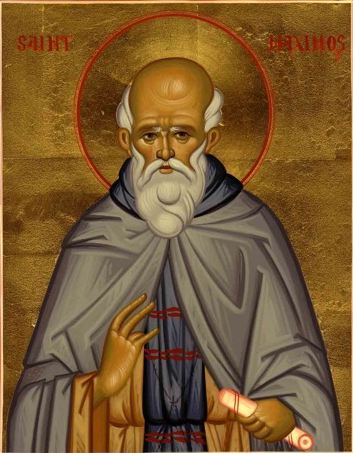
      –Maximus the Confessor (from Drinking from the Hidden Fountain)

The Dominican Order expects its brothers and sisters to spend an hour a day in prayer and an hour a day in study of Holy Scripture and theology.  Frankly, I love that part of the rubric of my Order, because learning and study come easy to me.  Maximus the Confessor reminds me that maybe it comes a bit too easy.

Maximus was a monk who lived from around 580 to 662.  Most scholars believe that he was born in Constantinople; we know he was tried there for heresy.  Maximus suffered both exile and torture for the faith.  After his death, the Church declared his innocence of the charge of heresy.  Both the Orthodox and Roman Catholic churches recognize him as a saint and a Father of the Church.  He famously said, “Theology without practice is the theology of demons.”

Looking to the reading today, Maximus reminds us that our study and our learning must be rooted in the ancient Christian practice of charity.  Charity carried a slightly different meaning then; it meant more than simply giving money to the poor.  Charity meant loving kindness without limits.  This notion was related to the Hebrew concept of chesed or the Greek word agape.

Thomas Aquinas said that all the virtues pointed toward charity, the highest of the virtues, and charity (or love) makes all the other virtues possible.  Charity is a grace, and we practice charity because we were first loved by God.  Charity relates closely to humility because both enable us to lay aside our own desires and concerns for a while.  As a friend of mine observed, the Christian virtue of humility doesn’t mean we think less of ourselves; it means we think of ourselves less.

Maximus reminds us that all our study, all our theology, will leave us parched and withered unless we drink from the well of charity.  Our knowledge is always deeply incomplete and inadequate.  Rabbi Heschel once said, “The tree of knowledge grows upon the soil of mystery.”  Part of that mystery lies in God’s limitless capacity to love, and our capacity to reflect His love through the practice of charity.  Thus, as Heschel observed, “When I was young I admired clever people.  Now that I am old, I admire kind people.”

I wish you a good and holy Lent,

James R. Dennis, O.P.

© 2012 James R. Dennis

N.B.  Earlier this week, through a computer glitch or some sort of (as yet unknown) operator error, this post was erroneously published as a draft with many, many typos.  I was mortified.  The irony of that event, in a post about humility is not lost on me, and I hope you’ll accept my apologies.

The Good Shepherd

“I am the good shepherd. The good shepherd lays down his life for the sheep.   The hired hand, who is not the shepherd and does not own the sheep, sees the wolf coming and leaves the sheep and runs away-and the wolf snatches them and scatters them.  The hired hand runs away because a hired hand does not care for the sheep.  I am the good shepherd. I know my own and my own know me,  just as the Father knows me and I know the Father.  And I lay down my life for the sheep.  I have other sheep that do not belong to this fold. I must bring them also, and they will listen to my voice. So there will be one flock, one shepherd.  For this reason the Father loves me, because I lay down my life in order to take it up again.  No one takes  it from me, but I lay it down of my own accord. I have power to lay it down, and I have power to take it up again. I have received this command from my Father.”  John 10:11-18.

This reading from John’s Gospel offers a rich passage, and those who know it well may have lost some appreciation for its texture.  First, when Jesus says “I am the good shepherd”, He presents us with one of the seven “I Am” statements.  These include “I am”: the bread of life;  the light of the world; the gate or door; the good shepherd; the resurrection and the life; the way, the truth and the life; and the vine.  Each of these statements resonates with God’s self description found in Exodus 3:14 (“I Am Who Am”).  In other words, John offers us a clear claim of the divinity of Jesus through these statements.

Jesus’ description of himself as a good shepherd also resonates with God’s announcement in the Old Testament:  “For thus says the Lord God: I myself will search for my sheep, and will seek them out.  As shepherds seek out their flocks when they are among their scattered sheep, so I will seek out my sheep.”  Ezek.  34: 11-12.    From his deathbed, Jacob declared that God had been the shepherd “all of my life to this day.”  Gen 48:24.  Jesus’ description of himself further calls to mind the 23rd Psalm.  Thus, Jesus locates himself firmly within the Davidic line:  a shepherd king.

We also need to grasp just how startling Jesus’ understanding of himself as a “good shepherd” would have been to a first century audience.  At that time, shepherds would have been considered am ha’aretz (people of the land or people of the dirt).  Shepherds were considered dirty, coarse, boorish, and uncivilized.  Rabbinic Judaism looked down on shepherds, who did not regularly keep the commandments.  Because of their work, they may not have even kept the Sabbath.

The shepherds of first century Palestine were also a rough lot, solitary men of tremendous courage.  They had to protect the flock from lions, bears, wolves and other predators.  Rather than the gentle, pastoral image we may have inherited from the Romantic poets, shepherds were fierce fighters who were prepared for dangerous combat when necessary to protect their sheep.  For example, David learned about battle by protecting his father’s sheep from predators.  1 Sam. 17:33-37.

So, there’s something in Jesus’ description of himself as “the good shepherd” that subverts our understanding and upends our expectations.  Jesus also contrasts himself with “the hired hands” who run away in the face of a wolf.  He thus begins to teach about his commitment to us, a commitment that disregards his own safety, that disregards his own life.  This commitment, this covenant, finds its root in love, and in the Father’s love for Jesus and in Jesus’ love for the Father.  Jesus teaches not only about the nature of His love for the disciples, but also about his love for every one of us.   In essence, Jesus tells us:  “I will not abandon you.”

Jesus then tells us that his sheep will listen to his voice.  I wonder how well we do that today.  Setting aside the question of listening, do we even recognize Jesus’ voice when he calls?  Christ then offers a remarkable insight that speaks to our fractured Church today.  He speaks of unity:  “So there will be one flock, one shepherd.”  When we encounter discord, schism, and fracture in the world, we can rest assured that at least one party (and perhaps all) are not listening to Jesus.

I believe this remarkable passage ultimately centers upon the overarching Christian commandment:  love God and love each other.  As Desmond Tutu once observed, “Nothing is too much trouble for love.”  Love binds the sheep to the shepherd, and binds the shepherd to his flock.  We understand the risks inherent in the practice of love, risks that will ultimately lead to Golgotha.  Despite these risks, in the final analysis, the Gospel teaches us that nothing else really matters.

God watch over thee and me,

James R. Dennis, O.P.

© 2012 James R. Dennis

If You Choose, You Can Make Me Clean

A leper came to Jesus begging him, and kneeling he said to him, “If you choose, you can make me clean.” Moved with pity, Jesus stretched out his hand and touched him, and said to him, “I do choose. Be made clean!” Immediately the leprosy left him, and he was made clean. After sternly warning him he sent him away at once, saying to him, “See that you say nothing to anyone; but go, show yourself to the priest, and offer for your cleansing what Moses commanded, as a testimony to them.” But he went out and began to proclaim it freely, and to spread the word, so that Jesus could no longer go into a town openly, but stayed out in the country; and people came to him from every quarter.  Mark 1:40-45.

At some point in our lives, most of us have experienced the pain, shame and loneliness of being an outsider.  In today’s Gospel reading, we find a man who knew that isolation intimately.  At that time, leprosy and most skin diseases were treated as a kind of plague.  Because of his illness, the community shunned him, and the Mosaic law justified and condoned their fears.  He had no right to approach Jesus, and Jesus had no business having anything to do with him, let alone touching him.

This man lived the life of walking ghost, or perhaps more accurately, a walking corpse. As a leper, this “unclean” man could not enter the Temple; he could not even enter any community other a community of other lepers.  Jesus enters into this ostracism by touching him and sharing in his uncleanness.

This man’s statement (“If you choose, you can make me clean”) carries a number of messages within it.  First, we can hear the pain in the voice of a man who simply doesn’t have the power to help himself.  We also hear a remarkable affirmation of faith in Jesus’ healing power.  And perhaps we also hear just a hint of a challenge to Jesus’ willingness to reach out to this man.

Jesus then tells the man something that God’s been trying to convey throughout the Old Testament:  I choose to heal you.  The text thus illustrates an important idea of divine freedom, reaching out to restore God’s creation.  As He did with Sarah and Abraham, as He did in the Exodus, and as he did on the Cross, God instinctively exercises His freedom to redeem our broken lives.  I think Jesus is telling us:  “This is what the kingdom looks like.”

Mark describes Jesus as “moved with pity”.  The phrase suggests a very deep emotional response, the sort of reaction that you feel deep within your gut.  It has also sometimes been translated as “moved with anger”.  I suspect that Jesus felt a certain anger at all those things which separate men from God, and perhaps at the lack of depth or vision in the priestly interpretation of the holiness code.  Perhaps Jesus was angry  with the very notion, embedded into this man by a life as a lonely outcast, that God would choose anything other than to heal him.

Regardless of whether Jesus was moved with pity or anger, we shouldn’t miss the important point:  His immediate response to this emotion was to reach out, to redeem and to restore.

Jesus then gives this man a strict warning not to tell anyone, but to simply present himself at the temple.  This instruction falls into what theologians call the “Messianic secret.”  In this passage and many others, Jesus often instructs those He heals (and even the demons he casts out) to keep quiet about what they’ve seen.  We get the impression that until the Resurrection (which would clearly reveal the meaning of Christ’s life) Jesus tried to avoid an incomplete understanding of his ministry.

Despite Jesus’ warning, the man begins to proclaim the news about Jesus.  This leads to a curious and ironic reversal.  While the man was originally kept from society, Jesus now finds himself an outsider because of his fame and the press of the crowds.  Cleansed of his disease, the man can now rejoin his town and family.  Having restored this man to his health and freedom,  Jesus could no longer travel freely and had to remain “out in the country” .  Jesus therefore becomes an outsider himself, no longer able to go to the towns and villages.  Even Jesus finds himself marginalized, and thus those who follow him should not be surprised when it happens to us, too.

In one sense, this passage is about risk.  Jesus took a tremendous risk in healing this man, risking contamination.  Jesus also took a risk in asking for this man’s assurance of secrecy, risking his own isolation.  By subjecting Himself to human history and sin, Jesus risked our judgment and condemnation.  In fact, the Gospels point to the final risk of the Incarnation, the Cross.

I think today’s Gospel reading teaches us another important lesson.  Mark illustrates one of the core tenets of the Christian faith:  ours is religion for the last kids picked for dodge ball, the kids no one wants to dance with, and those who always get their hearts broken.  We shouldn’t read this as a story about something that happened once, a long time ago; Jesus still choses to make us clean, to restore us and heal us.  Following Jesus is all about second chances.  It was for this man in today’s Gospel.  And it is for you and me, too.

Shabbat shalom,

James R. Dennis

© 2012 James R. Dennis

What Jesus Came to Do

Jesus left the synagogue at Capernaum, and entered the house of Simon and Andrew, with James and John. Now Simon’s mother-in-law was in bed with a fever, and they told him about her at once. He came and took her by the hand and lifted her up. Then the fever left her, and she began to serve them.

That evening, at sundown, they brought to him all who were sick or possessed with demons. And the whole city was gathered around the door. And he cured many who were sick with various diseases, and cast out many demons; and he would not permit the demons to speak, because they knew him.

In the morning, while it was still very dark, he got up and went out to a deserted place, and there he prayed.  And Simon and his companions hunted for him. When they found him, they said to him, “Everyone is searching for you.” He answered, “Let us go on to the neighboring towns, so that I may proclaim the message there also; for that is what I came out to do.” And he went throughout Galilee, proclaiming the message in their synagogues and casting out demons.  Mark 1:29-39.

In the Lectionary reading today, Jesus leaves the synagogue at Capernaum and travels to the home of Peter’s mother-in-law.  She has taken to her bed with a fever, which often presented a life-threatening condition in those days.  Jesus takes her by the hand and lifts her up.  That phrase, “lifted her up” resonates with meaning, calling to mind Jesus being lifted up on the cross and lifted up from the grave.  Jesus restores her to health, and restores her to her community.

We see a pattern begin to emerge in Jesus’ ministry.  The holiness and purity laws of the day would have required that one separate oneself from those who were ill, especially those who were spiritually diseased or who suffered from a moral infection.  Rather than shunning them, Jesus rushed to them.  At the time, this offered a new teaching, something really extraordinary.

That evening, word of Jesus’ healing ministry begins to spread and the house is surrounded by those who need Jesus’ healing touch.  Having had some involvement in the work of pastoral care, this passage from the Gospel rings remarkably true.  Pastoral care is the church’s growth industry in a world that groans in pain and cries out for God’s presence.

Jesus then engages in a practice we’ve seen before, and we’ll see again and again.  Having preached, having healed, he retreats “to a deserted place” and prayed.  Jesus knew what we so often ignore:  even the work of ministry can become empty and debilitating unless we allow the Father to refresh and renew us in prayer. Or perhaps Jesus knew what many of us so often forget: when we’ve come into direct contact with the overwhelming power of God to touch people’s lives, sometimes a bit of silent reflection offers the best and perhaps the only authentic response.

Peter and the disciples then encourage Jesus to return to Capernaum, where everyone is looking for him.  The disciples make the same mistake many of us do when we’ve encountered God doing something wonderful.  They suggest, “Do it again!”    As C.S. Lewis noted,  we are swimming upstream spiritually when we tell God “Encore!”  In Letters to Malcolm, Lewis observed : “It is no good angling for the rich moments. God sometimes seems to speak to us most intimately when he catches us, as it were, off our guard.”  Our fixation with that last event, that former experience, or that past feeling may well divert our attention from the new wonders God is already working.

Jesus tells the disciples that they need to go into “the neighboring towns”, which would have meant leaving the city of Capernaum and going into the countryside.  Here, we again see Jesus engage in a practice that will form a routine for Him:  (1) engage in ministry (proclaiming the Good News and healing the brokenhearted); (2) retreat and refresh in prayer; (3) expand the ministry to another place and people; and (4) repeat.  Those who follow Christ should seriously consider the wisdom of this regime.  It’s what we came here to do, too.

I wish you a good and holy Sabbath,

James R. Dennis, O.P.

© 2012 James R. Dennis

Why I Am a Dominican

Blessed Lord, who caused all holy Scriptures to be written for our learning: Grant us so to hear them, read, mark, learn, and inwardly digest them, that we may embrace and ever hold fast the blessed hope of everlasting life, which you have given us in our Savior Jesus Christ; who lives and reigns with you and the Holy Spirit, one God, for ever and ever. Amen.

As novices in the Dominican Order, we regularly engage in study and reflection together.  On a weekly basis, we will take a passage or a concept and each write an essay.  Each of us will then comment on each other’s work, so that our study becomes part of the bond of our community.  This past week, our topic required us to reflect on our experience of worship.  Mary, one of my Dominican sisters,  wrote the following piece:

Well the week of worship started a little differently.

Last week I was driving my son to the doctor and we passed the sign leading to one of our prominent suburban parishes currently in a rector search. My son said, “Mom – don’t you really wish you could be preaching THERE on Sundays instead of at Saint Otherwise?” Translated from his tone of voice and prior verbalizations – instead of at your hopelessly small, hopelessly underfinanced, hopelessly eccentric and, generally hopeless little congregation. To my surprise I said “yes. I really would.” And then rattled on a bit about frustration and other human emotions. I hate to confess having said this or felt this. I have a very faithful (to the Lord) and loyal (to the church and if truth be known, to its not always so humble rector) congregation. Which is or at least so far has been, persistently small, persistently underfinanced, as eccentric a collection as one would find in any given Episcopal parish, albeit without a lot of average types to absorb the eccentricity. After almost eight years of what sometimes feels like slogging [as our neuralgic deacon likes to point out] (in the most neuralgic ways possible, without ever demonstrating the desire to do anything other than get dressed up on Sundays and chant things) no visually apparent results, I hate to confess that it is harder than I would like it to be to stay with it. And of late I have more often than I would like to confess to you all had a harder time than I should in putting in the prayer, the time, the study, the listening, and all the things that go into the relationship of priest and parish, and preacher and assembly. And I wonder if there will ever be an answer to what seems to be the most lingering congregational question, asked every Sunday possibly since the parish was founded 126.3 years ago: does anyone remember which can has the decaf in it?
Yet when I come on Sunday morning, wondering as I always do whether there will actually be a minyan’s worth of people in the pews, and feeling alone and somehow unblessed in my priestly ministry, getting over the weekly “what do you mean you’re not coming to church and can I ever get out of here on Sunday morning without an argument” conversation at home, we begin the celebration of the Eucharist, with whoever is there, there and whoever is not somehow brought present perceptibly by those who are (I don’t know how they do it but they do – could it be, well love?), and somehow a change begins. Not in them but in me. I look at them and listen to them, and I get up to preach the word with the gospel open behind me. I walk into their midst and they change me. And I don’t remember anything about the suburban church or the congregation replete with potential foursomes for golf and loads of well-groomed acolytes and articulate lectors. And the sermon I didn’t think I had, has me instead, and the words start to remold themselves from what I imagined and hacked away at into living connections to lives and I am somehow between the gospels and those lives as the connections are knit. And I wash my hands among the innocent and begin the Eucharistic prayer. And I look up and down the center aisle through the glass windows of the doors someone came and put in because they knew the old ones needed replacing. And I see a world from which they have gathered. And I look down and the way the sun plays with the reflections of things around the foot of my chalice I see myself, and I see them and I see the high altar cross, all reflecting from the cup from which our Lord asked us to drink together. and I am where I should be, with them, in their dyings and risings and dying again. And I am graced. And I am humbled. And I am home. And another week will turn. Ethel has died at 92 and her son didn’t want a service. and Sophia will have her tenth birthday prayer. Nicholas will insist he is not a saint, and his mother will agree with him. Carolyn will tell us about the family for which we prayed for a year while their six-year-old son died of cancer giving birth to twins. The senior warden will ask if we can have a secret location for the vestry meeting so that the deacon doesn’t come. I will try to think of a canonical way this could happen. Joyce will go back to her husband and son for another six months of abuse in a remote part of Florida and she will weep as I pray a blessing for her and tell her to come back safe in April. George will have laughed at the jokes in my sermon. Mary Kay and Mike will be at home because Mike is sick from the fourth to the last radiation treatment on his spine. When I say “take them in remembrance that Christ died for you” Trish and I will catch each other’s eyes and she will know we are with her when she goes to painful divorce proceedings on Tuesday. The Organ will have ciphered, even though the repair guy said there was nothing wrong. Christ is among us, and hopeless is not a word that can be thought or spoken. That is my Sunday last. And if God is gracious, my Sunday next as well I think.
And I have tried to keep you all, as I do each Sunday, in the midst of its consecratory power.
Peace to all

I am both humbled and proud to call Mary my sister. When I read her piece, I found myself simply struck speechless.  And then I realized that I am too rarely speechless.    And that is why I am a Dominican.
Shabbat Shalom,
James R. Dennis, O.P.

© 2011 James R. Dennis

The Sin of Hopelessness

One of the seven deadly sins recognized by the medieval church was acedia, which gets poorly translated into “sloth.”  The words “despair” or “hopelessness” offer a  much better translation.  I’ve encountered these far too often in my life:  suicide, alcoholism and depression run deep in my family.

It’s important to offer a couple of clarifications at this point.  First, I’m not so much talking about clinical depression here.  (Clinical depression generally arises from a complex miasma of environmental circumstances and chemical imbalances.)   I’m also not talking about the sort of transitory sadness that is an appropriate response to a loss or to tragedy.  I’m talking about that deep, spiritual despair most of us encounter at some point of our lives.  Acedia involves a kind of spiritual resignation: the conclusion that not only can I not do anything about this situation, but also the suspicion that God cannot or will not help either.

It seems cruel to suggest that people like this, who live with genuine pain which they may have had little role in, are somehow in a sinful state.  And that would be true if we view sin as simply doing something forbidden or naughty or wicked.   I think it’s important, however, that we recognize this notion of sin is too narrow and ignores the true nature of sin.  Sin, simply, is separation from God.  And anyone who’s encountered deep spiritual despair knows quickly we can fall into feeling distant from God and God’s help.

In other words, I think we need to re-imagine sin as not just something we’ve done, but as a state in which our souls are in peril.  Sin may or may not involve some act of the will or volitional conduct.  (The question of whether our brothers and sisters had some role or fault in their current state must not be our concern.  That determination lies exclusively within the Almighty’s province.) Regardless of whether it’s volitional, the danger to our souls is just as real, and the danger lies in our separation from the Source of our lives and healing.

To paraphrase Woody Allen very roughly, eighty percent of the Christian life is just showing up.  I sometimes wonder if that’s not an important distinction between Judas Iscariot and St. Peter.  Both betrayed Jesus; both broke trust and listened to their lesser angels.  Judas despaired, and resigned himself to his failure.  Peter, on the other hand, kept showing up.

Jesus said that the devil did “not stand in the truth, because there is no truth in him. When he lies, he speaks according to his own nature, for he is a liar and the father of lies.”  John 8:44.   One of the most powerful lies our Ancient Enemy ever tells us is:  “This will never change.  This will never get better.  Things will always be this way.”  As Christians, hope provides our greatest weapon against the despair and resignation which the world so often pulls us toward.

In an earlier post, we discussed the Parable of the Good Samaritan (https://dominicanes.wordpress.com/2011/10/23/go-and-do-likewise/).  Most of us will never encounter someone lying on the road, beaten almost to death.  We are far more likely to meet a friend, neighbor or co-worker deep in the well of despair or hopelessness.  Sometimes, we may merely let them know that “it gets better.”  Sometimes, we may take them into our prayer lives, our hearts, or simply offer them a cup of coffee.  Sometimes, the situation calls for nothing more than sacred listening, or the ministry of simply being present to the struggle.  Either way, when we act as the hands, the voice and face of Christ, we engage in good and holy work.

Our faith often demands that we muster hope when it seems extraordinarily foolish, that we recognize God’s power to recreate when desperation has overcome us.  Our confidence lies in knowing that our Redeemer lives.  Thus, we pray in the Collect for this week that the living God increase our faith, our charity, and our hope. Like faith and charity, hope is a gift from God: a gift for which we should all pray.

God watch over thee and me,

James R. Dennis, O.P.

© 2011 James R. Dennis

Abstaining From Prayer

This Friday evening, devout Jews will observe Yom Kippur, the Day of Atonement. This is one of the most sacred days the Jewish year and provides an opportunity to ask forgiveness for our failings. It seems an appropriate time to discuss one of our great failures, the failure to pray.

On the subject of prayer, I don’t know of a more powerful and compelling thinker than Dr. Abraham Joshua Heschel. In his wonderful book, Man’s Quest for God, Heschel wrote: “We do not refuse to pray. We merely feel that our tongues are tied, our minds inert, our inner vision dim, when we are about to enter the door that leads to prayer. We do not refuse to pray; we abstain from it.” When I first read that sentence, I knew the accusation rang true in my life. For most of us, we don’t actually say “no” to God; we just never open the invitation.

No single practice or discipline can enrich or bolster our spiritual lives more than prayer. How can we possibly find it so difficult? Within my Order, we accept the discipline of an hour of prayer and an hour of study each day. I quickly found that the hour of study was no discipline at all; it was in fact wonderful to find an excuse for doing that which I already loved. What, however, was I going to do about this “hour of prayer” thing?

One of the first things we struggle with is finding the time. I mean, there’s work, and things to do around the house, and the gym, and the endless distractions we all encounter. Then, once you’ve settled into it, the email alert goes off, or the dogs are barking at something, or the phone rings….or just about anything. In the Zen tradition, they call this “monkey mind,” the inability to focus one’s heart and one’s thoughts. And then, there’s the horrifying notion of what exactly am I going to say to the omniscient, omnipotent Creator of everything? I stammer, I struggle and time itself begins to decelerate.

Someone once asked the former Archbishop of Canterbury, Michael Ramsey, how long he prayed each day. Ramsey replied, “About three minutes. But it takes me about 57 minutes to get there.” Our lives move so fast, but our spiritual lives demand that we slow down and learn to be patient in this dialogue. As we find ourselves on the precipice of a great mystery, it’s best not to rush the process.

One method that’s worked for me regularly is beginning with the present: where I am, what’s happening in my life, what worries me and what I’m feeling. Somehow, those concrete and particular details provide a really good catalyst for prayer. After a while, I begin to see the connections between the ordinary, workaday events and circumstances of my life and the Source of my life.

And as we proceed, we might begin to abandon the hope of addressing God in magnificent or even religious language. It’s good to learn a little humility when addressing the Infinite. As Heschel said, “It is in prayer that we obtain the subsidy of God for the failing efforts of our wisdom.”

And finally, we begin to sense God rushing out to meet us, a God who is always “more ready to hear than we to pray.” Fundamentally, our prayer life should resemble a love story, because at its heart, that’s the essence of prayer.

Pax,

James R. Dennis, O.P.

© 2011 James R. Dennis

The Feast of the Holy Cross

Today, on the Feast of the Holy Cross, I thought I’d share a thought from one of our Franciscan brothers.

“God wants useable instruments who will carry the mystery, the weight of glory, and the burden of sin simultaneously, who can bear the darkness and the light, who can hold the paradox of incarnation–flesh and spirit, human and divine, joy and suffering at the same time, just as Jesus did.”

–Fr. Richard Rohr, Things Hidden

Pax,

James R. Dennis, O.P.

September 11

It was, by all accounts, a beautiful late summer morning.  The temperatures were in the upper sixties, and the sun shone brightly against a brilliant blue sky.  At 8:46, American flight 11 traveling from Boston to Los Angeles crashed into the North Tower.  There were 91 passengers aboard.  At 9:03, United Airlines flight number 175 flew into the South Tower.  It carried 65 passengers, as it travelled from Logan Airport to  Los Angeles.  Then, at 9:30, American Airlines flight 77, which carried 64 passengers, crashed into the Pentagon. A total 2,996 people died, including the 19 hijackers.  At 10:10 a.m., United Airlines flight 93 crashed in rural Shanksville, Pennsylvania killing all 44 passengers aboard.

I thought we might consider those events ten years ago, about the consequences of that day, and particularly the changes in our spiritual lives as a result of that morning.  Among those consequences, our nation has been at war for the last ten years.  4,442 soldiers gave their lives in Operation Iraqi Freedom, and over 1,600 died in Operation Enduring Freedom.  It is extremely difficult to estimate the number of civilian casualties of these wars, but most calculations range somewhere between 150,000 and 1.2 million.  Estimates of the costs of these wars range between one and three trillion dollars, and they continue to mount.

We mourn the deaths of the 2,996 Americans who lost their lives ten years ago, and we may also mourn the hundreds of thousands of Iraqis and Afghans who have died since then.  We might also mourn the shameless treatment of prisoners in Abu Ghraib, and the wisdom of a place like Guantanamo Bay.  We might mourn the loss of our civil liberties in the Patriot Act and the Foreign Intelligence Services Act, which now authorizes searches of emails and wiretapping without judicial review.  We actually engaged in a national debate about whether torture was acceptable, and somehow that debate seemed to hinge on a cost-benefit analysis.

The September 11 attacks led to a remarkable resurgence of faith, or at least faithful activity.  People across the nation filled our churches and rediscovered a need for a spiritual answer to a very worldly problem.  We are right to wonder why people turn to God in times of crisis, but cannot sustain that conversion.  The biblical witness, however, teaches that we have been doing that for thousands of years.  Somehow, as our fears are calmed and our wounds are bound, our spiritual indifference resumes.  While time has healed some of those wounds, we have also acquired a sort of national amnesia about how sorrowful, broken and vulnerable we felt.

One of the other consequences of that day is our national fear, and perhaps prejudice, of those who practice the Muslim faith.  I’m not sure who the boogeyman was on September the 10th, but after September 11, he clearly had a middle-eastern face.  Somehow, these men became “Muslim terrorists,” although we did not use the term “Christian terrorists” to describe the Ku Klux Klan.  As Kofi Anan, has observed so wisely, the problem lies “not with the faith but with the faithful.”

We might look to the reflection of the Archbishop of Washington on this subject.  He said:

All violent acts of injustice, acts of destruction, and the taking of innocent life find their origin in the attitudes of the human heart. Evil dwells within. Jesus told us it is not what enters in from outside that defiles a person but the things that come from within are what defile. (Mark 7:15).

The great cosmic struggle between good and evil, between light and darkness, between peace and war, between harmony and violence, between love and hatred, begins first in each human heart, is waged there – and true peace depends on the outcome.

I am deeply troubled by the observation of Archbishop Desmond Tutu, who said: “We failed the biggest test posed by the 9/11 outrage: In our anger and dismay we failed to recognize our common humanity, that we are made for love and that acts such as those committed on that day are an aberration.”

There’s a certain irony in the name of the massive bureaucracy we created in the wake of September 11:  the Department of Homeland Security.  To create that department and fund our wars, we have incurred a national debt of trillions of dollars.  We might well ask about the security risks posed by that debt.  I suspect the people of Jericho felt very secure behind their walls, and the Philistines probably felt very safe with Goliath on their side.  The Egyptians probably rightly thought of themselves as a superpower as they approached the Red Sea.

I wonder if we really ever will achieve security, and I think the Scriptural witness suggests that our only security, our only real safety, lies in God.   Our spiritual efforts to move forward and get past that day may require us to take a great many risks.  Then again, the Cross is full of just such risks.

Pax,

James R. Dennis, O.P.

© 2011 James R. Dennis