Tag Archives: Spirituality

Giving Thanks

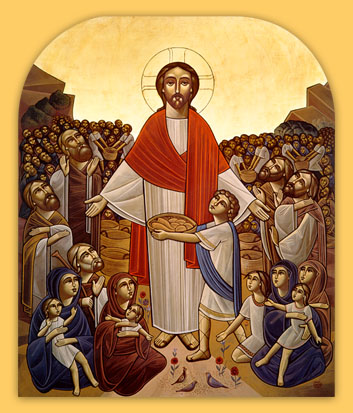
Then Jesus took the loaves, and when he had given thanks, he distributed them to those who were seated; so also the fish, as much as they wanted.  John 6: 11.

I love the Thanks-giving holiday for a lot of reasons.  First, I think few things are more important for our spiritual lives than learning to approach God and His world with gratitude.  I have known several people in my life who just had that aura of holiness about them, and without exception they all had the gift of gratitude.  Secondly, I think we find ourselves very near to the Sacred when we join with friends and family and collectively recall our gifts.  Finally, as we stand on the cusp of the season of Advent and prepare to celebrate the gift of the Incarnation, giving thanks just feels like the right thing to do.

I ran across this Orthodox prayer the other day, and it struck me as ideal for giving thanks for all our gifts:

“Glory to You who have called me forth into life;
Glory to You who have revealed the beauty of the universe to me;
Glory to You who have opened  both heaven and earth to me as an eternal book of wisdom;
Glory to Your eternity in the midst of this temporal world;
Glory to You for Your mercies known and unknown;
Glory to You for every sigh of my sorrow;
Glory to You for every step in my life, and for every moment of joy;
Glory to You, O God, unto the ages!”

God give us all grateful hearts,

James R. Dennis, O.P.

© 2011 James R. Dennis

Becoming a Prayer

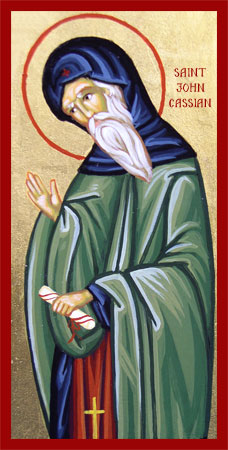
 In fact, everything that we have in our minds before the time of prayer is inevitably brought back by memory when we are praying.  So whatever kind of people we want to be in our prayer time, we want to be before we begin to pray.  St. John Cassian, Conferences.

I found  this quotation from Cassian in today’s reading in a wonderful little book, Drinking from the Hidden Fountain: A Patristic Breviary.  In The Conferences (written between 426 and 429 A.D.), Cassian surveyed much of the work of the Desert Fathers.  The Desert Fathers, along with Cassian, provided the foundation of the monastic movement.

St. Cassian reminds us that we cannot separate our prayer life from the balance of our lives.  We cannot separate the way we pray from the way we live.  If our lives are rushed, jumbled and frantic, our prayers will reflect that.  If our lives are self-centered or consumed by pettiness, our prayer lives will not be much different.  If our relationships with our brothers and sisters are shallow and insincere, our relationship with the One God will reflect that as well.

We work so hard to compartmentalize our lives.  We tell ourselves: “This is the face I show at work; this is the way I act with my friends; and this is the kind of person I want to project at prayer.”  Ultimately, I think we’ll find that God sees through these persona, sees beyond the walls we try to build.  We can trust that His love exceeds even our capacity to fool ourselves.  Rabbi Heschel wrote that “To pray is to dream in league with God, to envision His holy visions.”

Cassian rightly notes that as we approach the Almighty in prayer, we bring our lives before Him, whether we intend to or not.  Thus, the Christian life calls us into that process of continual conversion, until our daily lives perfectly reflect the kind of person we want to bring to God in prayer, a person who can rightly share in God’s “holy visions”.  We are all already in a conversation with God, whether we know it or not.  Cassian asks how authentic, how honest and how loving we want that conversation to be.

God watch over thee and me,

James R. Dennis, O.P.

© 2011 James R. Dennis

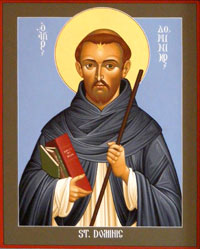
Why I Am a Dominican

Blessed Lord, who caused all holy Scriptures to be written for our learning: Grant us so to hear them, read, mark, learn, and inwardly digest them, that we may embrace and ever hold fast the blessed hope of everlasting life, which you have given us in our Savior Jesus Christ; who lives and reigns with you and the Holy Spirit, one God, for ever and ever. Amen.

As novices in the Dominican Order, we regularly engage in study and reflection together.  On a weekly basis, we will take a passage or a concept and each write an essay.  Each of us will then comment on each other’s work, so that our study becomes part of the bond of our community.  This past week, our topic required us to reflect on our experience of worship.  Mary, one of my Dominican sisters,  wrote the following piece:

Well the week of worship started a little differently.

Last week I was driving my son to the doctor and we passed the sign leading to one of our prominent suburban parishes currently in a rector search. My son said, “Mom – don’t you really wish you could be preaching THERE on Sundays instead of at Saint Otherwise?” Translated from his tone of voice and prior verbalizations – instead of at your hopelessly small, hopelessly underfinanced, hopelessly eccentric and, generally hopeless little congregation. To my surprise I said “yes. I really would.” And then rattled on a bit about frustration and other human emotions. I hate to confess having said this or felt this. I have a very faithful (to the Lord) and loyal (to the church and if truth be known, to its not always so humble rector) congregation. Which is or at least so far has been, persistently small, persistently underfinanced, as eccentric a collection as one would find in any given Episcopal parish, albeit without a lot of average types to absorb the eccentricity. After almost eight years of what sometimes feels like slogging [as our neuralgic deacon likes to point out] (in the most neuralgic ways possible, without ever demonstrating the desire to do anything other than get dressed up on Sundays and chant things) no visually apparent results, I hate to confess that it is harder than I would like it to be to stay with it. And of late I have more often than I would like to confess to you all had a harder time than I should in putting in the prayer, the time, the study, the listening, and all the things that go into the relationship of priest and parish, and preacher and assembly. And I wonder if there will ever be an answer to what seems to be the most lingering congregational question, asked every Sunday possibly since the parish was founded 126.3 years ago: does anyone remember which can has the decaf in it?
Yet when I come on Sunday morning, wondering as I always do whether there will actually be a minyan’s worth of people in the pews, and feeling alone and somehow unblessed in my priestly ministry, getting over the weekly “what do you mean you’re not coming to church and can I ever get out of here on Sunday morning without an argument” conversation at home, we begin the celebration of the Eucharist, with whoever is there, there and whoever is not somehow brought present perceptibly by those who are (I don’t know how they do it but they do – could it be, well love?), and somehow a change begins. Not in them but in me. I look at them and listen to them, and I get up to preach the word with the gospel open behind me. I walk into their midst and they change me. And I don’t remember anything about the suburban church or the congregation replete with potential foursomes for golf and loads of well-groomed acolytes and articulate lectors. And the sermon I didn’t think I had, has me instead, and the words start to remold themselves from what I imagined and hacked away at into living connections to lives and I am somehow between the gospels and those lives as the connections are knit. And I wash my hands among the innocent and begin the Eucharistic prayer. And I look up and down the center aisle through the glass windows of the doors someone came and put in because they knew the old ones needed replacing. And I see a world from which they have gathered. And I look down and the way the sun plays with the reflections of things around the foot of my chalice I see myself, and I see them and I see the high altar cross, all reflecting from the cup from which our Lord asked us to drink together. and I am where I should be, with them, in their dyings and risings and dying again. And I am graced. And I am humbled. And I am home. And another week will turn. Ethel has died at 92 and her son didn’t want a service. and Sophia will have her tenth birthday prayer. Nicholas will insist he is not a saint, and his mother will agree with him. Carolyn will tell us about the family for which we prayed for a year while their six-year-old son died of cancer giving birth to twins. The senior warden will ask if we can have a secret location for the vestry meeting so that the deacon doesn’t come. I will try to think of a canonical way this could happen. Joyce will go back to her husband and son for another six months of abuse in a remote part of Florida and she will weep as I pray a blessing for her and tell her to come back safe in April. George will have laughed at the jokes in my sermon. Mary Kay and Mike will be at home because Mike is sick from the fourth to the last radiation treatment on his spine. When I say “take them in remembrance that Christ died for you” Trish and I will catch each other’s eyes and she will know we are with her when she goes to painful divorce proceedings on Tuesday. The Organ will have ciphered, even though the repair guy said there was nothing wrong. Christ is among us, and hopeless is not a word that can be thought or spoken. That is my Sunday last. And if God is gracious, my Sunday next as well I think.
And I have tried to keep you all, as I do each Sunday, in the midst of its consecratory power.
Peace to all

I am both humbled and proud to call Mary my sister. When I read her piece, I found myself simply struck speechless.  And then I realized that I am too rarely speechless.    And that is why I am a Dominican.
Shabbat Shalom,
James R. Dennis, O.P.

© 2011 James R. Dennis

Our Dangerous Habits

Jesus said, “Then the kingdom of heaven will be like this. Ten bridesmaids took their lamps and went to meet the bridegroom. Five of them were foolish, and five were wise. When the foolish took their lamps, they took no oil with them; but the wise took flasks of oil with their lamps. As the bridegroom was delayed, all of them became drowsy and slept. But at midnight there was a shout, `Look! Here is the bridegroom! Come out to meet him.’ Then all those bridesmaids got up and trimmed their lamps. The foolish said to the wise, `Give us some of your oil, for our lamps are going out.’ But the wise replied, `No! there will not be enough for you and for us; you had better go to the dealers and buy some for yourselves.’ And while they went to buy it, the bridegroom came, and those who were ready went with him into the wedding banquet; and the door was shut. Later the other bridesmaids came also, saying, `Lord, lord, open to us.’ But he replied, `Truly I tell you, I do not know you.’ Keep awake therefore, for you know neither the day nor the hour.”  Matt. 25:1-13.

In the Lectionary today, we encounter the Parable of the Bridegroom. The parable sounds a well-known warning to us:  “Keep awake therefore, for you know neither the day nor the hour.”  While Jesus is teaching us about the need for preparation, I think he’s also pointing out just how difficult the Christian life will be.

In the field of law, we have a doctrine called stare decisis.  It means that once a case has been decided a certain way, future cases that present similar facts should generally be decided the same way.  The doctrine allows for consistency (the hobgoblin of small minds), predictability and promotes a certain sense of fairness.

We apply a similar practice in our own lives.  Each of us have developed a habit, a rubric, for dealing with telemarketers, panhandlers on the street, or older people who corner us to talk about their aches and pains.  We have a formula for how we deal with the coworker who stops by our desk to talk about their family problems.  These rubrics, these habits, offer us a certain level of efficiency.  But they may also pose a danger to our spiritual lives because they prevent us from having to think about individual situations or feel compassion when confronted with a unique situation.

The great German philosopher Martin Heidegger called this “unreflective everydayness.”  I think, in part, that’s what Jesus was warning us about in the Parable of the Bridegroom.  By relying on our preprogrammed responses, we miss the opportunity to see the face of Christ in those around us, and perhaps, to be the face of Christ for them.  I do not know how often God intervenes in the world around us, but I suspect it’s a lot more than most of us realize.  Christ’s advice “Keep awake” may well offer the best cure for the spiritual doldrums that obfuscate  God’s presence in the world.

 To paraphrase one of  the great prophets of our age, Ferris Bueller, “The Christian life moves pretty fast. If you don’t stop and look around once in a while, you could miss it.”

Shabbat Shalom,

 James R. Dennis, O.P.

© 2011 James R. Dennis

The Sin of Hopelessness

One of the seven deadly sins recognized by the medieval church was acedia, which gets poorly translated into “sloth.”  The words “despair” or “hopelessness” offer a  much better translation.  I’ve encountered these far too often in my life:  suicide, alcoholism and depression run deep in my family.

It’s important to offer a couple of clarifications at this point.  First, I’m not so much talking about clinical depression here.  (Clinical depression generally arises from a complex miasma of environmental circumstances and chemical imbalances.)   I’m also not talking about the sort of transitory sadness that is an appropriate response to a loss or to tragedy.  I’m talking about that deep, spiritual despair most of us encounter at some point of our lives.  Acedia involves a kind of spiritual resignation: the conclusion that not only can I not do anything about this situation, but also the suspicion that God cannot or will not help either.

It seems cruel to suggest that people like this, who live with genuine pain which they may have had little role in, are somehow in a sinful state.  And that would be true if we view sin as simply doing something forbidden or naughty or wicked.   I think it’s important, however, that we recognize this notion of sin is too narrow and ignores the true nature of sin.  Sin, simply, is separation from God.  And anyone who’s encountered deep spiritual despair knows quickly we can fall into feeling distant from God and God’s help.

In other words, I think we need to re-imagine sin as not just something we’ve done, but as a state in which our souls are in peril.  Sin may or may not involve some act of the will or volitional conduct.  (The question of whether our brothers and sisters had some role or fault in their current state must not be our concern.  That determination lies exclusively within the Almighty’s province.) Regardless of whether it’s volitional, the danger to our souls is just as real, and the danger lies in our separation from the Source of our lives and healing.

To paraphrase Woody Allen very roughly, eighty percent of the Christian life is just showing up.  I sometimes wonder if that’s not an important distinction between Judas Iscariot and St. Peter.  Both betrayed Jesus; both broke trust and listened to their lesser angels.  Judas despaired, and resigned himself to his failure.  Peter, on the other hand, kept showing up.

Jesus said that the devil did “not stand in the truth, because there is no truth in him. When he lies, he speaks according to his own nature, for he is a liar and the father of lies.”  John 8:44.   One of the most powerful lies our Ancient Enemy ever tells us is:  “This will never change.  This will never get better.  Things will always be this way.”  As Christians, hope provides our greatest weapon against the despair and resignation which the world so often pulls us toward.

In an earlier post, we discussed the Parable of the Good Samaritan (https://dominicanes.wordpress.com/2011/10/23/go-and-do-likewise/).  Most of us will never encounter someone lying on the road, beaten almost to death.  We are far more likely to meet a friend, neighbor or co-worker deep in the well of despair or hopelessness.  Sometimes, we may merely let them know that “it gets better.”  Sometimes, we may take them into our prayer lives, our hearts, or simply offer them a cup of coffee.  Sometimes, the situation calls for nothing more than sacred listening, or the ministry of simply being present to the struggle.  Either way, when we act as the hands, the voice and face of Christ, we engage in good and holy work.

Our faith often demands that we muster hope when it seems extraordinarily foolish, that we recognize God’s power to recreate when desperation has overcome us.  Our confidence lies in knowing that our Redeemer lives.  Thus, we pray in the Collect for this week that the living God increase our faith, our charity, and our hope. Like faith and charity, hope is a gift from God: a gift for which we should all pray.

God watch over thee and me,

James R. Dennis, O.P.

© 2011 James R. Dennis

Thoughts on Stewardship and Michelangelo

The Pharisees went and plotted to entrap Jesus in what he  said. So they sent their disciples to him, along with the Herodians, saying, “Teacher, we know that you are sincere, and teach the way of God in accordance with truth, and show deference to no one; for you do not regard people with  partiality. Tell us, then, what you think. Is it lawful to pay taxes to the emperor, or not?” But Jesus, aware of their malice, said, “Why are you putting  me to the test, you hypocrites? Show me the coin used for the tax.” And they  brought him a denarius. Then he said to them, “Whose head is this, and whose title?” They answered, “The emperor’s.” Then he said to them, “Give therefore to the emperor the things that are the emperor’s, and to God the things that are
God’s.”   Matt. 22:15-21.

We find ourselves in the season of stewardship in most churches, and I thought we might discuss a few thoughts on the subject.  (Don’t worry, this isn’t going to be a plea for you to give money to the Church or to the poor, although both are very good ideas.)  But we might discuss our stewardship over the most important asset we have been given:  our lives.

Scripture teaches that each of us were made in the image of God, and St. Paul instructs us that our lives are not our own:  we were bought with a price.  I wonder how often we treat the lives we were given with awe and reverence, and how often our lives are squandered?  We are appropriately reminded at the beginning of each Lent, “Dust thou art and to dust thou shalt return.”   Our time and lives are precious, and we are called to treat ourselves as craftsmen creating a precious work.

When asked how he sculpted a work as wonderful as David, Michelangelo supposedly said, “I looked at the stone and began to carve away everything that was not David.”  Other sources report that he said, “I saw the angel in the marble and carved until I set him free.”

It seems to me that our spiritual struggle works something like that.  As good stewards of our lives, we need to take stock of those things that stand between us and God.  Whether it’s our material possessions, a long-standing quarrel or some hell of our own making, we are called chip away those things that are not part of the authentic lives we were meant to lead.  Our lives do not belong to Caesar, to the mortgage company, to fashion, or to any addiction.  Rather we are, all of us, children of the Living God.

Reading today’s lectionary from St. Matthew, we might appropriately ask, have we given to the Lord those things that belong to Lord?  Have we welcomed his children, or fed them when they were hungry?  Have we offered our friendship to those who are outcasts?  Have we treated our time in prayer and worship as a treasured gift, or as an obligation to be met?  As good stewards, God calls each of us to look at the angels within our lives and (like Michelangelo) set them free.

Shabbat Shalom,

James R. Dennis, O.P.

© 2011 James R. Dennis

The Spiritual Wisdom of Steve Jobs

It has been a week since Steve Jobs passed away, but I wanted to take a while before writing about it. It seemed like these events required a bit of time for reflection. In part, the whole thing seemed sort of “secular.” Even the wry corporate logo seems to grin at the notion of eating from the tree of knowledge: not humanity’s finest moment.

Jobs and his work at Apple seem like the classic, remarkable success story, but maybe that’s not the case. If you’ve taken the time to listen to Job’s 2005 commencement address at Stanford, I’m sure you found it moving. If you haven’t yet heard it, you can find it here: http://www.youtube.com/watch?v=UF8uR6Z6KLc. In the address, Jobs tells three stories that reveal the secret of his success: failure and catastrophe.

Although our world values success perhaps above all else, Jobs talked about: (1) dropping out of college; (2) getting fired from Apple; and (3) being diagnosed with pancreatic cancer. Each of these experiences, which would have looked like failure or disasters to all the world, contributed (and perhaps even brought about) that remarkable life. Jobs noted his inability, at the time of these events, to see the connections between them and their impact on his life. He described this as difficulty in connecting “the dots.”

Our world places remarkable value on success and accomplishment. It motivates so much of what we do, so much of who we are. Sometimes, what looks like sucess is nothing more than tenacity. As Winston Churchill once said, “Success consists of going from failure to failure without loss of enthusiasm.” Nothing in Churchill’s statement, or Jobs’ commencement address, should come as a surprise to those of us who believe in the living God.

The story is as old as our removal from Eden, as old as being trapped between the Red Sea and the Egyptian army. We’ve been telling this story since the destruction of the Temple and the Babylonian Exile. Each of these events seemed like catastrophes at the time. We hear the same story as Cleopas and another disciple traveled to Emmaus, despondent and convinced that Jesus’ ministry was a great “failure.” Later, they learned that this through this catastrophe, God was at work, displaying His capacity to reveal Himself even in the horror of Golgotha.

So, while we may rightfully celebrate our successes, I hope we don’t miss the opportunity to see God at work in those events where we seem to have stumbled. When that Sunday school class doesn’t quite come off like we hoped or when confronted with a pastoral situation that we feel powerless to help with, we might remember the power of an unseen God to connect the dots. In the Church, we call that “faith.”

Requiescat en pace, Mr. Jobs.

James R. Dennis, O.P.

© 2011 James R. Dennis

Sh’ma Yisrael

During this interstice between the High Holy Days of Rosh Hashanah and Yom Kippur, I thought we’d examine the Sh’ma Yisrael, or Shema. For many observant Jews, the Shema offers the central prayer service of Judaism. The recitation of this prayer twice daily is a commandment. As a good Jew, Jesus would certainly have followed this practice. Deuteronomy instructs us that we shall say this prayer upon lying down and rising up. Deut. 6-7. Some have suggested that the Shema functions less as a prayer than as a creed, a statement of the binding principles of the Jewish faith.

The first section of the prayer begins: “Hear, oh Israel, the Lord our God is One. You shall love the Lord your God with all your heart, and with all your soul and with all your might.” We might examine those two sentences more closely.

The opening line of the Shema reminds God’s people of God’s oneness. This sometimes seems counterintuitive to us. God created the universe in all its complexity, hears the prayers of billions and billions of people and knows their needs. God authored gravity and the immense power of the stars. Surely, that God is incredibly complex. Sometimes, God seems like such a decent fellow, when all is going well and our bellies are full. At other times, when life isn’t going so well, we perceive God as uncaring, or perhaps even vengeful. Yet the Shema reminds us that of the simplicity of God, despite the complexity we might perceive.

St. Thomas wrote often of the simplicity of God. Summa Theologiae 1.3.7; Summa contra Gentiles 1.22.9-10. In fact, Aquinas described God as “infinitely simple.” The Oneness, or simplicity of God, provides the unifying power, the unifying event and idea for our disparate perceptions. No other ideology or vision or philosophy can replace God as the single, ultimate ground of meaning. The Shema expresses God’s sovereignty, God’s kingship, over all creation and creatures.

St. John comments on God’s oneness when he observes quite simply that “God is love.” 1 John 4:8. This leads us directly to the second passage of the Shema which continues: “And you shall love the Lord your God with all your heart, and with all your soul and with all your might.” This passage suggests that our love of the Lord must be single-minded: there is no room here for duplicity. If we truly loved unambiguously, there would be little space in our hearts for the separation of sin. Learning to love God this way requires a great deal of us. Great love always does. The Shema provides the central focus of our spirituality: loving God. But it also teaches that where we encounter love, we encounter the divine center of things.

Jesus clearly understood the central nature of the Shema. A scribe asked Christ, “Which is the greatest commandment?” Jesus answered directly from the Shema:

Jesus answered, ‘The first is, ‘Hear, O Israel: the Lord our God, the Lord is one; you shall love the Lord your God with all your heart, and with all your soul, and with all your mind, and with all your strength.’”

Mark 12: 29-30. Jesus then added a gloss to the Shema, taking his reference from Leviticus:

“The second is this, ‘You shall love your neighbour as yourself.’ There is no other commandment greater than these.”

Mark 12:32. Jesus teaches that these two commandments provide the framework, the scaffolding, for the balance of the Scriptures. Matt. 22:40. Because “our neighbors” are made in the image of God, our love of them reveals the depth of our love of the Almighty. Our capacity to love God is bounded by our capacity to love “our neighbors.”

Understanding the Shema, then, isn’t something clever or broad-minded Christians can discuss at cocktail parties. It provides us with a deep and profound understanding of who Jesus was and what he thought was important. Praying the Shema at morning and in the evening, then, helps us to understand Christ. We have a great deal to learn from our Jewish brothers and sisters. Jesus thought so, anyway.

Shabbat Shalom,

James R. Dennis, O.P.

© 2011 James R. Dennis

A God We Can Do Business With

When those hired about five o’clock came, each of them received the usual daily wage. Now when the first came, they thought they would receive more; but each of  them also received the usual daily wage. And when they received it, they grumbled against the landowner, saying, `These last worked only one hour, and you have made them equal to us who have borne the burden of the day and the scorching heat.’ But he replied to one of them, `Friend, I am doing you no wrong; did you not agree with me for the usual daily wage? Take what belongs to you and go; I choose to give to this last the same as I give to you. Am I not allowed to do what I choose with what belongs to me? Or are you envious because I am generous?’ So the last will be first, and the first will be last.”  Matthew 20: 9-16

The parable of the laborers challenges us to our very core, because here Jesus is asking us to re-think something very fundamental:  our idea of fairness.  This is hard for us, because having eaten of the tree of the knowledge of good and evil, we have a pretty good idea of what is fair and what isn’t.  And there’s something about the notion of people who worked all day being paid the same as those who worked for just an hour that just doesn’t seem right.  But Jesus is doing something more than simply challenging our notion of justice:  he’s challenging our very notion of God.

Because one of the things we want, perhaps more than anything else, is a God we with whom we can strike a bargain.  We want a God we can do business with.  I want to agree with God that if  He will take away my receding hairline, then I will pray every night.  Or we want to tell God that if we lead reasonably holy lives, then He will take good care of us and nothing much bad will happen.  Or we want to cut a deal that if we don’t do anything really bad, and go to church most Sundays, then he’ll let us into heaven.  We want a God we can understand, dicker with, and hold to a particular set of rules.  We want a God with whom we can do business.

Jesus teaches us, however, that this is not the sort of God we have.  He teaches us that the normal rules don’t apply here, that the first will be last and the last will be first.  He teaches that our notion of fairness doesn’t even come close to God’s mercy.  This is one of the problems with the prosperity gospel and with preachers who suggest that hurricanes are God’s judgment on certain places or that diseases like AIDS are God’s judgment on a given community.  Jesus regularly taught that God doesn’t work that way.  He said:  “Or those eighteen who were killed when the tower of Siloam fell on them—do you think that they were worse offenders than all the others living in Jerusalem?”  Luke 13:4.  This is just one of the ways, as a dear friend of mine observed, in which biblical fundamentalism is fundamentally un-biblical.  Even the parable of the prodigal son calls upon us to re-think what fairness really looks like to a God of limitless compassion.

Jesus teaches that our notion of fairness deeply underestimates the Kingdom, where the first will be last and the last will be first.  We don’t have a God we can do business with, or a God we can hold to a given set of contractual obligations.  Instead, we have a God who calls us into a covenant which is based on a loving relationship rather than a set of contractual rights to which we can hold the Almighty to when things aren’t “fair.”  Rather than a God we can do business with, Jesus teaches that we will find a God of infinite mercy and grace.  I think that’s probably a better deal anyway.

Shabbat Shalom,

James R. Dennis, O.P.

© 2011 James R. Dennis
The Feast of the Holy Cross

Today, on the Feast of the Holy Cross, I thought I’d share a thought from one of our Franciscan brothers.

“God wants useable instruments who will carry the mystery, the weight of glory, and the burden of sin simultaneously, who can bear the darkness and the light, who can hold the paradox of incarnation–flesh and spirit, human and divine, joy and suffering at the same time, just as Jesus did.”

–Fr. Richard Rohr, Things Hidden

Pax,

James R. Dennis, O.P.