Tag Archives: Love

He Loved Them to the End

Now before the festival of the Passover, Jesus knew that his hour had come to depart from this world and go to the Father. Having loved his own who were in the world, he loved them to the end. The devil had already put it into the heart of Judas son of Simon Iscariot to betray him. And during supper Jesus, knowing that the Father had given all things into his hands, and that he had come from God and was going to God, got up from the table, took off his outer robe, and tied a towel around himself. Then he poured water into a basin and began to wash the disciples’ feet and to wipe them with the towel that was tied around him. He came to Simon Peter, who said to him, “Lord, are you going to wash my feet?” Jesus answered, “You do not know now what I am doing, but later you will understand.” Peter said to him, “You will never wash my feet.” Jesus answered, “Unless I wash you, you have no share with me.” Simon Peter said to him, “Lord, not my feet only but also my hands and my head!” Jesus said to him, “One who has bathed does not need to wash, except for the feet, but is entirely clean. And you are clean, though not all of you.” For he knew who was to betray him; for this reason he said, “Not all of you are clean.”

After he had washed their feet, had put on his robe, and had returned to the table, he said to them, “Do you know what I have done to you? You call me Teacher and Lord–and you are right, for that is what I am. So if I, your Lord and Teacher, have washed your feet, you also ought to wash one another’s feet. For I have set you an example, that you also should do as I have done to you. Very truly, I tell you, servants are not greater than their master, nor are messengers greater than the one who sent them. If you know these things, you are blessed if you do them.

Jesus said, “Now the Son of Man has been glorified, and God has been glorified in him. If God has been glorified in him, God will also glorify him in himself and will glorify him at once. Little children, I am with you only a little longer. You will look for me; and as I said to the Jews so now I say to you, `Where I am going, you cannot come.’ I give you a new commandment, that you love one another. Just as I have loved you, you also should love one another. By this everyone will know that you are my disciples, if you have love for one another.” John 13:1-17, 31b-35.

In the Lectionary reading for today, we feel the reverberation of Mary of Bethany’s act of devotion from Monday’s reading.    In many respects, today’s Gospel contains the adhesive which bonds all of the events of, and the readings for, Holy Week together.  St. John reports that Jesus knew that the hour of his death had come; this passage records how chose to spend his last hours with his friends.  “Having loved his own who were in the world, he loved them to the end.”

In washing the disciple’s feet, Jesus assumed the role of a servant, of a slave.  Reluctant to have his Rabbi assume this role, Peter protested.  Jesus assured Peter, however, that this way was the path to sharing in the life of Christ.  He teaches them that serving each other offers a great blessing.  Jesus teaches, “For I have set you an example, that you also should do as I have done to you.”

In a terribly poignant moment, Jesus calls his disciples “little children” and tells them his time with them has grown very short.  Jesus then offers them the great commandment:  to love each other as He has loved us.  We love each other because He loved us first, and showed us how to do it.  I’ve come to believe, the more time I spend in John’s Gospel, that there’s really only one sin:  the failure to love.

I have often heard church leaders talk about a “path to discipleship”, and I suppose that’s a useful discussion in some sense.  But Jesus says that there’s only one true marker of his disciples:  they love each other, reflecting Christ’s love.  Jesus paints a portrait of divine vulnerability, reflecting a God who entered into human history, subjected Himself to shame, and poured Himself out to show us how to live.  This moment in John’s Gospel, in which God acts like a slave, constitutes a critical moment of God’s self-revelation.  “This,” Jesus tells us, “this is what the Kingdom looks like.”

Love serves as the glue which binds the readings for Holy Week together.  Love rode into Jerusalem on a donkey.  Love filled the house with a fragrant oil.  Love lights the way so that the darkness will not overcome us.  Love surrounds us in a great cloud of witnesses.  And tomorrow, Love will be hoisted on a Cross.

Lord, have mercy on me, a sinner,

James R. Dennis, O.P.

© 2012 James R. Dennis

Six Days Before the Passover

Six days before the Passover Jesus came to Bethany, the home of Lazarus, whom he had raised from the dead. There they gave a dinner for him. Martha served, and Lazarus was one of those at the table with him. Mary took a pound of costly perfume made of pure nard, anointed Jesus’ feet, and wiped them with her hair. The house was filled with the fragrance of the perfume. But Judas Iscariot, one of his disciples (the one who was about to betray him), said, “Why was this perfume not sold for three hundred denarii and the money given to the poor?” (He said this not because he cared about the poor, but because he was a thief; he kept the common purse and used to steal what was put into it.) Jesus said, “Leave her alone. She bought it so that she might keep it for the day of my burial. You always have the poor with you, but you do not always have me.” When the great crowd of the Jews learned that he was there, they came not only because of Jesus but also to see Lazarus, whom he had raised from the dead. So the chief priests planned to put Lazarus to death as well, since it was on account of him that many of the Jews were deserting and were believing in Jesus.  John 12:1-11.

Perhaps Mary of Bethany shows us the only authentic response to Holy Week: she responds with an extravagant love.  At a dinner for the Lord, she acted out of  lavish charity and kindness toward Jesus.  She anointed him for his death, filling the house with this remarkable and extravagant fragrance.  (Scholars report that this perfume would have cost the yearly wages of a laborer.)  I think St. John meant to remind us that following Jesus might sometimes require that we forego counting the cost of loving God.

Mary’s extravagance carries with it the sort of sensuality that would have made the other guests, and almost any good Jew, more than a little uncomfortable.  She anointed Jesus’ feet and wiped them dry with her hair.  No respectable Jewish woman would have behaved this way. Social custom would have limited this sort of affectionate behavior to a woman’s husband or perhaps her family, and even then, only in private.  Mary’s conduct  reflects a profoundly intimate relationship.

In anointing Jesus, Mary prefigures the preparation of His body for burial.  But although  Jesus awaited His death with his friends, the presence of Mary’s brother (Lazarus) reveals that death holds no finality here. Mary anoints Jesus for his burial while he is still living.  Lazarus, who was dead, has joined them for dinner.  We encounter here the intersection of death and life, woven together in a story of reckless mercy, in the context of having a meal together.  St. John teaches us that death will have its say, but not the last word.

John juxtaposes Mary’s remarkable fidelity with Judas’ treason.  Similarly, he contrasts the beauty of the perfume’s scent and this deeply affectionate moment with the ugly brutality of the impending crucifixion in which hatred seems to win the day.  St. John tells us these events took place six days before the Passover.  The timetable echoes with the days of creation, and through his Passion Jesus makes “all things new again”.  Jesus renews all creation through the his death on the Cross, a death by which love conquers fear, hatred and death itself.

Pax Christi,

James R. Dennis, O.P.

 © 2012 James R. Dennis

How Can These Things Be?

From Mount Hor the Israelites set out by the way to the Red Sea, to go around the land of Edom; but the people became impatient on the way. The people spoke against God and against Moses, “Why have you brought us up out of Egypt to die in the wilderness? For there is no food and no water, and we detest this miserable food.” Then the LORD sent poisonous serpents among the people, and they bit the people, so that many Israelites died. The people came to Moses and said, “We have sinned by speaking against the LORD and against you; pray to the LORD to take away the serpents from us.” So Moses prayed for the people. And the LORD said to Moses, “Make a poisonous serpent, and set it on a pole; and everyone who is bitten shall look at it and live.” So Moses made a serpent of bronze, and put it upon a pole; and whenever a serpent bit someone, that person would look at the serpent of bronze and live.  Numbers 21: 4-9.

Jesus said to Nicodemus, “Just as Moses lifted up the serpent in the wilderness, so must the Son of Man be lifted up, that whoever believes in him may have eternal life.
“For God so loved the world that he gave his only Son, so that everyone who believes in him may not perish but may have eternal life.”  John 3: 14-16.

The first passage, from the Book of Numbers, deeply challenges our understanding of Yahweh, and confronts our  imaginations.  It takes place against the backdrop of  the consistent theme within the Exodus narrative:  forty years of wandering in the wilderness, marked by the people’s resistance, God’s punishment, the people’s repentance, and God’s restoration.   As the people near the end of their journey, a campaign of rebellion  arose against both Moses and God.  The text reports that God addressed this issue through an infestation of seraphs (poisonous snakes).

One might reasonably conclude that there were already poisonous snakes among the Hebrew people, spreading this contagion of destructive grumbling.  While we may struggle with the notion that God sent the snakes down upon the Hebrews, I want to suggest that those vipers were merely visible tokens of the toxic rebellion that already enveloped them.  The serpents which would lead to their deaths were already there.  God merely revealed a physical sign of the spiritual reality they already confronted.  It’s as though the Lord were telling them, “This is what your way looks like.”

In this fitting Lenten passage, when the people acknowledge their complicity for their situation, God intervenes to save them.  God instructs Moses, who creates a bronze serpent placed upon a pole.  When those bitten by snakes look upon this image, this icon, God heals them.  Out of this destructive pattern of sin and death, God will raise up a way of healing.  This leads us to the Gospel reading for today.

In the Gospel passage, we encounter the terribly interesting figure of Nicodemus, a Pharisee who secretly followed Jesus.  Immediately prior to this passage, Jesus challenges Nicodemus’ imagination, teaching about the need for a man to be “born again”.  Jesus then reveals his messianic role, drawing on the iconic image of Moses lifting up a serpent in the wilderness.  This statement carries with it the double-meaning of the Christ being raised up as the Messiah and of Jesus raised up on the cross.  As with the earlier passage from Numbers, Jesus describes a spiritual reality that the world cannot yet comprehend.

The cross will become the source of healing this broken world.  Just as with the bronze serpent, that which we perceived as an image of fear and death becomes the source of our new life.  Again, it’s as though God said to the world, “All right.  This horror on Golgotha is the result of the way you want to do business.  But I can still create life where you see nothing but death and shame.”

 Jesus teaches Nicodemus that believing  in the Son “lifted up” provides the way to eternal life.  It’s important to note that the Greek phrase John uses isn’t actually “believes in him” but rather “believes into him”.  In other words, Jesus isn’t describing an intellectual assent to a set of propositions, but rather a radical submission and new way of life.  Jesus offers eternal life, therefore, to those who join in His way of life.  Thus, St. Paul could accurately say “I no longer live, but Christ lives in me.”  Gal. 2:20.

John’s Gospel offers us a deeply rooted theology of the cross.  In fact, for St. John, the cross operates as the fulcrum point upon which all of human history turns.  This passage seems to answer, perhaps a little obliquely, Nicodemus’ question, “How can these things be?”  John 3:9.

Jesus points to a spiritual reality we cannot yet see, that we cannot yet understand.  Our new life, our eternal life, in Christ originates in one mysterious, glorious, incomprehensible notion:  “God so loved the world that he gave his only Son, so that everyone who believes into him may not perish but may have eternal life.”  Salvation arises through God’s love, revealed on the cross.  In the depth of this Lenten season, that’s good news.

Shabbat shalom,

© 2012 James R. Dennis

Moses and the Bronze Serpent © Fr. Lawrence Lew, O.P.

The Grace of Charity

If you have received from God the gift of knowledge, however limited, beware of neglecting charity and temperance.  They are virtues which radically purify the soul from passions and so open the way of knowledge continually.
The way of spiritual knowledge passes through inner freedom and humility.  Without them we shall never see the Lord.
“Knowledge puffs up whereas charity builds up.”  [1 Cor. 8:1.]  Therefore, unite knowledge with charity and by being cleansed from pride you will build yourself up and all those who are your neighbors.

Charity takes its power to build up from the fact that it is never envious nor unkind.  It is natural for knowledge to bring with it, at the beginning anyway, some measure of presumption and envy.  But charity overcomes these defects:  presumption because “it is not puffed up” and envy because “it is patient and kind.”  [1 Cor. 13:4]

Anyone who has knowledge, therefore, ought also to have charity, because charity can save his spirit from injury.
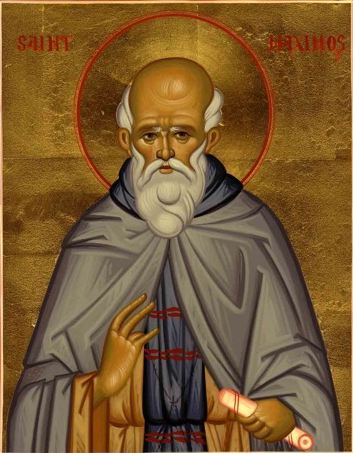
      –Maximus the Confessor (from Drinking from the Hidden Fountain)

The Dominican Order expects its brothers and sisters to spend an hour a day in prayer and an hour a day in study of Holy Scripture and theology.  Frankly, I love that part of the rubric of my Order, because learning and study come easy to me.  Maximus the Confessor reminds me that maybe it comes a bit too easy.

Maximus was a monk who lived from around 580 to 662.  Most scholars believe that he was born in Constantinople; we know he was tried there for heresy.  Maximus suffered both exile and torture for the faith.  After his death, the Church declared his innocence of the charge of heresy.  Both the Orthodox and Roman Catholic churches recognize him as a saint and a Father of the Church.  He famously said, “Theology without practice is the theology of demons.”

Looking to the reading today, Maximus reminds us that our study and our learning must be rooted in the ancient Christian practice of charity.  Charity carried a slightly different meaning then; it meant more than simply giving money to the poor.  Charity meant loving kindness without limits.  This notion was related to the Hebrew concept of chesed or the Greek word agape.

Thomas Aquinas said that all the virtues pointed toward charity, the highest of the virtues, and charity (or love) makes all the other virtues possible.  Charity is a grace, and we practice charity because we were first loved by God.  Charity relates closely to humility because both enable us to lay aside our own desires and concerns for a while.  As a friend of mine observed, the Christian virtue of humility doesn’t mean we think less of ourselves; it means we think of ourselves less.

Maximus reminds us that all our study, all our theology, will leave us parched and withered unless we drink from the well of charity.  Our knowledge is always deeply incomplete and inadequate.  Rabbi Heschel once said, “The tree of knowledge grows upon the soil of mystery.”  Part of that mystery lies in God’s limitless capacity to love, and our capacity to reflect His love through the practice of charity.  Thus, as Heschel observed, “When I was young I admired clever people.  Now that I am old, I admire kind people.”

I wish you a good and holy Lent,

James R. Dennis, O.P.

© 2012 James R. Dennis
N.B.  Earlier this week, through a computer glitch or some sort of (as yet unknown) operator error, this post was erroneously published as a draft with many, many typos.  I was mortified.  The irony of that event, in a post about humility is not lost on me, and I hope you’ll accept my apologies.

Looking For the Kingdom

Then the king will say to those at his right hand, ‘Come, you that are blessed by my Father, inherit the kingdom prepared for you from the foundation of the world; for I was hungry and you gave me food, I was thirsty and you gave me something to drink, I was a stranger and you welcomed me, I was naked and you gave me clothing, I was sick and you took care of me, I was in prison and you visited me.’  Then the righteous will answer him, ‘Lord, when was it that we saw you hungry and gave you food, or thirsty and gave you something to drink?  And when was it that we saw you a stranger and welcomed you, or naked and gave you clothing?  And when was it that we saw you sick or in prison and visited you?’  And the king will answer them, ‘Truly I tell you, just as you did it to one of the least of these who are members of my family, you did it to me.’  Then he will say to those at his left hand, ‘You that are accursed, depart from me into the eternal fire prepared for the devil and his angels;for I was hungry and you gave me no food, I was thirsty and you gave me nothing to drink, I was a stranger and you did not welcome me, naked and you did not give me clothing, sick and in prison and you did not visit me.’ Then they also will answer, ‘Lord, when was it that we saw you hungry or thirsty or a stranger or naked or sick or in prison, and did not take care of you?’  Then he will answer them, ‘Truly I tell you, just as you did not do it to one of the least of these, you did not do it to me.’  Matt. 25: 34-46.

By now, we Christians should be accustomed to the notion of an invisible reality.  We believe in an unseen God at work in the world, that simple bread and wine are transformed every week into the body and blood of Jesus, and that the Church operates as the mystical body of Christ today.  So, the reading from today’s Lectionary shouldn’t surprise us:  Christ tells us that somehow our works of charity reveal and reflect His presence in the world.

Charity doesn’t mean simply rich people writing checks to poor people, and it’s quite different from what we think of as philanthropy.  It’s Latin root is caritas, meaning loving-kindness.  In Greek the word is agape, and in Hebrew, the word is chesed.  The ancient Christian virtue of charity both glorifies and reflect’s God’s love.  In no small measure, charity is less about what we do and more about who we are.

Let’s return to the notion of this invisible reality about which Jesus is teaching us.  He tells us that our charity (our ability to love our ability to see his love and be his love) to those on the margins of society actually reveals our love for Him.  This is the tricky part:  “Just as you did it to one of the least of these who are members of my family, you did it to me.”  Jesus tells us that through the mystery of the  incarnation, every one of us can still encounter the Living Christ.  Our compassion for the hungry, the stranger,  the sick and the prisoners will allow us to find Jesus.  If we take Scripture seriously, we are all compelled to accept this mystical reality.

This entire discussion takes place within the context of Jesus telling us that our ability to love without flinching provides the standard by which the sheep and the goats will be separated.  Our salvation depends on our charity.  Jesus offers all this as an explanation of what the Kingdom is like. 

I don’t think Jesus is simply talking about heaven, or about some distant time when we’ll find out what it’s like to see the face of God.  Remember, Jesus also told us, “the kingdom of God is among you now.”  Luke 17:21. 

I know:  the world today doesn’t look much like the Kingdom.  That sick lady in the hospital, that homeless smelly old man, and that tattooed gang member in the County Jail:  they just don’t seem to have much in common with the Son of God.  But I believe in the invisible reality that Jesus told us we couldn’t yet see.  And I believe that our charity will  form our souls and will reveal the kingdom among us.

Shabbat Shalom,

James R. Dennis, O.P.

© 2011 James R. Dennis

Go And Do Likewise

“A man was going down from Jerusalem to Jericho, and fell into the hands of robbers, who stripped him, beat him, and went away, leaving him half dead. Now by chance a priest was going down that road; and when he saw him, he passed by on the other side.  So likewise a Levite, when he came to the place and saw him, passed by on the other side.  But a Samaritan while traveling came near him; and when he saw him, he was moved with pity.  He went to him and bandaged his wounds, having poured oil and wine on them. Then he put him on his own animal, brought him to an inn, and took care of him.  The next day he took out two denarii,  gave them to the innkeeper, and said, ‘Take care of him; and when I come back, I will repay you whatever more you spend.’  Which of these three, do you think, was a neighbor to the man who fell into the hands of the robbers?”  He said, “The one who showed him mercy.” Jesus said to him, “Go and do likewise.”  Luke 10: 30-37.

In this morning’s readings in the Daily Office, we encounter the Parable of the Good Samaritan.  It’s an extraordinarily familiar story, although it appears only in the Gospel of St. Luke.  Perhaps we know the story so well that it’s lost some of its impact.  Familiarity, after all, breeds indifference long before it breeds contempt.  So, we may have forgotten just how shocking this story was to the audience in first century Palestine.

Part of what’s been lost to us is the geography.  The story takes place on the long, downhill road between Jerusalem and Jericho, a road also known at the time as the “Bloody Pass” or “The Way of Blood.”  The road meanders and the topography provides the perfect environment for an ambush:  a paradise for bandits and robbers.

There’s nothing surprising then about the man being beaten, robbed and left for dead on that road.  Nor would Jesus’ audience have been particularly surprised to hear Jesus tell that the priest and the Levite both passed the man by, in fact they walked by “on the other side” of the road.  (The laws of ritual purification at the time might actually have recommended this practice to devout Jews.)  We aren’t surprised by Jesus’ casting the priests and Levites in the role of the villains:  both Jesus and John the Baptist had been doing that for a while.

But the notion that the Samaritan showed the quality of mercy, the notion of the Samaritan as the hero of the story, that would have astonished and befuddled Jesus’ first century audience.  The Samaritans and the Jews had hated each other for hundreds of years at the time Jesus told this story.  The Samaritans had desecrated the Temple with human bones.  The Jews reciprocated.  According to the Mishna (the first major work of Rabbinic Judaism), “He that eats the bread of the Samaritans is like to one that eats the flesh of swine” (Mishna Shebiith 8:10). So, hearing about a “good Samaritan” would have bewildered Jesus’ audience.  It would be the equivalent of a modern parable about the “good Klansman” or a “good Zeta” (one of the Mexican drug cartels) or the “Good Al-Qaeda fighter.”

Thus, part of Jesus’ message continues the message of the sixth chapter of Luke’s Gospel.  “But I say to you that listen, Love your enemies, do good to those who hate you,bless those who curse you, pray for those who abuse you.”  Luke 6:27-28.  This commandment teaches that there is nothing soft or squishy or indulgent about the Christian life.  It is, as C.S. Lewis observed, “as hard as nails.”  And this teaches one of the many ways that Christianity must remain counter-cultural:  loving our enemies, caring for those who’ve wounded us, will never be a popular position.

I think, however, this parable suggests at least one more critical lesson.  Jesus teaches us about our most common sin, if not our greatest sin: indifference.  Jesus contrasts the compassion which overtook the Samaritan with the indifference of the priest and the Levite.  It’s a sharp criticism directed at the religious leaders of his day, and I’m not so certain it doesn’t apply with equal force today.  Indifference, perhaps even more than hatred, may have the greatest power to separate us from God.

So, I’m wondering, who did I not notice?  Who did I walk to the other side of the road to avoid?  As Bruce Cockburn wrote, “Lord, spit on our eyes so that we can see.”

Shabbat shalom,

James R. Dennis, O.P.

© 2011 James R. Dennis

The Feast of the Holy Cross

Today, on the Feast of the Holy Cross, I thought I’d share a thought from one of our Franciscan brothers.

“God wants useable instruments who will carry the mystery, the weight of glory, and the burden of sin simultaneously, who can bear the darkness and the light, who can hold the paradox of incarnation–flesh and spirit, human and divine, joy and suffering at the same time, just as Jesus did.”

–Fr. Richard Rohr, Things Hidden

Pax,

James R. Dennis, O.P.

September 11

It was, by all accounts, a beautiful late summer morning.  The temperatures were in the upper sixties, and the sun shone brightly against a brilliant blue sky.  At 8:46, American flight 11 traveling from Boston to Los Angeles crashed into the North Tower.  There were 91 passengers aboard.  At 9:03, United Airlines flight number 175 flew into the South Tower.  It carried 65 passengers, as it travelled from Logan Airport to  Los Angeles.  Then, at 9:30, American Airlines flight 77, which carried 64 passengers, crashed into the Pentagon. A total 2,996 people died, including the 19 hijackers.  At 10:10 a.m., United Airlines flight 93 crashed in rural Shanksville, Pennsylvania killing all 44 passengers aboard.

I thought we might consider those events ten years ago, about the consequences of that day, and particularly the changes in our spiritual lives as a result of that morning.  Among those consequences, our nation has been at war for the last ten years.  4,442 soldiers gave their lives in Operation Iraqi Freedom, and over 1,600 died in Operation Enduring Freedom.  It is extremely difficult to estimate the number of civilian casualties of these wars, but most calculations range somewhere between 150,000 and 1.2 million.  Estimates of the costs of these wars range between one and three trillion dollars, and they continue to mount.

We mourn the deaths of the 2,996 Americans who lost their lives ten years ago, and we may also mourn the hundreds of thousands of Iraqis and Afghans who have died since then.  We might also mourn the shameless treatment of prisoners in Abu Ghraib, and the wisdom of a place like Guantanamo Bay.  We might mourn the loss of our civil liberties in the Patriot Act and the Foreign Intelligence Services Act, which now authorizes searches of emails and wiretapping without judicial review.  We actually engaged in a national debate about whether torture was acceptable, and somehow that debate seemed to hinge on a cost-benefit analysis.

The September 11 attacks led to a remarkable resurgence of faith, or at least faithful activity.  People across the nation filled our churches and rediscovered a need for a spiritual answer to a very worldly problem.  We are right to wonder why people turn to God in times of crisis, but cannot sustain that conversion.  The biblical witness, however, teaches that we have been doing that for thousands of years.  Somehow, as our fears are calmed and our wounds are bound, our spiritual indifference resumes.  While time has healed some of those wounds, we have also acquired a sort of national amnesia about how sorrowful, broken and vulnerable we felt.

One of the other consequences of that day is our national fear, and perhaps prejudice, of those who practice the Muslim faith.  I’m not sure who the boogeyman was on September the 10th, but after September 11, he clearly had a middle-eastern face.  Somehow, these men became “Muslim terrorists,” although we did not use the term “Christian terrorists” to describe the Ku Klux Klan.  As Kofi Anan, has observed so wisely, the problem lies “not with the faith but with the faithful.”

We might look to the reflection of the Archbishop of Washington on this subject.  He said:

All violent acts of injustice, acts of destruction, and the taking of innocent life find their origin in the attitudes of the human heart. Evil dwells within. Jesus told us it is not what enters in from outside that defiles a person but the things that come from within are what defile. (Mark 7:15).

The great cosmic struggle between good and evil, between light and darkness, between peace and war, between harmony and violence, between love and hatred, begins first in each human heart, is waged there – and true peace depends on the outcome.

I am deeply troubled by the observation of Archbishop Desmond Tutu, who said: “We failed the biggest test posed by the 9/11 outrage: In our anger and dismay we failed to recognize our common humanity, that we are made for love and that acts such as those committed on that day are an aberration.”

There’s a certain irony in the name of the massive bureaucracy we created in the wake of September 11:  the Department of Homeland Security.  To create that department and fund our wars, we have incurred a national debt of trillions of dollars.  We might well ask about the security risks posed by that debt.  I suspect the people of Jericho felt very secure behind their walls, and the Philistines probably felt very safe with Goliath on their side.  The Egyptians probably rightly thought of themselves as a superpower as they approached the Red Sea.

I wonder if we really ever will achieve security, and I think the Scriptural witness suggests that our only security, our only real safety, lies in God.   Our spiritual efforts to move forward and get past that day may require us to take a great many risks.  Then again, the Cross is full of just such risks.

Pax,

James R. Dennis, O.P.

© 2011 James R. Dennis