Tag Archives: Jesus

Shocked and Grieving (A Sermon)

“And when he heard this, he was shocked and went away grieving, for he had many possessions.” In the name of the Living God, Father, Son and Holy Spirit.

You know, if there’s someone in your life that you’d really like to get rid of, there are a number of ways to make them feel unwelcome. You could ask them to help you scrub the grout on your tile kitchen floors.  Or, you could invite them out to dinner at the all you can eat liver buffet.  Or, you could ask them to come to your parish and give a stewardship sermon.  And so, when my good friend, your priest, the father of my godson, invited me here today, well, I took the hint.  But we’ll get to that stewardship thing in just a bit.

For now, let’s look at that young man in today’s gospel. The Gospel tells us that Jesus was setting out on a journey, when a man runs up to him and kneels down. So, from the very beginning, we know that this story concerns an interruption, a profound interruption while Jesus was about to do something else.  It’s interesting how many of the gospel stories work like that, and how our own spiritual lives work that way too.  Woody Allen famously said, “If you want to hear God laugh, tell him your plans.”

So this young man comes to Jesus and asks him, “Good teacher, what must I do to inherit eternal life?”  Jesus replies with a stark statement: “No one is good but God alone.” Jesus begins by reminding him, and us, that God is the source of everything that is good.  We acknowledge that in our liturgy every Sunday when we sing “Praise God, from whom all blessings flow.” Or perhaps we say, “All things come from Thee, o Lord, and of Thine own have we given thee.”  The point in all three is the same: all goodness, all that is, comes from God alone.

Jesus then tells this young man “You know the commandments: ‘You shall not murder; You shall not commit adultery; You shall not steal; You shall not bear false witness; You shall not defraud; Honor your father and mother.'” And the young man tells Jesus, “Rabbi, I have kept all of these commandments since I was a child.” Of course, Jewish tradition held that no one other than Abraham and Moses had been able to keep the law.

But I want us to look at this man carefully.  He’s not a bad guy, not a bad guy at all.  In fact, I think he’s a lot like you and like me.   When we get to that part of the service where we confess our sins, sometimes we’re kinda scratchin’ our heads and lookin’ at our shoes and thinking, “Surely there’s something bad, some minor infraction,  I’ve committed this week.”

This young man comes to Jesus mostly for an affirmation.  What he wants, like what we want, is for Jesus to tell him that everything’s okay, that he’s doing everything he’s supposed to, and when it comes to him, eternal life is pretty much a shoe-in. That’s what he wants, and I think that’s what we want, too.  But that’s not exactly what’s going to happen.

The next line is often overlooked when we hear this story.  “Mark tells us Jesus, looking at him, loved him and spoke.” Somehow, despite his self-assurance, despite his remarkable confidence in his own spiritual maturity, Jesus loves this young man. Just like He loves us. There’s only one authentic response to that kind of love:  gratitude.

Our Savior tells him, “You lack one thing; get up, sell what you own, and give the money to the poor, and you will have treasure in heaven; then come, follow me.” That phrase Jesus uses, “get up”, it’s a phrase often used in the stories of Jesus healing people.  In Capernaum, when Jesus heals the paralytic, he tells him to “get up, take your mat and go home.” In the 5th Chapter of Mark, when he casts demons out of a man by the shore, he tells him to get up and go home and tell your friends what God has done for you. He uses the phrase again and again.  And so, we begin to wonder, is Jesus trying to heal this man, too?

Yet, like so many of us, this man can’t take this teaching.  Scripture tells us: “When he heard this, he was shocked and went away grieving, for he had many possessions.”  Jesus often taught about the cloud that our possessions, our wealth, place over our spiritual lives.  The only subject he talked about more was the Kingdom of God, and in today’s reading He talks about both.

I want to suggest to you that one reason that young man went away sad is that he had betrayed his own true nature.  You know, it’s one of the first things we learn about God in Scripture.  He gives us a world, he gives us a garden, he gives us freedom and gives us a promised land to live in, and then, he gives us a son. God is by nature a giver, a giver who teaches us again and again how to be generous.  Each breath I draw, I draw because of God.  The car I drove up here in this morning, very early this morning, that came from God.

Someone might say, “No, that car came from the money you made at your job.  That didn’t come from God.” But the simple truth is, that job came from God, as did my education, which flowed out of the parents God gave me.  Praise God, from whom all blessings flow. Everything, my family, my friends, and my godchildren: all of these things came from God.

You may remember that just last week, Jesus told us that to receive the kingdom of God, we must receive it as little children. Children, particularly little children, can’t make their own way in the world.  Rather, most everything they have, they have gotten as a gift.  Somehow, we’ve managed to forget that.  In a culture that perpetuates the myth of the self-made man, we’ve forgotten that we are utterly dependent on God for our very lives.

And when the Book of Genesis tells us that we are made in the image of God, I think it means, in part, that we were made to be givers.  We were created to be generous creatures.  And that’s part of the reason why that wealthy young man went away so sad.  He had betrayed his real nature, the purpose for which he was created.  He had revealed that his heart was with his treasure, the things he owned. He had denied his real nature, revealing that his heart lay in a wealth he could not part with.

We might well ask ourselves, what are the things of which we are not willing to let go?  What’s getting in the way of our relationship with the God who sustains our lives in every moment? This young man who came up to Jesus lived in a world of scarcity.  Perhaps he wondered, who’ll take care of me when I’m old, or what happens if the economy takes another turn for the worse?  You see, it’s largely a question of who we trust.  Do we trust in our real estate holdings, our financial institutions, or our ability to make a living, or do we trust in the God who spun the world into existence?  Learning to give is important for our spiritual lives, in part, because it’s a matter of learning to trust. Like many of us, this rich young man comes to Jesus with reverence, but without much trust.

On the other hand, most of us know that giving is in our very nature.  We give to our children, our spouses, our friends, and this giving brings us joy.  When we give to the Church, however, we also engage in a liturgical act.  We know that our word liturgy means “the work of the people.”  It is a private sacrifice for a public good. And so, when we write those checks on Sunday morning, it’s not the same thing as writing a check to the grocer, or the dentist, or the landlord.  Our giving to God becomes a sacrament, just like the sacrament we’ll receive at the altar shortly. And we’ll gather those offerings together, and ask God to take them and make something holy out of them. And in that, I hope we also can find our joy.

As a congregation, our treasure reveals itself in all sorts of acts of liturgy, acts which are both spiritual and material. When we baptize a child or tend to the sick or serve food in a shelter, we are make an offering of a materialism of the sweat and tears of our days, not a materialism of furniture or jewelry or 401ks. Becoming a disciple of Jesus means that we have been adopted into this new life.

Our giving, our charity, is both a spiritual event and a denial of the materialism that the world embraces.  We choose a radically different kind of materialism.  In that sacramental moment, as we make our gifts to God, I hope we can hear Jesus’ voice, wondering if we might do just a little more, just as he asked that rich young man to do so long ago.

Shabbat Shalom,

James R. Dennis, O.P.

© 2012 James R. Dennis

The Keys We All Carry

When you hear the words: “Peter, do you love me?” [John 21:15] imagine you are in front of a mirror and looking at yourself.
Peter, surely, was a symbol of the Church.  Therefore the Lord in asking Peter is asking us too.  
To show that Peter was a symbol of the Church, remember the passage in the Gospel, “You are Peter, and on this rock I will build my Church and the gates of hell will not prevail against it.  I will give you the keys of the kingdom of heaven. [Matt. 16:18]
Has only one man received those keys?  Christ himself explains what they are for: “Whatever you loose on earth will be loosed in heaven.” [Matt. 18:18] If these words had been said only to Peter, now that he is dead who would ever be able to bind or loose?
I make bold to say that all of us have received the keys.  We bind and loose.  And you also bind and loose.
Whoever is bound is separated from your community; he is bound by you. When he is reconciled, however, he is loosed, thanks to you because you are praying for him. 

Augustine, Serm. Morin 16 (Miscellanea Agostiniana)

My travel schedule remains quite hectic, so once again this will be a short post.  I found this bit of wisdom in Thomas Spidlik’s wonderful little book, Drinking from the Hidden Fountain.

I think Augustine points out several things that matter a great deal for our spiritual lives.  As we read Scripture, we should read it as if Jesus were speaking to us personally.  Jesus wasn’t only explaining to the a first century audience about the kingdom of heaven: He was speaking to you and to me.

I think too often we think of the keys to the kingdom as something that Jesus left as an inheritance to Peter, or to the Twelve, and perhaps we might even go so far as to think our clergy have inherited it.  Augustine suggests, and I believe, that those keys are our inheritance, yours and mine. So, when I withhold forgiveness from my brother or sister, I hold that sin bound.  (I think one could seriously question exactly who is bound up when forgiveness is withheld, but perhaps we’ll talk about that another time.) On the other hand, each of us have the power to loose our brothers and sisters.

We can loose them by forgiving them; we can loose them from the burdens they carry; we can loose them by righting an old wrong or through our acts of charity and kindness.   Jesus left us these keys, left them to you and to me.  So, I wonder, what locks will we open today?

God watch over thee and me,

James R. Dennis, O.P.

© 2012 James R. Dennis

And Now You’re Here

My travel schedule remains quite busy, so today’s post will be short.  Today is the feast day of St. Thérèse of Lisieux, a Carmelite nun who lived a short life from 1873 to 1897.

I ran across this in Celtic Daily Prayer, from The Song of Simeon:

And now You’re here–
the light is shining where
the darkness used to be–
and all the world
is a different place…

…and every single day a fresh beginning.

As St. Thérèse once said,  “May you not forget the infinite possibilities that are born of faith.”

James R. Dennis, O.P.

© 2012 James R. Dennis
Have Salt in Yourselves

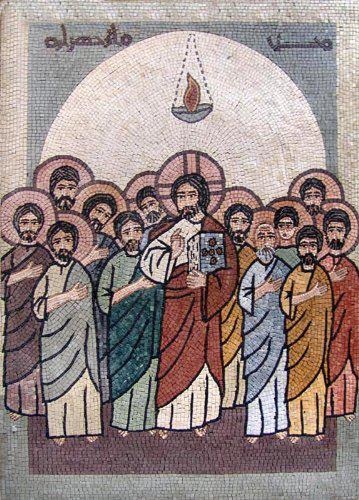
John said to Jesus, “Teacher, we saw someone casting out demons in your name, and we tried to stop him, because he was not following us.” But Jesus said, “Do not stop him; for no one who does a deed of power in my name will be able soon afterward to speak evil of me. Whoever is not against us is for us. For truly I tell you, whoever gives you a cup of water to drink because you bear the name of Christ will by no means lose the reward.

“If any of you put a stumbling block before one of these little ones who believe in me, it would be better for you if a great millstone were hung around your neck and you were thrown into the sea. If your hand causes you to stumble, cut it off; it is better for you to enter life maimed than to have two hands and to go to hell, to the unquenchable fire. And if your foot causes you to stumble, cut it off; it is better for you to enter life lame than to have two feet and to be thrown into hell., And if your eye causes you to stumble, tear it out; it is better for you to enter the kingdom of God with one eye than to have two eyes and to be thrown into hell, where their worm never dies, and the fire is never quenched.

“For everyone will be salted with fire. Salt is good; but if salt has lost its saltiness, how can you season it? Have salt in yourselves, and be at peace with one another.” Mark 9:38-50.

Jesus had a funny habit.  He often encountered those who would try to draw a boundary between the holy and the unholy, between the sacred and the profane, between the clean and the unclean.  Whenever he ran into these boundaries, Jesus would step on the other side.  He did it with lepers. He did it with tax collectors. He did it with prostitutes and those who were sick and lame and even the Gentiles.  He even crossed the boundaries drawn around the Sabbath. He did it so often that we begin to wonder if there’s a message in there.  And in today’s Gospel, He does it again.

In the first section of this passage, the disciples express their concern that someone outside their circle has also engaged in the healing ministry. It’s at least worth noting that this passage in Mark follows the scene in which the disciples were squabbling among themselves about who was the greatest. Mark 9:32-34. That story ended with Jesus taking a small child (another outsider in that society) into his arms and explaining that those who welcome such a child actually welcome Jesus and his Father. In today’s reading, Jesus continues teaching his disciples about letting go of their sense of self-importance and widening the circle of holiness far beyond themselves.

We hear the echoes of John’s criticism (he was “not following us”) too often as we hear Christians speak of other believers, other denominations, and other faiths. Jesus wants to “welcome” the children; John is concerned with those who are “not following us.” Jesus affirms even the simplest act of kindness, a cup of water, done in His name.

Jesus sharply contrasts those who offer kindness, who encourage, with those who get in the way of someone’s journey to the Father. Those who scandalize these little ones or cause them to stumble, Jesus teaches that Gehenna awaits them. (Gehenna, the Valley of Hinnom, was a ravine south of Jerusalem where child sacrifices to Moloch had taken place.  Jeremiah 7:31; 32:35.)  After King Josiah destroyed the altar to Moloch, it became a continuously burning trash, used as a metaphor for the torment of the wicked.

Jesus teaches that we must rid ourselves of whatever causes us to stumble, even if it’s our hand, our foot, or our eye. I don’t think Jesus is advocating self-mutilation.  He’s telling His disciples to separate themselves from anything that interferes with their path to the Father. He advocates a clear focus on the things that bring us closer to the kingdom of God, even if we must shed ourselves of ourselves.

The closing paragraph may seem strange to our modern ears.  At the time, however, both salt and fire were used medicinally.  They were used to treat wounds; thus, Jesus is saying that everyone will find their healing, their wholeness. To “share salt” with someone, to share a meal, carried with it the implication of fellowship.  The expression “have salt in yourself” meant “be at peace with yourself.”  Salt was also used as a preservative and carried with it the implication of permanence. Jesus thus encourages His disciples (and us) to find our healing and reconciliation by making peace with ourselves, and with our brothers and sisters.

I pray we find that peace, not by excluding others from the circle of holiness, but my looking for God and His kingdom in all times and all places.

Shabbat Shalom,

James R. Dennis, O.P.

© 2012 James R. Dennis
A Simple Prayer

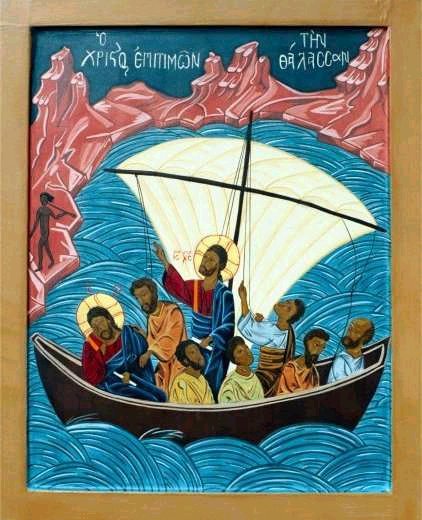
“O Holy Christ,
bless me with Your presence
when my days are weary
and my friends few.”

From Celtic Daily Prayer.

I have been traveling, and so this will be a brief post.  It’s my hope to offer this prayer for  the intentions of “the sick, the friendless, and the needy.”

Be Opened

Jesus set out and went away to the region of Tyre. He entered a house and did not want anyone to know he was there. Yet he could not escape notice, but a woman whose little daughter had an unclean spirit immediately heard about him, and she came and bowed down at his feet. Now the woman was a Gentile, of Syrophoenician origin. She begged him to cast the demon out of her daughter. He said to her, “Let the children be fed first, for it is not fair to take the children’s food and throw it to the dogs.” But she answered him, “Sir, even the dogs under the table eat the children’s crumbs.” Then he said to her, “For saying that, you may go– the demon has left your daughter.” So she went home, found the child lying on the bed, and the demon gone.

Then he returned from the region of Tyre, and went by way of Sidon towards the Sea of Galilee, in the region of the Decapolis. They brought to him a deaf man who had an impediment in his speech; and they begged him to lay his hand on him. He took him aside in private, away from the crowd, and put his fingers into his ears, and he spat and touched his tongue. Then looking up to heaven, he sighed and said to him, “Ephphatha,” that is, “Be opened.” And immediately his ears were opened, his tongue was released, and he spoke plainly. Then Jesus ordered them to tell no one; but the more he ordered them, the more zealously they proclaimed it. They were astounded beyond measure, saying, “He has done everything well; he even makes the deaf to hear and the mute to speak.” Mark 7:24-37.

In today’s lectionary readings from Mark’s Gospel, we find a number of challenges.  In the first passage, on our initial reading, Jesus seems a bit stingy, argumentative, and a little off His game. A few years ago, reading this passage, I was struck by the idea that it seemed like Jesus had to be coaxed into being charitable. At first, we may wonder if this is the same Jesus we know. I want to suggest that this passage presents exactly the Jesus we know.

We should begin with the observation that this first passage contains a number of unusual characteristics.  First, it’s located in Tyre, which is not an ordinary place for Jesus to be roaming around. That’s Gentile country, and no place for a good Jewish boy to be.  Secondly, he’s approached by a Syrophoenecian woman.  At that time, it would be unusual for any woman to approach a Jewish rabbi, let alone a Gentile woman. (Further, the identification  of this woman as “pheonician” implies an association with the Canaanites. In fact, Matthew’s Gospel describes this woman as a Canaanite.)  Unlike many of the Gospel stories, in this story Jesus’ disciples (his regular companions) are absent. Finally, her daughter has a demon, and so we know we’re encountering a spiritual battle here.

I think part of the answer lies in the original Greek text.  When the woman comes and asks Jesus to cast the demon from her “little daughter” (thygatrion in Greek), He replies that the children should be fed first before the “little dogs” (kynariois). In one sense, I think we can read this story, picturing Jesus with a twinkle in his eye as He draws from this woman an affirmation of the faith which He knew was present in her. In another sense, I think St. Mark uses this story to contrast Jesus with the Jewish authorities of the day, who would certainly have rejected this woman and her concerns.

Mark uses this as a narrative device.  It’s worth noting that Jesus doesn’t tell the woman “no”; rather, he says, “not yet.”  I don’t think Mark uses this story to portray Jesus as ambivalent or wishy-washy on the subject of ministering to the Gentiles. Rather, I think he’s telling this story to portray the difference between Jesus and the religious authorities of His day.

Jesus expels the demon from this woman’s child “because of this reasoning” (dia touton ton logon). We therefore ask, what was it that she said?  She told Jesus that even the crumbs He had to offer would suffice to heal her daughter. We hear an echo of this in the old 1928 Book of Common Prayer, and I’m not so sure we shouldn’t still be praying this: “We are not worthy so much as to gather up the crumbs under Thy table.” From this Gentile woman we hear a remarkable affirmation of trust, of need, and of faith.

Mark’s second story similarly challenges the traditional notion of holiness of that time.  Jesus travels toward the region of the ten cities (the Decapolis).  Again, He remains deep in the territory of the Gentiles. The crowd brings a deaf man with a speech impediment to Jesus.  Jesus’ offers a deeply intimate act of healing this man.  He thrusts his hands into the man’s ears, spits and then touches the man’s  tongue. These things would have clearly violated the purity codes of that time, which viewed saliva as unclean.

As Jesus looks to heaven, he groans.  (Groans offers a far better translation of the Greek word estenaxen than “sighs.”)  In other words, this healing involves Jesus’ identification with the suffering and distress of this man.  Mark tells the story of an earthy (incarnational) healing, rather than a purely metaphysical event.  Mark reports Jesus speaking in the Aramaic language:  Ephphatha (which means “be opened.”)

The passage rings with the echo of Isaiah’s promise:  “Then the eyes of the blind shall be opened, and the ears of the deaf unstopped….” Isaiah 35:5-6. In one sense, it’s the deaf man’s ears that are opened.  In other sense, it’s the Gentile woman who is opened to the ministry of Jesus.  Viewed in another light, it’s about Jesus being open to the pain of the world. In yet another sense, it’s the entire world (and not just the people of Israel) to whom Jesus opens a new way of holiness.  I pray that we will be open to his healing ministry as well.

Shabbat Shalom,

James R. Dennis, O.P.

© 2012 James R. Dennis

Interpreting the Law

How must we interpret this law of God?  How, if not by love? The love that stamps the precepts of right-living on the mind and bids us put them into practice. Listen to Truth speaking of this law: “This is my commandment, that you love one another.”  Listen to Paul:  “The whole law,” he declares, “is summed up in love”; and again: “Help one another in your troubles, and you will fulfill the law of Christ.” the law of Christ–does anything other than love more fittingly describe it?  Truly we are keeping this law when, out of love, we go to the help of a brother or sister in trouble.

But we are told that this law is manifold.  Why?  Because love’s lively concern for others is reflected in all the virtues.  It begins with two commands, but soon embraces many more.  Paul gives a good summary of its various aspects.  “Love is patient,” he says, “and kind; it is never jealous or conceited; its conduct is blameless; it is not ambitious, not selfish, not quick to take offense; it harbors no evil thoughts, does not gloat over other people’s sins, but is gladdened by an upright life.” Moral Reflections on Job by Gregory the Great.

I ran across this passage earlier this week in the Readings for the Daily Office from the Early Church. St. Gregory makes a number of powerful observations that help us understand Holy Scripture.  Principally, he enjoins us to read the Torah (the Law) through the lens of love.  Jesus taught that all of the law and all of the prophets hung on the commandments to love God and love our neighbors. Matt. 22:40.

In Jesus’ day (just as in ours), some argued that the scriptures should be read as an exclusionary document.  Thus, many (lepers, those with physical infirmities, women, and outsiders) were excluded from the Temple.  Jesus asked the Pharisees, “What have you done to help them inside?” Through acts of love and mercy, Jesus brought many back within the circle of faith.  The Pharisees used the scriptures as a club to beat people away from the gates of the church.  Jesus, interpreting the scriptures through the template of love, showed us how to welcome God’s children back home.

We see this same tension played out in the book of Job.  Job endures calamity upon catastrophe without blaming God for what’s happened to him.  His three “friends” (Eliphaz, Bildad, and Zophar) arrive to convince him that God always punishes evil and rewards good, so somehow, Job must’ve sinned. Job’s friends do have a superficial understanding of the scriptures; they just don’t understand much about love, or God for that matter.  (A very good friend of mine observes that Job’s friends did everything right: until they open their mouths.)

Those who follow Christ know that all scripture, the Old Testament and the New, must be read with eyes of love. If we love God and His children, we cannot leave those in need behind.  And once we recognize that love provides the Rosetta Stone by which we interpret all the teachings of Scripture, we find ourselves compelled to love more broadly and more deeply.  We find ourselves breathing in a climate of grace, and we begin to  learn the language of blessing.

God watch over thee and me,

James R. Dennis, O.P.

© 2012 James R. Dennis
Doing the Word

Every generous act of giving, with every perfect gift, is from above, coming down from the Father of lights, with whom there is no variation or shadow due to change. In fulfillment of his own purpose he gave us birth by the word of truth, so that we would become a kind of first fruits of his creatures.

You must understand this, my beloved: let everyone be quick to listen, slow to speak, slow to anger; for your anger does not produce God’s righteousness. Therefore rid yourselves of all sordidness and rank growth of wickedness, and welcome with meekness the implanted word that has the power to save your souls.

But be doers of the word, and not merely hearers who deceive themselves. For if any are hearers of the word and not doers, they are like those who look at themselves in a mirror; for they look at themselves and, on going away, immediately forget what they were like. But those who look into the perfect law, the law of liberty, and persevere, being not hearers who forget but doers who act-they will be blessed in their doing.

If any think they are religious, and do not bridle their tongues but deceive their hearts, their religion is worthless. Religion that is pure and undefiled before God, the Father, is this: to care for orphans and widows in their distress, and to keep oneself unstained by the world. James 1:17-27.

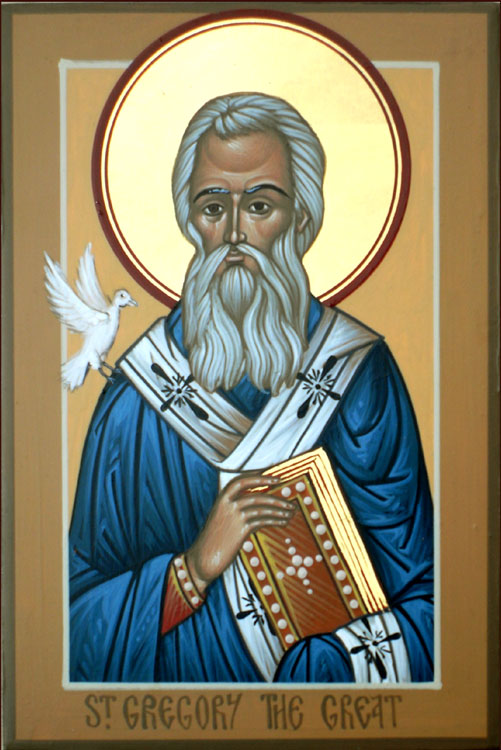
I have always loved today’s Lectionary reading from James, for a number of reasons. He reminds us that following Jesus requires living into our beliefs, rather than merely accepting certain concepts or propositions. I love good, challenging theology, but that’s not James’ purpose. This is deep, richly practical Christianity.

James begins with the remarkable statement that all our works of love come down from the Father of lights. All of our charity, all of our generosity, all of our love: James tell us these come from heaven. This means, of course, that God constantly works to better this world.

James then cautions the believers to be quick to listen, although slow to speak and slow to anger. As I listen to squabbles within my own denomination, or heaven forbid read the flaming posts that carry on religious debates on the blogosphere, I understand why the Church thought James’ epistle needed to be in the Bible.

James advises us all to stop and think a few moments before we respond with a quick anger and find ourselves regretting patiently. Mother Teresa once made a powerful observation about the genuine function of Christian speech.  She said, “I am a little pencil in the hand of a writing God who is sending a love letter to the world.”

He warns us against fooling ourselves: all our piety, if we can’t bridle our tongues and live into the life of Christ, is nothing more than self-deception. At that time, the most vulnerable members of society were widows and orphans. They lived on the margins of first century Palestine.  James cautions the Church: real religion consists of taking care of God’s children when they can’t take care of themselves and avoiding the stain if sin.  James calls that the “pure religion,”and everything else is just holy smoke.

Shabbat Shalom,

James R. Dennis, O.P.

© 2012 James R. Dennis

Letting Go of Fear

If someone really does not care whether they live or die it is hard to threaten them.  If our identity lies in whose we are, and not just who we are, then even loss of reputation will only be a temporary setback.  The need to be someone, to have clout, to command respect, to have prestige or position, these are shackles every bit as strong as those of materialism.
To be seen as holy, or spiritually mature, someone of depth, having a quiet authority: are these not also ambitions, or bolsters of our status?
If we can only reach the true poverty and yieldedness of not “needing to be” anything (even a humble nothing), then we will be truly invisible.  We will be unable to be bought by any pressure.

–Celtic Daily Prayer

Today’s reading from Celtic Daily Prayer offers us several lessons about our spiritual lives. I taught a class Sunday on one of the primary threats to our relationship with God: fear.  When we turn onto the highway of fear, we find that it’s full of toll roads.  Fear may be our Ancient Enemy’s most powerful weapon.  When I look back on the worst mistakes I’ve made in my life, I find that they were motivated by a common denominator:  I was afraid.

Fear can manifest itself in a number of ways.  The more our wealth increases, the more we fear that we might lose it: through thieves, market fluctuations, taxation, or that it just might not be enough. Thus, Jesus regularly cautioned us about letting go of our wealth.

Today’s reading, however, cautions us about another kind of fear: the need to be well thought of, to command respect, and achieve spiritual advancement.  It’s a caution that I take to heart.  From a very early age, I wanted to be “the smartest guy in the room.”  And for those of us in the religious life, our fear can push us into a fear of spiritual disrespect.  It’s a very special kind of pride, which can manifest itself in a particular type of fear.  We wonder, “What if they don’t listen? What if they think I’m shallow?”

And yet, Jesus taught us that the kingdom of heaven would belong to the poor in spirit. Matt. 5:3. What does spiritual poverty mean to us?  The notion reminds me of Job, who lost everything there was to lose. (Coincidentally, the readings from the Daily Office are focussing on Job. The icon above is a very old icon of Job.)  Every last bit of pride was stripped from him. And yet, Job never abandoned the Source of his life. In many ways, I think the Book of Job is one of the most Christian books of the Old Testament.

The trick, I think, lies in remembering (as Celtic Daily Prayer reminds us) not so much who we are as whose we are. We are beloved children of God and we belong only to Him.  Nothing else matters so much as that.  And when we come to that realization, like Job, we find comfort in the knowledge that “my Redeemer lives.”  Job 19:25.

May the peace of Christ disturb you profoundly,

James R. Dennis, O.P.

 © 2012 James R. Dennis

To Whom Can We Go?

Jesus said, “Those who eat my flesh and drink my blood abide in me, and I in them. Just as the living Father sent me, and I live because of the Father, so whoever eats me will live because of me. This is the bread that came down from heaven, not like that which your ancestors ate, and they died. But the one who eats this bread will live forever.” He said these things while he was teaching in the synagogue at Capernaum.

When many of his disciples heard it, they said, “This teaching is difficult; who can accept it?” But Jesus, being aware that his disciples were complaining about it, said to them, “Does this offend you? Then what if you were to see the Son of Man ascending to where he was before? It is the spirit that gives life; the flesh is useless. The words that I have spoken to you are spirit and life. But among you there are some who do not believe.” For Jesus knew from the first who were the ones that did not believe, and who was the one that would betray him. And he said, “For this reason I have told you that no one can come to me unless it is granted by the Father.”

Because of this many of his disciples turned back and no longer went about with him. So Jesus asked the twelve, “Do you also wish to go away?” Simon Peter answered him, “Lord, to whom can we go? You have the words of eternal life. We have come to believe and know that you are the Holy One of God.” John 6:56-69.

The Lectionary brings us now to the final and critical passage from the sixth chapter of John’s Gospel. To place it in context, Jesus has fed the five thousand, has walked on water, and now tries to teach the crowd about his flesh and blood as the road to eternal life.  That message does not go over so well.

John reports that many in the crowd could not accept this “difficult” teaching. Even some of his disciples muttered and complained.  As we hear about the disciples grumbling about this teaching, we hear the echo of God’s people grumbling about bread in the wilderness during the Exodus.  Jesus knew the crowd found His teaching offensive; his words were scandalous and incendiary, and the crowd began to turn away.

We shouldn’t judge those who turned away too harshly; Jesus’ teachings ran contrary to scripture. Leviticus clearly instructed, “If anyone of the house of Israel or of the aliens who reside among them eats any blood, I will set my face against that person who eats blood, and will cut that person off from the people.” Lev. 17:10.  We find the same prohibition in the Book of Genesis:  “Every moving thing that lives shall be food for you; and just as I gave you the green plants, I give you everything. Only, you shall not eat flesh with its life, that is, its blood.” Genesis 9:3-4.

Leviticus reveals the reasons for this prohibition: For the life of every creature—its blood is its life; therefore I have said to the people of Israel: You shall not eat the blood of any creature, for the life of every creature is its blood; whoever eats it shall be cut off. Lev. 17: 14. Moreover, this is one of the “I Am” passages in John’s gospel in which Jesus identifies himself with YHWH (“I am who am”). Thus, the crowd would have struggled with Jesus’ teaching on several levels.

Jesus instructs the crowd to consider the ways of heaven, and turn away from their focus on the ways of this world. He tells them, “It is the spirit that gives life; the flesh is useless. The words that I have spoken to you are spirit and life.” Scripture taught them not to eat blood because it contained the essence of life.  Jesus tells us that He wants His very life coursing though our veins, through our lives. His spirit will become our food, the life force animating and running through us.

John tells us that many in the crowd turned away from Jesus, turned back into “the things of the past” (eis ta opiso in the Greek). They returned to a spiritual life that was more traditional comfortable, more comfortable. They returned to a religious life that seemed much more safe.

Now we reach the climax, the fulcrum upon which the entire sixth chapter of John (in which we’ve spent several weeks) turns. Jesus turns to the Twelve and asks them, “Are you going to leave me, too?”  And Peter (stumbling, clumsy Peter) responds, “Lord, to whom can we go? You have the words of eternal life. We have come to believe and know that you are the Holy One of God.” Peter’s answer, in one sense, is heartbreaking:  “Where else are we going to go?”  It’s a question we sometimes ask ourselves as we confront the heartbreaking moments in our lives.

The disciples have come to that remarkable point at which there’s really no turning back for them.  Wherever Jesus is going, no matter how difficult, that’s their path as well. Whatever they’ve found in Jesus is beyond this world, beyond the Temple, and yes, beyond “religion”. They are coloring outside the lines now, because the life of Christ has begun to run through them.

In the past, I’ve written about the tremendous mystery of Jesus’ presence in the Eucharist.  In this passage, we see the Twelve drawn into perhaps the greatest mystery of all: God’s deep and abiding love for us. I pray that we will all be drawn by the Father into that mystery, until the life of the Holy One flows in and through us.

Shabbat Shalom,

James R. Dennis, O.P.

 © 2012 James R. Dennis