Tag Archives: Gospel of John

The Scent of Scandal at Bethany

Mary took a pound of costly perfume made of pure nard, anointed Jesus’ feet, and wiped them with her hair. The house was filled with the fragrance of the perfume. (The full readings for this morning can be found here.)


In the name of the living God who is creating, redeeming, and sustaining us.

Way back a very long time ago, back in the early twelfth century, I was a boy in Odessa, Texas. And I can tell you my very first memory. I was riding in a golf cart with my father, and I couldn’t have been older than three or four years old. And the sun was coming up, and I smelled the scent of freshly cut grass, and I thought I must have gone to heaven.

And I remember going to my grandmother’s house for Thanksgiving, and the house was full of the most wonderful smells: ham, turkey, sweet potatoes, about 5 kinds of pie, and a pot of cowboy coffee on that old stove. Oh, I can still smell those thanksgivings.

Rudyard Kipling once wrote, “Smells are surer than sights or sounds to make your heartstrings crack.” And Hellen Keller once observed, “Smell is a potent wizard that transports you across thousands of miles and all the years you have lived.” Neuropsychologists tell us that smell is one of the most powerful gateways into our memories, in part because those two parts of the brain are very close to each other. Think about your first new car, or favorite book or your first trip to the library as a child, and you will almost automatically be drawn to the way they smelled. I think this is true in part because our sense of smell is so closely tied with the act of breathing—we don’t just detect a scent, we take it into our lungs and our bodies through our breath, which is another way of saying we take it into our spirit.

So, this morning, the Church offers us this wonderful story of a dinner party. It takes place in Bethany, which is bordered by the Mount of Olives, and only about two miles from the city of Jerusalem. And Jesus is on his way to Jerusalem; in fact, it’s his last trip to that city. And nothing very good is going to happen there.

Now, this is sort of an odd dinner party, for a number of reasons. It takes place at the home of Mary and Martha and their brother Lazarus—yes, that Lazarus. And just one chapter before this, Jesus had raised Lazarus from the dead. And even Jesus, knowing all that he knew and was about to do, wept at that tomb. He wept over the death of his friend, and he wept over the grief he shared with his friend’s sisters. And when Jesus told them to roll away the stone, Martha voiced her concern: “Lord, already there is a stench because he has been dead for four days.” She was concerned about the stench of the grave, the odor of death and decay. But Jesus called Lazarus back from the grave and ordered them to unbind him from the strips of cloth in which he was entombed.

So, we have these two sisters at this dinner party, along with Lazarus (who was dead, but is alive) and Jesus (who is alive but will not be for much longer). And then, we have Judas. I’ll circle back around to him in a bit. And they are gathered at the table.

Then, one of the sisters (Mary) does something remarkable. She does something scandalous, something embarrassing, something shocking, something prodigal. (You may remember that story of the prodigal son from last week, another story of a reckless love that doesn’t care about dignity.) She takes a pound of perfume made from pure nard and anoints Jesus’ feet with it and then she wipes them with her hair. Let’s break this down a bit.

Nard was a very expensive perfume with a strong, distinctive aroma that clung to the skin. It is mentioned elsewhere in Scripture, in the Song of Solomon, which is also a sensuous and erotic and sometimes scandalous book of the bible. The value of the oil with which she anoints Jesus’ feet is approximately a year’s wages. So, this is a lavish, sensuous act of devotion. And women of that time, did not loosen their hair, let alone wash a man’s feet with it. But just as her brother Lazarus was unbound from his death shroud, Mary unbinds her hair and begins to wash Jesus’ feet. Washing someone’s feet—well, that was dirty work for the servants or slaves. In fact, women of that time did not touch a man at all unless they were married.

So, all the good, proper ladies over at the First Baptist Church of Jerusalem would have been clutching their pearls at this scene.

And then Judas asks a question, “Why didn’t she do some good with this money? Why not give it to the poor?” Now Judas is the consummate cynic, right? You know what a cynic is—a cynic is someone who knows what everything costs but doesn’t know what anything is worth. The stench of betrayal and stinginess and violence clings to him. And he cannot recognize the worth of this moment as this woman pours out her wealth, pours out her life and her dignity, upon this man Jesus. A love that reckless doesn’t care what love costs.

And Jesus tells Judas, “Leave her alone. She bought it so that she might keep it for the day of my burial.” And I don’t want you to think that Jesus was unconcerned with the plight of the poor. The gospels tell us, rather, that he was profoundly concerned with the poor. But this is a special moment, a moment of lavish, unselfish tenderness, and I’m sure it strengthened Jesus for those horrifying days that lay ahead. Judas, if we take him at his word, was more concerned with a return on the investment. Mary, on the other hand, wasn’t making an investment; she was giving a gift. Love, with no strings attached. Love may not always be the most practical response, but it is always the divine response.

Now, Mary had purchased this perfume for the time of Jesus’ death, but instead chooses to anoint Jesus now. In a profound sense, she chooses life over death. This woman was willing to risk shame and embarrassment and ridicule— all for a reckless love. That kind of love always leads to the cross. Always. And maybe sometimes, every now and then, we might remember that loving God sometimes means a reckless refusal to consider the cost of love, and we might focus on what it’s worth. And maybe we might remember that God, as Isaiah tells us, is about to do a new thing.

Now, in just a few days we will celebrate Maundy Thursday, the day when Jesus washed his disciples’ feet. It’s the very next Chapter of John’s gospel, and again, it’s very intimate and embarrassing. But, when we get there, I want you to remember, it was this woman Mary who showed Jesus how to do that, who showed him what love looks like.

The house was filled with the fragrance of the perfume. Breathe that in, breath in her tender, reckless devotion and breathe in the life of Jesus. And then, exhale love. Amen.

James R. Dennis, O.P. © 2025
The First Duty of Love


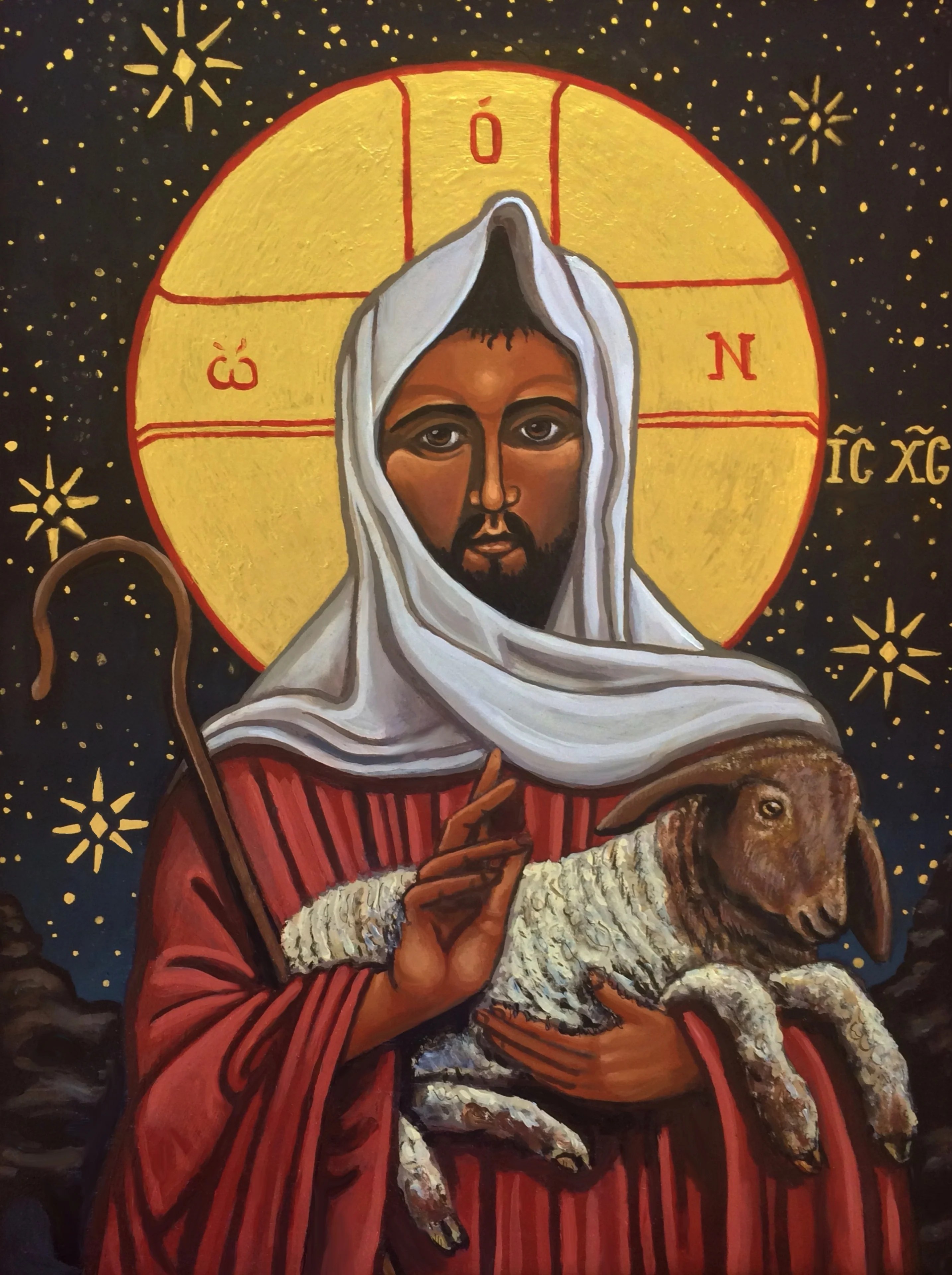
“I am the good shepherd. I know my own and my own know me, just as the Father knows me and I know the Father.” (The full readings for today can be found here.) In the name of the Living God, who is creating, redeeming, and sustaining us.

Well, good morning, everybody, good morning. You know, I’m not sure…no, I’m not sure at all. I’m not sure that I’m qualified to preach on this Good Shepherd Sunday. You see, my people were cattle people. They weren’t sheep people. And cattle people didn’t always get along with sheep people. By “not always,” I mean they never got along with each other.

And while there are a lot of differences between cattle and sheep, a couple of them come to mind. One of the biggest differences is that you can lead sheep, but you have to drive cattle. Unlike cattle, sheep will learn to follow. They build friendships and will stick up for one another. Like us, they are highly social animals, and when they are under stress or isolation, they become sad, and yes, even depressed. And they are very intelligent creatures; they recognize faces and voices. But like us, they will sometimes stray away from the herd, and need to be watched over.

In Jesus’ time, sheep were a mainstay of survival: they provided milk and cheese, and sometimes meat for the family and for sacrifices. They also provided wool for warm garments. But I think there’s something going on in John’s gospel than a discussion of first-century animal husbandry or livestock. I think this gospel reading is, at its core, about how we love, and how we are loved.

So, I think we should note a couple of things before we go on. And for this, I think we have to go all the way back to the beginning of John’s gospel, back to the very first time we meet this man called Jesus. You may remember that John was baptizing people in the river Jordan when he saw Jesus and shouted out: “Here is the lamb of God who takes away the sins of the world.” Now, lambs had been used as sacrificial animals for a long time by the Jewish people and were particularly associated with the holy feast of Passover.

We hear this same image, this same symbolic language in the last passage of John’s gospel, where the resurrected Jesus and Peter sit by a charcoal fire after breakfast.  And Jesus makes clear to Peter that Peter’s assurance of love carries with it a tender and sometimes difficult office, an obligation to feed his sheep. So, I want to suggest if we find this image being used in the beginning of John’s gospel, at the end of his gospel, and this morning pretty much in the middle of the gospel, we can probably safely assume that John thought this was important.

But as we read this, we might be forgiven if we have a moment of confusion. Is Jesus the lamb or the shepherd? Why is Peter feeding the sheep? Are we the sheep, or is Jesus the lamb? Quite frankly, it seems a bit complicated, and a little bewildering.

I think at least part of the answer lies, perhaps a bit veiled, in Jesus’ statement: “I am the good shepherd.” It’s one of what’s called the “I am” sayings of Jesus: you know, “I am the Bread of Life”, “I am the Light of the World”, “I am the vine,” and “I am the Good Shepherd.” In doing so, Jesus is aligning himself with a very old understanding of who God is. You remember the story from the Book of Exodus, when Moses asks God his name and God replies, “I am who I am.” For John, there is no difference between God and Jesus, the Word, the Logos. And for John, there is no difference between listening to Jesus and listening to God.

Jesus distinguishes his role from that of a hired hand. And at least part of the distinction has to do with how they react when the wolves come. Whether you’re a cattle person or a sheep person, you know about wolves. Lord have mercy, I believe we all know about wolves. You can find them in any walk of life—in business, in politics, and on our television screens. Sometimes those wolves come disguised as ambition or greed, sometimes as addictions, sometimes as failure, and sometimes as desperation.

You might argue that the distinction between the Good Shepherd and the hired hand is about their level of commitment. Perhaps the hired hand acts out of self-interest, while the Good Shepherd isn’t afraid of the wolves and understands his responsibilities. But I think there’s something more there. I think the Good Shepherd doesn’t run away when the wolves come because he acts out of something much more profound. Love, and only love, hangs around when the wolves come. Love, and only love, is willing to stand its ground when the situation gets risky. Only that kind of love is willing to lay down its life for the beloved.

Now, here’s the good news. We are the beloved. And Jesus is telling us that he loves us like that, that God loves us like that. And that kind of love doesn’t even ask what it costs, because it knows what it’s worth.
Later in this same Chapter of John, Jesus tells us “My sheep hear my voice. I know them, and they follow me.” I often wonder how well I’m listening for the voice of Jesus. When I get busy, when I get worried, or when I’m simply careless, it’s hard to hear.

You know, a very famous theologian named Paul Tillich said, “The first duty of love is to listen.” That’s worth repeating: “The first duty of love is to listen.” We have a lot of choices in this world as to which voices we’ll listen to. We can listen to the voices that tell us that our neighbors aren’t like us—voices that tell us that they’re not as smart as we are, or they’re freeloaders, or they’re dangerous. Or we can listen to the voices that tell us this world is full of risk and danger, that we might not have enough, or the voices that tell us that our lives will finally make sense if we just get that new car, that new outfit, that new iPhone, or earn enough to retire. We can listen to those voices that tell us that we’re not quite smart enough, not quite pretty enough, or not quite good enough.  

Or we can listen to the voice of the One who will never run away when the wolves come, the one who offers us forgiveness, the one who came to show us what an abundant life really looks like. We can listen to the One who laid down his life for us, who said he’d never leave us, who says he’s with us always, even to the end of time. That kind of voice, that kind of love, is hard to fathom; in fact, it’s one of life’s deepest mysteries.

We are sometimes told, “You are what you eat.” I think it’s equally true that we are what we listen to. The voices we hear can shape us in powerful ways. Genuine listening is an attitude of the heart, a vulnerability to the holy. If indeed the first duty of love is to listen, the choice we are compelled to make is which voice we are going to listen for. Maybe, just maybe, if we listen in love, we will hear the voice of the One who loves us limitlessly, who loves us fearlessly. Amen.

James R. Dennis, O.P. © 2024

Whom Are You Looking For? (An Easter Sermon)

Woman, why are you weeping? Whom are you looking for?” (The full readings for this morning can be found here.)

In the name of the living God, who is creating, redeeming, and sustaining us. Well, good morning, good morning. And, because we haven’t been able to say it during those long 40 days of Lent: Alleluia!

Don’t you hate it when you lose something? It’s very frustrating, it’s unsettling. Say, you have something very precious, or something terribly dangerous, and you lock it up and put it away where no one can get to it. You hide it, or seal it up, or bury it, and when you go back, it’s not there. You search and search, but it’s just not there anymore. But, I’m getting ahead of myself.

I want us to imagine the desperation of these disciples, particularly Mary Magdalene and the women who go to anoint Jesus’ body. They had lost just about everything you could lose. Some had betrayed him, some had denied him, many had run away, and almost none of them could bear to watch this horror show. They had lost their dreams of a life with God, their vision that finally someone was going to do something about the Romans and their brutal occupation. They had lost their hopes for a better world, and many of them lost their self-image, their idea of who they were. And so, these women come to anoint their dead friend, to honor their dead. As Henry Nouwen wrote, “Compassion asks us to go where it hurts…” Now, I don’t think those women went to the grave that morning out of a sense of religious obligation, or some concept of duty. I think they went there out of love for their friend.

Now, we humans have known something for a very long time. We have known it ever since we crawled or loped out of the savannah, ever since those prehistoric people left their handprints on the Cueva de los Manos in Spain. We have known that “dead is dead.” Science teaches it, our experience teaches it, and our feelings of loss teach it. Dead is dead. Our broken hearts have always instructed us about the finality of death. Death is the end of the story. Or, is it?

Today’s gospel calls that assumption into question. As these women go to mourn their losses, they find that the stone has been rolled away and the tomb is empty. Don’t you hate it when you’ve put something away for safekeeping and then it’s missing? And after the other disciples have confirmed that Jesus’ body is gone, Mary remains at the tomb weeping. And she doesn’t recognize Jesus at first. Grief is like that, clouding our vision and consuming our ability to focus on anything but loss. And it’s not until Jesus calls her by name that she recognizes him. My hope, no, my prayer for each of us is that we can hear God calling our names, calling us out of grief and loss and into new life.

Jesus then asks her a very pointed, and very important, question: “Whom are you looking for? In our world of heartache, loss, death, and empire, it takes a good deal of courage to go looking for Jesus. It takes a good deal of hope and strength to entertain the notion that death might not be the end of the story. Love is like that, you see. Love always goes looking for the beloved. Even when it’s scary, even when there are Roman guards there, even when it seems hopeless—love goes looking.

So, I want you to look here at the genius of John’s gospel. If you were with us for the Good Friday service, you’ll remember what John said. “Now there was a garden in the place where he was crucified, and in the garden there was a new tomb in which no one had ever been laid. And so, because it was the Jewish day of Preparation, and the tomb was nearby, they laid Jesus there.” Our story this morning is also set in that same garden.

If you were with us for the Vigil, you heard that story from Genesis of the very first day, the story of light coming into the world. So, I want us to look carefully at what that masterful poet John is telling us in his gospel this morning. John says these events took place “Early on the first day….” The first day. These events took place in a garden. The story of our creation takes place in a garden. This is no accident. There are no coincidences in John’s gospel. I think John is trying to tell us that the story of Jesus’ resurrection is the story of God recreating the world.  It’s the story of Jesus “making all things new again.”

Now, the forces of empire knew exactly where they had put Jesus. He was sealed in a tomb, safely locked away where he could not cause them any trouble. In this story, the might of empire is represented by the soldiers guarding the tomb. Look at the reversal that takes place when they are confronted with the power of resurrection, the power of new life. John says, “For fear of him the guards shook and became like dead men.”

God is in the business of creating life where there was no life before. St. Paul notes that the grave has lost its finality, writing: “O death, where is thy sting?” But I probably prefer the formulation of that fine mystic, the English poet John Donne, who said:

Death, be not proud, though some have called thee
Mighty and dreadful, for thou art not so;
For those whom thou think’st thou dost overthrow
Die not, poor Death, nor yet canst thou kill me.

Death is not the end of the story. It’s not even a period, not even a semicolon. Death is nothing more than a comma, a brief pause. You see, when Jesus walked out of the tomb, he didn’t come out alone. God’s love escaped from the tomb, escaped from the grave where the forces of empire tried to contain it.

So, we come back to these stories, these same stories, year after year at about this same time. The church calls them the stories of Jesus’ passion and resurrection. But in a broader sense, they are something more: they are love stories. In fact, they are our love stories. They are stories of God’s love for you and me, of God’s love for humanity.

This is our theology of hope; this is why we call ourselves an Easter People. Our gospel this morning teaches us that the forces of empire do not win. The powers of fear and intimidation and violence do not prevail. Death and grief do not have the last word. Darkness and the forces of hell do not win. Love always wins. Always. And even though we go down to the grave, we make our song: Alleluia, Alleluia, Alleluia!

James R. Dennis, O.P. © 2022

In the Beginning Again (Homily for the Great Vigil)

He is not here; for he has been raised, as he said. Come, see the place where he lay. (The full readings for today can be found here.)

            Good evening, my friends, good evening. And welcome to the Great Vigil of Easter.

Did you notice that opening line of that very first reading? It’s such a fabulous first line, a cardinal statement: “In the beginning when God created the heavens and the earth, the earth was a formless void and darkness covered the face of the deep, while a wind from God swept over the face of the waters. Then God said, ‘Let there be light’; and there was light. And God saw that the light was good; and God separated the light from the darkness.”

But we might well wonder, Why is the Church giving us that story this evening, as we celebrate the great vigil? What does this have to do with Easter—with the empty tomb? It’s almost as if the Church were trying to tell us something, as if the Church were offering a glimpse into the nature of God through the lens of these readings. I think the Church is trying to give us some insight into God’s professional life, God’s business. You see, I think God is in the business of creating life where there was no life before. And there’s only one reason for that sort of creative impulse, that need to form and shape something new. But I’m getting ahead of myself.

So, I want us to imagine the state of mind of the disciples, particularly these women, going to anoint Jesus’ body for his burial. Not only have they witnessed the brutal horror of Jesus’ death, not only have they lost their friend and teacher, but they’ve also seen a dream die. They had dreamed of a life with Jesus, of a life filled with God’s love; they had dreamed of a better world. So they went to the tomb to honor their friend, to honor their loss, to honor the dead.

But they didn’t find any death there, because our God is not the God of the dead, but of the living. Our God, as we said earlier, is in the business of new life. Our God is in the business of calling light out of the darkness, of creating new life out of nothing more than His love.

We see that new life happening this evening, right before our eyes. God is on the loose again tonight at St. Christopher By the Sea, doing that God thing. God is about to make a new thing, another Genesis story, in the baptisms of Addison and Wayne. And, while we don’t know yet what paths they will walk down in their lives to come, we know who will always walk with them.

Looking back to the readings tonight, I’m pretty sure that the forces of empire were certain that the story of Jesus was over. In fact, they were certain he was not only dead, but buried. But God, like love, is never static; neither God nor love will be contained. And I want to suggest to you that something more than Jesus escaped from that grave—pure love rolled away the stone, unadulterated love walked out of that tomb, and love told those dear women that he would meet them again in Galilee.

Many of us have tried to keep God in a box. We try to create a spiritual ghetto—over here is where I keep my work life, and over here is where I keep my family stuff, and this box here is where I keep my religion. That box we try to keep God in, well, it’s nothing more than a grave, a tomb. And if today’s Gospel teaches us anything, it teaches us that God will not stay where we put Him. This is our hope; this is why we call ourselves Easter people, my friends. He is not dead; he is risen. Alleluia!

James R. Dennis, O.P. © 2022


What is Truth?(Good Friday)

Jesus answered, “You say that I am a king. For this I was born, and for this I came into the world, to testify to the truth. Everyone who belongs to the truth listens to my voice.” Pilate asked him, “What is truth?” (The full readings for this morning can be found here.)

In the name of the living God, who is creating, redeeming, and sustaining us.Good evening, good evening. It’s good to be back with you again.

 You know, sometimes, when I look at the readings for a given Sunday, my first thought as a preacher is “There’s just not much there to talk about.”  That is definitely not the case with the readings for tonight. Rather, this is like trying to get a drink from a firehose. So, I want to highlight just a few passages from this story of Jesus’ Passion. As we read the Gospel for today, we cannot help but wince as we recall Jesus’ words: “This is my body. This is my blood.”

 So, we talked yesterday about the wonderful observation of Jürgen Moltmann, who said that all of our thinking about God, especially our theology of hope, must be accomplished “within earshot of the dying Christ.” Well, tonight we can hear Christ all too clearly. In fact, we may want to plug our ears, but we mustn’t do that, or we’ll miss something very important.

Now, I love my friend John’s gospel. John is a poet, and everything is his Gospel is laden with layers of meaning. In this Gospel, there are no accidents, and there are no coincidences. So, we all remember the fabulous story of Moses on Mt. Horeb when he encounters the burning bush. God tells Moses to take off his sandals because he’s standing on holy ground and tells him that he is the God of Abraham, Isaac, and Jacob. When Moses asks him his name, God replies, “I am that I am.” We call this the Great I Am, and it implies that everything that has existence, everything that is, exists because of and through God.

Now, let’s see what this poet John does with that idea. When the soldiers and Pharisees come to the Garden of Gethsemane asking for Jesus, he replies, “I am he.” As Jesus hangs on the cross, dying, he says, “I am thirsty.” Now let’s look at how John treats Peter, Jesus’ close friend. You’ll recall that Peter had sworn, “Even though they all fall away, I will not leave you.” And Peter does follow Jesus—right up to the courtyard of the high priest. But when a woman asks Peter if he’s one of Jesus’ disciples he replies, “ I am not.” I am….not. Again, as he tries to warms himself, the crowd asks if Peter was a disciple of Jesus. Peter again says, “I am not.” Peter’s repudiation is actually a denial of his association with God.

I don’t want to judge Peter too harshly. There have certainly been times in my life when I walked away from God, even pushed God away. Sometimes, we all find our fears to be overpowering. This is especially true when confronted with the power of empire, especially an empire as brutal as the Roman empire. You may recall we talked on Maundy Thursday about Jesus and the great commandment: the notion that people would know we follow Jesus by our love.

But a love like that will stick out like a sore thumb in a place like the Roman Empire. Whether it’s Pharoah or Caesar or Vladimir Putin, empire only wants one thing: more—more bricks, more oil, more guns, more land. Empire concerns itself with expansion and self-preservation. Love is concerned, fiercely, with the other.

We see this distinction exposed in the discussion between Pilate and Jesus. Revealing his primary concern with empire, Pilate begins by asking Jesus if he is a king. Jesus doesn’t answer the question, or rather, answers the question with a question of his own. Pilate then asks “What have you done?” And Jesus doesn’t answer this question. Rather, he now goes back to the first question, and says that he is a king in another place. Jesus tells Pilate that he came into the world to testify to the truth. Now, Pilate asks Jesus, “What is truth?” Later, Pilate asks, “Where are you from?” And Jesus doesn’t answer. In frustration, Pilate then demands, “”Do you refuse to speak to me? Do you not know that I have power to release you, and power to crucify you?” Do you not know that I have the power to hang you up on a tree like a scarecrow?

Does it seem to you that these two men are having a failure to communicate? Although they may be speaking the same language, they don’t share a common vocabulary or a common point of reference. Pilate asks the question, “What is truth?” He doesn’t seem to know and I’m not sure he really cares. In reality, the Truth is standing right in front of him. The Truth is about to be beaten and crucified—because in a world dominated by empire, truth and love will stand out like a sore thumb. Empire doesn’t have any use for truth, but Pilate reveals his real concern. His concern, and his last question, is about power. That is the nature of empire.

Fear and violence are the principal tools, the fundamental weapons of empire. And the Cross was just such a tool. You know, it’s said that for the first century or so, the fish and not the cross, was the primary symbol of Christianity. And I think that’s because no one who had actually seen a crucifixion could bear to see the Cross used in that way, they could not yet imagine it as an avatar of faith. For them, the Cross marked only terror and brutality. Those forces can only be overcome through the strongest force known to humanity. Only love can overcome them.

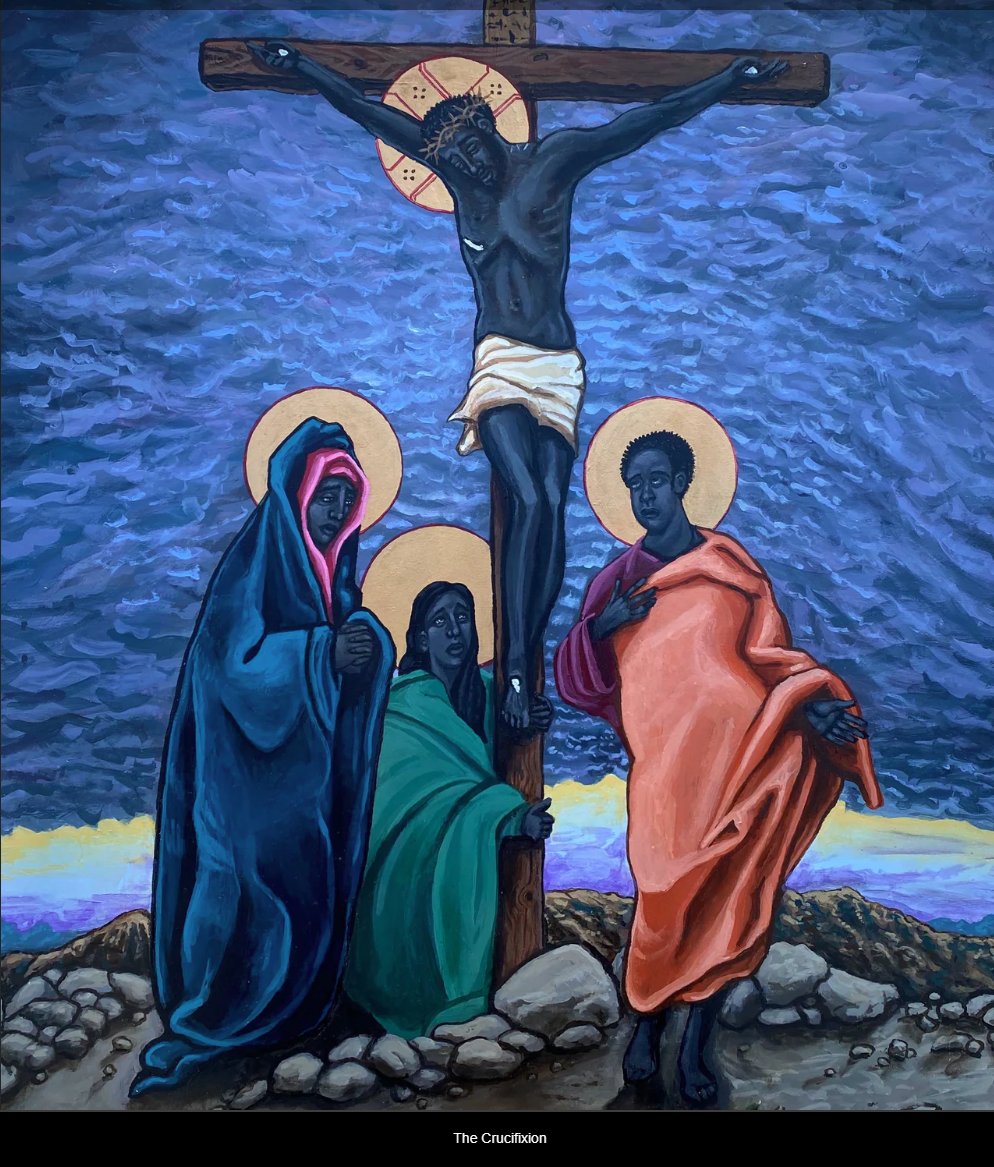
We see that love demonstrated as Jesus hangs on the Cross, dying. He looks down upon his mother and the beloved disciple, the only ones who remained with him, or the only people who could bear to watch this horror show. And as he’s dying, he says to his mother, “Woman, here is your son.” He tells his disciple, “Here is your mother.” It is a moment of unbelievable tenderness, a moment of redefining family as a community of love and loss, an expression of God’s concern for those left behind even in these final moments of agony.

So, what does this story mean for us as Christians in the 21st century, some two thousand years after these events? Well, among other things, I think it means that God intended to share in the entire human experience: pain, hunger, thirst, weddings, joy, glory, sorrow and loss, and even shame and death. God reached into the entire human experience, knew it firsthand, touched it, and made it sacred. It means that there is no part of our lives that God does not understand and will not share with us.

I want to suggest to you that it was not iron nails that fastened Jesus to the Cross. Rather, Jesus was held there by the love of God for all of humanity. In a real sense, the Cross is God’s statement to the world: do your very worst. You can beat me, mock me, scorn me, betray me, deny me, hang me on a tree like a scarecrow, and even kill me. Do your very worst, and I will still love you. And thus, the Cross was changed, transubstantiated, from an instrument of torture and shame into a symbol of hope and love. God’s love overcomes empire, terror, and death. And that’s got to be “good news.”Amen.

James R. Dennis, O.P. © 2022

Maundy Thursday (The Great Commandment)

I give you a new commandment, that you love one another. Just as I have loved you, you also should love one another. By this everyone will know that you are my disciples, if you have love for one another. The full readings for today can be found here.)

In the name of the living God, who is creating, redeeming, and sustaining us. Good evening, good evening. And thank you and Father John for inviting me to spend this Holy Week with you at St. Christopher by the Sea. And as we go through these holy days we call the Triduum, I want us to view these days, these sacred days, not as isolated worship services, but as a week-long single service that began last week with Jesus’ triumphal entry into Jerusalem. It was a day of joy, a day of laughter, a day when the crowds proclaimed that Jesus was the king. And things would end up so very differently.

One of my favorite theologians, a man named Jürgen Moltmann, said that all theology must be conducted within earshot of the dying Christ. We’re going to come back to that again over the next several days, but it’s worth repeating: all of our thinking about God, especially that which concerns our hope for ourselves and humanity, must take place within earshot of the Cross. Well, in our readings for this evening, the shadow of the Cross looms very large.

So, we’ve all heard the question before, and maybe we’ve even thought about the answer for ourselves: “What would you do if you knew it was your last night on earth?” In this passage from John’s gospel, we see Jesus’ answer to that question. He has a final meal with his closest friends, even those who will betray and deny him. And John tells us, “he loved them to the end.”

And then, Jesus does something astonishing. He washes the feet of his disciples. In that culture, a culture that placed tremendous importance on honor and shame, that was considered the work of a servant, a slave. And this scene is in stark contrast with the entry into Jerusalem in which the crowd proclaimed him a king. This shocking lack of dignity is not the work of a rabbi, let alone the task of a king. But this loss of dignity is nothing compared to that which will come just a few hours later. After all, we are, as Moltmann observed, within earshot of the Cross.

And so, it’s no wonder that Peter suffers from a bit of cognitive dissonance because these two things just can’t go together. Or maybe this scene involves a level of vulnerability that Peter just isn’t comfortable with. Jesus tells Peter that unless he washes his feet, Peter will have no share in him. It’s an unusual phrase. But I think Jesus is telling Peter that we, as disciples, must learn not only to care for each other recklessly, but also to allow others to care for us without regard to our dignity or theirs. We have to learn vulnerability if our love is going to mean anything at all.

You see, I think Jesus came to live among us to show us what God was like. That’s part of the mystery of the Incarnation. And Jesus shows us an image of a God who is willing to take the risk of looking foolish in order to show us what love looks like. We like to think that love is all soft, and cuddly, covered in glitter and bathed in golden light. But if you’ve been around a while, you know that love is more often about taking risks, sometimes terrible risks. And tomorrow, we’ll find out just how high a price God is willing to pay for loving us.

Now comes the lynchpin of this gospel passage. Jesus tells his disciples: “if I, your Lord and Teacher, have washed your feet, you also ought to wash one another’s feet.” That’s what he said to the disciples; that’s what he’s still saying to you and me. Tonight, we’ll symbolically enact that teaching when we wash each other’s feet. But, when we leave and go into the world, we’ll have a chance to embody, to incarnate that teaching when we show God’s people—especially those who aren’t particularly loveable—that we love them.

That may mean working at a food bank, or offering a meal to a homeless family, or visiting someone who’s terribly ill. It might mean backing away from a party to look for someone who’s left out, who’s friendless, who’s lonely. It might mean going on a medical mission, or working with the water ministry. Through God’s grace, we are offered thousands of chances every day to show God’s people that we love them. Love them when it’s hard, love them when it hurts, love them until the end.

Jesus tells us: “I give you a new commandment, that you love one another.” It’s not a difficult rule to understand, but it’s hard to live out. It’s as hard as the nails of the Cross. Martin Luther King once explained the purpose of this commandment:

“the end is reconciliation; the end is redemption; the end is the creation of the Beloved Community. It is this type of spirit and this type of love that can transform opponents into friends. It is this type of understanding goodwill that will transform the deep gloom of the old age into the exuberant gladness of the new age. It is this love which will bring about miracles in the hearts of men.”

Love is a powerful force. It is the only force that has ever brought about real change in our world. Genuine love does not ask how much this will cost, or what people will think, or whether this person deserves our love.

Jesus tells us that by that kind of love, people will know that we are his disciples. So, it turns out that our identity as Christians has very little to do with sticking a fish decal on our car, or dressing in our Sunday best, or which political party we support. And it isn’t really about feet at all, except that it is. The last thing Jesus wanted his disciples to know, the most important thing he wants us to know, is that love defines our common life, defines our humanity. Tonight, we will strip the altar bare, take away all the finery, remove all the trappings. And if anything remains here in this Church, if anything remains in your heart, let it be love. Amen.

James R. Dennis, O.P. © 2022

The Smell of Scandal in Bethany

Mary took a pound of costly perfume made of pure nard, anointed Jesus’ feet, and wiped them with her hair. The house was filled with the fragrance of the perfume. (The full readings for this morning can be found here).

In the name of the living God who is creating, redeeming, and sustaining us.

Way back a very long time ago, back in the early twelfth century, I was a boy in Odessa, Texas. And I can tell you my very first memory. I was riding in a golf cart with my father, and I couldn’t have been older than three or four years old. And the sun was coming up, and I smelled the scent of freshly cut grass, and I thought I must have gone to heaven.

And I remember going to my grandmother’s house for Thanksgiving, and the house was full of the most wonderful smells: ham, turkey, sweet potatoes, about 5 kinds of pie, and a pot of coffee on that old stove. Oh, I can still smell those thanksgivings.

      Rudyard Kipling once wrote, “Smells are surer than sights or sounds to make your heartstrings crack.” And Hellen Keller once observed, “Smell is a potent wizard that transports you across thousands of miles and all the years you have lived.” Neuropsychologists tell us that smell is one of the most powerful gateways into our memories, in part because those two parts of the brain are very close to each other. Think about your first new car, or your favorite book, or your first trip to the library as a child, and you will almost automatically be drawn to the way they smelled. I think this is true in part because our sense of smell is so closely tied with the act of breathing—we don’t just detect a scent, we take it into our lungs and our bodies through our breath, which is another way of saying we take it into our spirit.

  So, this morning, the Church offers us this wonderful story of a dinner party. It takes place in Bethany, which is bordered by the Mount of Olives, and only about two miles from the city of Jerusalem. And Jesus is on his way to Jerusalem; in fact, it’s his last trip to that city. And nothing very good is going to happen there.

The story takes place, as John tells us, “six days before the Passover.” My friend John is a careful writer and a fine poet. There aren’t any accidents or coincidences in John’s Gospel. So when he says “six days before the Passover,” I think he wants us to think back to the book of Genesis, to the six days of creation. Because these six days we’re approaching, the days we now call Holy Week, are God’s re-creation: God is making all things new again.

Now, this is sort of an odd dinner party, for a number of reasons. It takes place at the home of Mary and Martha and their brother Lazarus—yes, that Lazarus. And just one chapter before this, Jesus had raised Lazarus from the dead. And even Jesus, knowing all that he knew and was about to do, wept at that tomb. He wept over the death of his friend, and he wept over the grief he shared with his friend’s sisters. And when Jesus told them to roll away the stone, Martha voiced her concern: “Lord, already there is a stench because he has been dead for four days.” She was concerned about the stench of the grave, the odor of death and decay. But Jesus called Lazarus back from the grave and ordered them to unbind him from the strips of cloth in which he was entombed.

So, we have these two sisters at this dinner party, along with Lazarus (who was dead, but is alive) and Jesus (who is alive but will not be for much longer). And then, we have Judas. I’ll circle back around to him in a bit. And they are gathered at the table.

Then, one of the sisters (Mary) does something remarkable. She does something scandalous, something embarrassing, something shocking, something prodigal. (See, I told you last week we’d come back to that idea.) She takes a pound of perfume made from pure nard and anoints Jesus’ feet with it and then she wipes them with her hair. Let’s break this down a bit.

     Nard was a very expensive perfume with a strong, distinctive aroma that clung to the skin. It is mentioned elsewhere in Scripture, in the Song of Solomon, which is also a sensuous and erotic, and sometimes scandalous book of the bible. The value of the oil with which she anoints Jesus’ feet is approximately a year’s wages. So, this is a lavish, sensuous act of devotion. And women of that time did not loosen their hair, let alone wash a man’s feet with it. But just as her brother Lazarus was unbound from his death shroud, Mary unbinds her hair and begins to wash Jesus’ feet. Washing someone’s feet—well, that was dirty work for the servants or slaves. In fact, women of that time did not touch a man at all unless they were married.

So, all the good, proper ladies over at the First Baptist Church of Jerusalem would have been clutching their pearls at this scene.

And then Judas asks a question, “Why didn’t she do some good with this money? Why not give it to the poor?” Now Judas is the consummate cynic, right? You know what a cynic is—a cynic is someone who knows what everything costs but doesn’t know what anything is worth. The stench of betrayal and stinginess and violence clings to him. And he cannot recognize the worth of this moment as this woman pours out her wealth, pours out her life and her dignity, upon this man Jesus.

And Jesus tells Judas, “Leave her alone. She bought it so that she might keep it for the day of my burial.” And I don’t want you to think that Jesus was unconcerned with the plight of the poor. The gospels tell us, rather, that he was profoundly concerned with the poor. But this is a special moment, a moment of lavish, unselfish tenderness, and I’m sure it strengthened Jesus for those horrifying days that lay ahead.

So, Mary had purchased this perfume for the time of Jesus’ death, but instead chooses to do so now. In a profound sense, she chooses life over death. This woman was willing to risk shame and embarrassment and ridicule— all for a reckless love. That kind of love always leads to the cross. Always. And maybe sometimes, every now and then, we might remember that loving God sometimes means a reckless refusal to consider the cost of love, and focus on what it’s worth. And maybe we might remember that God, as Isaiah tells us, is about to do a new thing.

Now, in just a few days we will celebrate Maundy Thursday, the day when Jesus washed his disciples’ feet. It’s the very next chapter of John’s gospel, and again, it’s very intimate and embarrassing. But, when we get there, I want you to remember, it was this woman Mary who showed Jesus how to do that, who showed him what love looks like.

The house was filled with the fragrance of the perfume. Breathe that in; breathe in her tender, reckless devotion and breathe in the life of Jesus. And then, exhale love.

     Amen.

James R. Dennis, O.P. © 2022

This Night

1


Now before the festival of the Passover, Jesus knew that his hour had come to depart from this world and go to the Father. Having loved his own who were in the world, he loved them to the end. The devil had already put it into the heart of Judas son of Simon Iscariot to betray him. And during supper Jesus, knowing that the Father had given all things into his hands, and that he had come from God and was going to God, got up from the table, took off his outer robe, and tied a towel around himself. Then he poured water into a basin and began to wash the disciples’ feet and to wipe them with the towel that was tied around him. He came to Simon Peter, who said to him, “Lord, are you going to wash my feet?” Jesus answered, “You do not know now what I am doing, but later you will understand.” Peter said to him, “You will never wash my feet.” Jesus answered, “Unless I wash you, you have no share with me.” Simon Peter said to him, “Lord, not my feet only but also my hands and my head!” Jesus said to him, “One who has bathed does not need to wash, except for the feet, but is entirely clean. And you are clean, though not all of you.” For he knew who was to betray him; for this reason he said, “Not all of you are clean.”

After he had washed their feet, had put on his robe, and had returned to the table, he said to them, “Do you know what I have done to you? You call me Teacher and Lord–and you are right, for that is what I am. So if I, your Lord and Teacher, have washed your feet, you also ought to wash one another’s feet. For I have set you an example, that you also should do as I have done to you. Very truly, I tell you, servants are not greater than their master, nor are messengers greater than the one who sent them. If you know these things, you are blessed if you do them.

“Now the Son of Man has been glorified, and God has been glorified in him. If God has been glorified in him, God will also glorify him in himself and will glorify him at once. Little children, I am with you only a little longer. You will look for me; and as I said to the Jews so now I say to you, `Where I am going, you cannot come.’ I give you a new commandment, that you love one another. Just as I have loved you, you also should love one another. By this everyone will know that you are my disciples, if you have love for one another.” The full readings for today’s liturgy can be found here.

“Having loved his own who were in the world, he loved them to the end.”

             In the name of the Living God: Father, Son, and Holy Spirit.

In the Haggadah, the ancient Jewish text for the Passover meal (the  Seder), the youngest child present always asks the question, “Why is this night different from every other night?” It’s an important question, a question pious Jews have been asking for almost two thousand years: Why is this night different from every other night?

For us, there are several answers. Liturgically, this is the night that we wash each other’s feet. We process up to the front of the church and we kneel down and we imitate Jesus washing the feet of his disciples. It’s one of the most moving services of the year, and we do it every year. But this year is not like every other year. I’ll circle back to that idea later.

Biblically, it’s a compelling story, full of mystery and pathos: it’s heartbreaking, and it’s unique. We find this story only in John’s gospel, and John’s gospel is not like any of the other gospel. Jesus has gathered with his disciples, his closest friends, for a final meal. And John tells us that Jesus knew exactly what was going to happen to him, and understood the agony that was waiting for him. It’s an interesting question: if you knew you were about to die, what would you say to those you love the most. But Jesus does more than tell them—he shows them, because words are sometimes poor vehicles to carry the cargo of our most profound emotions.

So, after Jesus and his disciples have eaten, Jesus removes his robe, ties a towel around himself and begins washing his disciples’ feet. We may lose some of the stunning power of this shocking display. In that culture, at that time, washing another person’s feet was considered degrading work, work for slaves. In fact, if a Jew had a Jewish slave, they wouldn’t even ask a Jewish slave to wash their feet.  To wash someone’s feet was a shameful, humiliating task. And that humiliation offered a mere taste of the indignities that lay ahead—being stripped, beaten, whipped, and hung up on a tree like a scarecrow.

And so, we can understand Peter’s reluctance to have his feet washed by his Lord, his rabbi. Not surprisingly, Peter feels embarrassment at watching his teacher debase himself in this way. Some of us may have shared that unease on occasion as we participate in this liturgy. And yet, Jesus tells us, “Unless I wash you, you have no share with me.”

It’s worth noting that Jesus washes the feet of all of the disciples that night. He washes the feet of the disciple who will betray him, the disciple who will deny him, and those who will abandon him. Real love means more than being nice, or romance, or the kind of love that ends up on Hallmark cards. Real love doesn’t always look like puppies, or glitter or rainbows. Real love requires strength, and often demands self-sacrifice—putting the good of someone else first, even when it hurts. Real love will sometimes call upon us to climb our own Golgotha. Love calls us into ever widening, ever more expansive, ever deepening, ever more daring circles of caring.  Real love cannot remain in the shallow end of the pool.

Jesus stands ready to wash our feet as well, washing away our insecurities, scrubbing off our shame, rinsing  our weariness away. Jesus stands ready to wash our feet even when we deny him, betray him, abandon him, and perhaps even worse, ignore him. And that, my brothers and sisters, is a very tough love. That kind of love stares right into the eyes of fear and humiliation, mockery and betrayal, and even death, and says: “Do you very worst. And when you are done, I will still be here.”

So, this year, this night, is not like any other night. We will not exchange the sign of peace. We will not break the bread; we will not drink the wine. We will not get on our knees and wash each other’s feet. But tonight, we will not do those things for the same reason that we normally do them. Tonight is different because tonight love means that we remain in our homes, rather than joining together. Tonight, we will not gather together because, in a time of pandemic, that’s not a very loving thing to do. In a time of contagion, with so many at risk, that’s not what love looks like. But the reason why we won’t do those things tonight is the same reason we do them every other year: because we love each other.

We observe the sacrament of this night, and rest assured, this is a sacramental act (regardless of what the Prayer Book purists tell you) when we reach out to those who are lonely, when we read to a child who needs a friend, when we volunteer at a food bank, or when we smile at a stranger. You see, we call this Maundy Thursday, a name which comes from the Latin word for commandment, mandatum. And the commandment wasn’t “wash each others’ feet.” The commandment was “love one another, as I have loved you.” Love one another, even when we’re not especially lovable. Maybe especially when we’re not lovable. Love one another, even when we let each other down. Love one another, even when it’s hard. Amen.

James R. Dennis, O.P. © 2020

Hearing the Words

stone

Whoever is from God hears the words of God. The reason you do not hear them is that you are not from God.’

The Jews answered him, ‘Are we not right in saying that you are a Samaritan and have a demon?’ Jesus answered, ‘I do not have a demon; but I honour my Father, and you dishonour me. Yet I do not seek my own glory; there is one who seeks it and he is the judge. Very truly, I tell you, whoever keeps my word will never see death.’ The Jews said to him, ‘Now we know that you have a demon. Abraham died, and so did the prophets; yet you say, “Whoever keeps my word will never taste death.” Are you greater than our father Abraham, who died? The prophets also died. Who do you claim to be?’ Jesus answered, ‘If I glorify myself, my glory is nothing. It is my Father who glorifies me, he of whom you say, “He is our God”, though you do not know him. But I know him; if I were to say that I do not know him, I would be a liar like you. But I do know him and I keep his word. Your ancestor Abraham rejoiced that he would see my day; he saw it and was glad.’ Then the Jews said to him, ‘You are not yet fifty years old, and have you seen Abraham?’* Jesus said to them, ‘Very truly, I tell you, before Abraham was, I am.’ So they picked up stones to throw at him, but Jesus hid himself and went out of the temple. John 8: 47-59.

Whoever is from God hears the words of God. The reason you do not hear them is that you are not from God.

In the name of the Living God: Father, Son and Holy Spirit.

You know, sometimes, sometimes, I absolutely hate the lectionary. I’ve got a sermon, or I’ve got a theology, or I have an understanding, and it just won’t fit into the text that I’ve been given. Sometimes, the text just doesn’t have much to do with my idea of God, or Jesus, or holiness at all. But to paraphrase former secretary of defense Donald Rumsfeld, we’ve got to deal with the lectionary we have, not the one we wish we had. In fact, as today’s gospel reminds us, we’ve got to deal with the Jesus we have rather than the one we wish we had.

If you ever find yourself infatuated with the kind, squishy, gooey caramel Jesus, I suggest that the eighth chapter of John is the best antidote for you. This is not a Jesus made for people who need puppies and unicorns and glitter: this is a Jesus in conflict. It’s a conflict that begins in the opening lines of the 8th chapter with the story of the woman caught in adultery, a conflict that will ultimate get Jesus killed.

But, I’m getting ahead of myself. You know, back when I was just a kid, growing up in West Texas, some of the earliest questions I can remember people asking me were: “Where are you from? Who are your people? Are you any kin to those Dennis’ over in Scurry County?” We are fascinated with questions surrounding our origins. I think that’s based on the assumption that if we can know the origins of a thing or a person, we will then understand it, and know which box to put it in. These are the very questions that our gospel today centers upon.

So, we heard a bit about this conflict yesterday. And this morning, the conflict has accelerated. Jesus’ accusers go so far as to accuse him of being a Samaritan, or of having a demon. Now, in either instance, if he were a Samaritan or if a demon had driven him insane, the implication is that no one needs to listen to what Jesus had to say. Jesus turns away from the insult, returning to the notion of his origin, his source. The only authority Jesus claims for himself is the authority of the Father.

Jesus then makes a remarkable claim: those who keep his word will never see death. So, now we have the competing claims of authority. Those who oppose Jesus claim their authority arises from Abraham, the father of monotheism. They rest upon their link, their lineage, back to Abraham, Isaac, Jacob and the prophets. They ask Jesus, they mock Jesus: “Are you greater than our father Abraham, and all the prophets who died?” The question echoes with the question posed in the 4th chapter of John’s Gospel by the Samaritan woman at the well: “Are you greater than our father Jacob who gave us this well?”
Jesus refuses to entertain the question of who’s greater. He says he’s not interested in his own glory (in the Greek doxa). Whatever glory Jesus has will come from the Father, and not from them. Jesus responds that they don’t even know the Father. Jesus argues that he knows both the Father and Abraham. Now the fight is joined: they know Jesus is crazy because he couldn’t know Abraham. Abraham has been dead for centuries.

And here’s the punch line: Jesus claims before Abraham was, I am. It’s an odd formulation. He doesn’t claim, I was before Abraham was. He says, “Before Abraham was, I am.” I am. In the Greek, ego eimi. It is the same phrase Jesus uses when he says, “I am the bread of life, or “I am the true vine” or “I am the good shepherd.” It is the same phrase that answers Moses’ question, “Who are you?” I am who I am. It’s an origin story. Jesus’ origin lies at the beginning of creation: the Logos who was with God and was God from the beginning.

It’s a remarkable claim. It’s the sort of claim that’ll get you in a rock fight, get you killed, get you crucified up on a tree. So, I think there’s a lesson for us as Dominicans. Jesus, the truth, finds himself in conflict with those who cannot accept the truth. For those of us who follow Dominic, who belong to an Order whose motto is Veritas, this offers an important lesson. Our lives will not be free of conflict. We follow a man, a God, who was born and lived a good part of his life in conflict. You see, in a world full of comfortable lies, the truth will always fall under attack. Scripture teaches us that: we need only look to the stories of Amos, Elijah, the other prophets or Jesus.

The first weapon of our Ancient Enemy was the lie. Jesus told us, He was a liar from the very beginning. Our ancient enemy said, if you eat this fruit, you will not die, but you will become gods. Lies have a remarkable power. As my father used to say, a lie can travel three counties over while the truth is still tying its shoes.

In a land of lies, the truth will stand out like a sore thumb. And history teaches us that lies cannot bear the light of the truth. Modern history teaches us this as well. From Gandhi to Martin Luther King, lies and liars cannot suffer the presence of those who commit themselves to the Truth. They cannot, and I choose this word carefully, abide it. So, we should not expect our road to be easy. Ours is the road that leads to Jerusalem and to Golgotha.

So, as we leave this place, go home safely, go in peace and with our blessing and our love. But as you go, listen for God’s voice. Make that your home; abide there. But walk in truth, with the incarnate Truth, the Logos, the Christ. Amen.

James R. Dennis, O.P. © 2018


When Did You Get to Know Me?

NathanielThe full readings for today can be found here:

Jesus decided to go to Galilee. He found Philip and said to him, “Follow me.” Now Philip was from Bethsaida, the city of Andrew and Peter. Philip found Nathanael and said to him, “We have found him about whom Moses in the law and also the prophets wrote, Jesus son of Joseph from Nazareth.” Nathanael said to him, “Can anything good come out of Nazareth?” Philip said to him, “Come and see.” When Jesus saw Nathanael coming toward him, he said of him, “Here is truly an Israelite in whom there is no deceit!” Nathanael asked him, “Where did you get to know me?” Jesus answered, “I saw you under the fig tree before Philip called you.” Nathanael replied, “Rabbi, you are the Son of God! You are the King of Israel!” Jesus answered, “Do you believe because I told you that I saw you under the fig tree? You will see greater things than these.” And he said to him, “Very truly, I tell you, you will see heaven opened and the angels of God ascending and descending upon the Son of Man.” John 1:43-51.

When did you get to know me?

In the name of the living God: Father, Son and Holy Spirit.

Several years ago, I travelled to Toronto with my Dominican brothers and sisters for Chapter, our annual gathering. While we were there, I was lucky enough to spend some time at L’Ache, the community founded by Henri Nowen, the great pastoral theologian.
L’Arche is a home for people who face profound mental challenges. While I was there, I met a man named Tom. Tom had Down’s syndrome, but that wasn’t the most important fact about him. You see, Tom was deeply concerned with, one might even argue obsessed with, superheroes. I mean, all of them: Batman, Superman, Spiderman, Ironman, even the Green Lantern.

As I had the chance to talk more with him, I got to see some of his artwork. He showed me one piece that was a little confusing. It portrayed a bearded man wearing what appeared to be a Superman outfit, with his arm around someone who was obviously Tom. I asked him if the other man was Jesus, and he told me that it was. Now, Jesus (or SuperJesus) had his other arm dangling out into space. I asked Tom why Jesus’ arm was just hanging there, and he said, “That’s for you.”

I was gobsmacked. Here was this man, with supposed mental deficits, who had completely grasped a profound theological concept that I had been struggling to live into for years. I asked Tom if there was anything he needed us to pray for, and Tom told me, “I want to be a superhero.” I told him, “Tom, I think you already are, but I’ll pray anyway.”

God is like that. God is sneaky. The divine will jump up and grab you from behind when you weren’t expecting it.

So, in today’s Gospel, we have a wonderful story, a story of calling and wonder and awe. It’s the story of one of my favorite cynics, Nathaniel. But we’ll get to that in just a moment. It’s worth setting the stage.

In the first chapter of John’s Gospel, the day after Jesus is baptized, two of John the Baptist’s disciples ask Jesus where he is staying, or where he abides. He answers them, “Come and see.” That day, Jesus calls Andrew and his brother Simon Peter.

Our reading today takes place the next day, as Jesus is returning from Bethany to Galilee. John tells us that Jesus “found” Phillip. Now, John is a fine poet, and he doesn’t use words lightly. While he regularly contrasts light and darkness, he also contrasts the notion of who is lost and who is found. And if you want an interesting spiritual exercise, try putting your own name in that sentence: Jesus found Nancy, or David, or Rilda or Brad, or James, and said, “Follow me.” Listen for Jesus calling your own name, saying “Follow me.”

Now, Phillip goes to his friend Nathaniel, and tells him about Jesus, describing Jesus in fairly glowing terms. He describes Jesus as fulfilling all the hopes of Israel, the man who Moses and the prophets wrote about: Jesus son of Joseph, of Nazareth. That’s a complex description, and we’ll try and unpack it a bit, but there’s something else worth noting. Phillip says “we found Jesus,” although the text says Jesus “found” Phillip. So I suspect that if Phillip did the finding, it was only in following Jesus that he found Him. And perhaps that’s true of us as well: if we want to find Jesus, we have to follow Him.

In response to Phillip’s assessment of Jesus, Nathaniel asks a poignant question: Can anything good come out of Nazareth? The question may reveal Nathaniel’s understanding of the biblical prophecies: the Messiah wasn’t supposed to come from Nazareth. Or his response may reveal a general disdain for that area. Nazareth was a poor, unimportant, hillside village, and it was no place special. We might as well ask whether anything good can come out of Haiti, or El Salvador, or the poverty-stricken countries of Africa. But I think Nathaniel’s question betrays something more troublesome. I think it’s a question born of cynicism, born of waiting for the Mashiach, the Messiah, waiting for God to make things right. I think that kind of cynicism is usually born out of many disappointments, out of hope that has been smothered, out of the rough tragedy of disappointment. Perhaps it’s a disappointment arising because the word of the Lord was rare in those days, too.

But Phillip answers his friend Nathaniel, echoing Jesus’ response the day before when John’s disciples asked Jesus where he was staying. Phillip tells him: “Come and see.” They are warm words, words of welcome and invitation. And as Nathaniel approaches Jesus, Jesus announces: “Here is truly an Israelite in whom there is no deceit!” There’s a bit of wordplay going on here. You see, before Israel was the name of a country, it was the name of a man, the name of one of Isaac’s two son’s. But Israel wasn’t the name he was born with; that name was given to him after he wrested with God at Peniel. His name at birth was Jacob, which means the deceiver, the usurper.

Now, in case you doubt that Jesus was directly referring to the story of Jacob and Israel, he returns to the story of Jacob at the end of this Gospel passage. When Jesus tells Nathaniel that he will see angels ascending and descending on the Son of Man, he’s alluding to the story of Jacob’s ladder. Jacob arose from his dream knowing that he was standing “at the gate of heaven,” the intersection of heaven and earth.

But in today’s Gospel, Nathaniel comes to recognize a new point where heaven and earth intersect: the person of Jesus. Jesus recognizes Nathaniel: tells him he saw him under the fig tree before Phillip called him. And then Nathaniel recognizes Jesus. He says, “Rabbi, you are the son of God and the King of Israel.” This is Nathaniel’s discovery, his epiphany, his confession. And he reveals himself as a true Israelite, one for whom God’s promises were intended.

Like Samuel in the Old Testament reading, Nathaniel didn’t recognize the divine initially. But God knew Samuel, just as Jesus knew Nathaniel. As the Psalmist says, God created their inmost parts; knit them together in their mother’s womb. And ultimately, they both came to recognize the call of the divine upon their lives.

I’m wondering if we can hear the God calling our names in the dark, calling us from under the fig tree. Because I believe each of us are called to be living icons in which God’s presence in the world is revealed. Regardless of what we do for a living, that’s our vocation. Regardless of how well we know God, God has searched us out and knows us. God “traces our journeys and our resting places.”

Sometimes, when the word of the Lord seems very rare, God sneaks up on us and asks us to share in God’s dreams for the world. God calls to us and says, “Come and see,” or “Follow me.” We may hear God calling to us in a sick friend, a neighbor who’s just lost a child, or a homeless person who’s down on their luck. Like I said, the Almighty is sneaky that way. And God can use many voices: dreams, visions, or a man with Down’s syndrome in a superman tee shirt. Amen.

James R. Dennis, O.P. © 2018