Our Common Prayer

We have stressed the fact that prayer is an event that begins in the human soul.  We have not dwelled upon how much our ability to pray depends upon our being a part of a community of prayer.
It is not safe to pray alone.  Tradition insists that we pray with, and as a part of community; that public worship is preferable to private worship.  Here we are faced with an aspect of the polarity of prayer. There is a permanent union between individual worship and community worship, each of which depends for its existence upon the other.  To ignore their spiritual symbiosis will prove fatal to both….
[The] truth is that private prayer will not survive unless it is inspired by public prayer.  The way of the recluse, the exclusive concern with personal salvation, piety in isolation from the community is an act of impiety….Our relationship to [God] is not as an I to a Thou, but as a We to a Thou.

If you’ve been following this blog for any length of time, you know that I’m a devotee of Rabbi Abraham Joshua Heschel.  One of the most profound thinkers on prayer and spirituality in the last century, perhaps in any century, Heschel always leaves me with a sense of wonder. I took this reading from his wonderful book, Man’s Quest for God. He observed that prayer constituted “our humble answer to the inconceivable surprise of living.”

In this reading, Rabbi Heschel suggests that our spiritual lives depend on our common prayer, and our prayers remain somehow incomplete when we restrict ourselves to private prayer. That good rabbi argues that private prayer and prayer actually depend upon each other.  He calls this a spiritual symbiosis; private prayer and prayer in community need each other for either to be able to thrive.

This offers an answer for both those whose prayer life consists merely of attending church on Sunday morning, and for many (if not most) of those who consider themselves “spiritual, but not religious.” (In my experience, many of the latter are those who’ve been wounded or hurt by the Church at some point, and have simply decided that their spirituality is safer in private.)

In the final section, Heschel clearly offers a gloss to Martin Buber’s classic work, I and Thou. Rabbi Heschel suggests that the really important relationship is We and Thou. Most of us belong to many communities of faith. We’re members of churches or parishes, prayer groups, study groups, families, religious orders or just people who gather together for prayer, study and accountability.  Each of these support, enhance, complete and inform our private prayer and our spiritual lives.

In one sense, our collective prayer and our private prayer are like the two levers on a pair of pliers.  Neither of them have a great deal of utility alone; together, they combine to achieve their purpose.

We not only enrich each other; we come to depend upon each other.  And somewhere in that process, we discover that these relationships are icons for the relationship which really sustains us: our relationship with the Living God.

Be blessed today, and be a blessing,

James R. Dennis, O.P.

© 2012 James R. Dennis

Be Opened

Jesus set out and went away to the region of Tyre. He entered a house and did not want anyone to know he was there. Yet he could not escape notice, but a woman whose little daughter had an unclean spirit immediately heard about him, and she came and bowed down at his feet. Now the woman was a Gentile, of Syrophoenician origin. She begged him to cast the demon out of her daughter. He said to her, “Let the children be fed first, for it is not fair to take the children’s food and throw it to the dogs.” But she answered him, “Sir, even the dogs under the table eat the children’s crumbs.” Then he said to her, “For saying that, you may go– the demon has left your daughter.” So she went home, found the child lying on the bed, and the demon gone.

Then he returned from the region of Tyre, and went by way of Sidon towards the Sea of Galilee, in the region of the Decapolis. They brought to him a deaf man who had an impediment in his speech; and they begged him to lay his hand on him. He took him aside in private, away from the crowd, and put his fingers into his ears, and he spat and touched his tongue. Then looking up to heaven, he sighed and said to him, “Ephphatha,” that is, “Be opened.” And immediately his ears were opened, his tongue was released, and he spoke plainly. Then Jesus ordered them to tell no one; but the more he ordered them, the more zealously they proclaimed it. They were astounded beyond measure, saying, “He has done everything well; he even makes the deaf to hear and the mute to speak.” Mark 7:24-37.

In today’s lectionary readings from Mark’s Gospel, we find a number of challenges.  In the first passage, on our initial reading, Jesus seems a bit stingy, argumentative, and a little off His game. A few years ago, reading this passage, I was struck by the idea that it seemed like Jesus had to be coaxed into being charitable. At first, we may wonder if this is the same Jesus we know. I want to suggest that this passage presents exactly the Jesus we know.

We should begin with the observation that this first passage contains a number of unusual characteristics.  First, it’s located in Tyre, which is not an ordinary place for Jesus to be roaming around. That’s Gentile country, and no place for a good Jewish boy to be.  Secondly, he’s approached by a Syrophoenecian woman.  At that time, it would be unusual for any woman to approach a Jewish rabbi, let alone a Gentile woman. (Further, the identification  of this woman as “pheonician” implies an association with the Canaanites. In fact, Matthew’s Gospel describes this woman as a Canaanite.)  Unlike many of the Gospel stories, in this story Jesus’ disciples (his regular companions) are absent. Finally, her daughter has a demon, and so we know we’re encountering a spiritual battle here.

I think part of the answer lies in the original Greek text.  When the woman comes and asks Jesus to cast the demon from her “little daughter” (thygatrion in Greek), He replies that the children should be fed first before the “little dogs” (kynariois). In one sense, I think we can read this story, picturing Jesus with a twinkle in his eye as He draws from this woman an affirmation of the faith which He knew was present in her. In another sense, I think St. Mark uses this story to contrast Jesus with the Jewish authorities of the day, who would certainly have rejected this woman and her concerns.

Mark uses this as a narrative device.  It’s worth noting that Jesus doesn’t tell the woman “no”; rather, he says, “not yet.”  I don’t think Mark uses this story to portray Jesus as ambivalent or wishy-washy on the subject of ministering to the Gentiles. Rather, I think he’s telling this story to portray the difference between Jesus and the religious authorities of His day.

Jesus expels the demon from this woman’s child “because of this reasoning” (dia touton ton logon). We therefore ask, what was it that she said?  She told Jesus that even the crumbs He had to offer would suffice to heal her daughter. We hear an echo of this in the old 1928 Book of Common Prayer, and I’m not so sure we shouldn’t still be praying this: “We are not worthy so much as to gather up the crumbs under Thy table.” From this Gentile woman we hear a remarkable affirmation of trust, of need, and of faith.

Mark’s second story similarly challenges the traditional notion of holiness of that time.  Jesus travels toward the region of the ten cities (the Decapolis).  Again, He remains deep in the territory of the Gentiles. The crowd brings a deaf man with a speech impediment to Jesus.  Jesus’ offers a deeply intimate act of healing this man.  He thrusts his hands into the man’s ears, spits and then touches the man’s  tongue. These things would have clearly violated the purity codes of that time, which viewed saliva as unclean.

As Jesus looks to heaven, he groans.  (Groans offers a far better translation of the Greek word estenaxen than “sighs.”)  In other words, this healing involves Jesus’ identification with the suffering and distress of this man.  Mark tells the story of an earthy (incarnational) healing, rather than a purely metaphysical event.  Mark reports Jesus speaking in the Aramaic language:  Ephphatha (which means “be opened.”)

The passage rings with the echo of Isaiah’s promise:  “Then the eyes of the blind shall be opened, and the ears of the deaf unstopped….” Isaiah 35:5-6. In one sense, it’s the deaf man’s ears that are opened.  In other sense, it’s the Gentile woman who is opened to the ministry of Jesus.  Viewed in another light, it’s about Jesus being open to the pain of the world. In yet another sense, it’s the entire world (and not just the people of Israel) to whom Jesus opens a new way of holiness.  I pray that we will be open to his healing ministry as well.

Shabbat Shalom,

James R. Dennis, O.P.

© 2012 James R. Dennis
Interpreting the Law

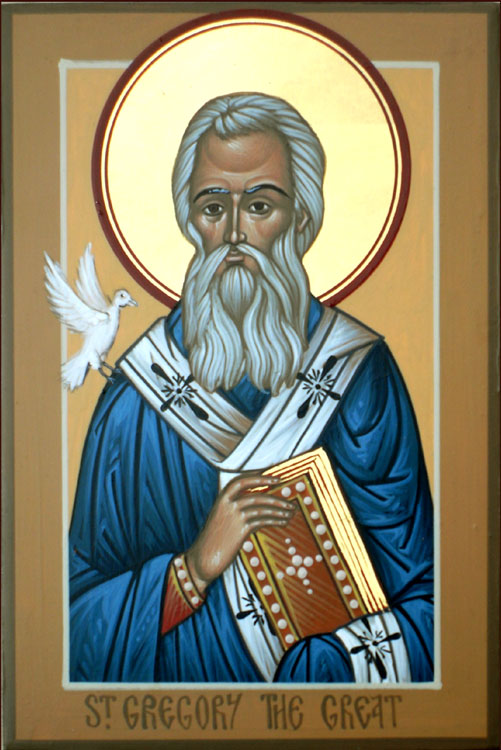
How must we interpret this law of God?  How, if not by love? The love that stamps the precepts of right-living on the mind and bids us put them into practice. Listen to Truth speaking of this law: “This is my commandment, that you love one another.”  Listen to Paul:  “The whole law,” he declares, “is summed up in love”; and again: “Help one another in your troubles, and you will fulfill the law of Christ.” the law of Christ–does anything other than love more fittingly describe it?  Truly we are keeping this law when, out of love, we go to the help of a brother or sister in trouble.

But we are told that this law is manifold.  Why?  Because love’s lively concern for others is reflected in all the virtues.  It begins with two commands, but soon embraces many more.  Paul gives a good summary of its various aspects.  “Love is patient,” he says, “and kind; it is never jealous or conceited; its conduct is blameless; it is not ambitious, not selfish, not quick to take offense; it harbors no evil thoughts, does not gloat over other people’s sins, but is gladdened by an upright life.” Moral Reflections on Job by Gregory the Great.

I ran across this passage earlier this week in the Readings for the Daily Office from the Early Church. St. Gregory makes a number of powerful observations that help us understand Holy Scripture.  Principally, he enjoins us to read the Torah (the Law) through the lens of love.  Jesus taught that all of the law and all of the prophets hung on the commandments to love God and love our neighbors. Matt. 22:40.

In Jesus’ day (just as in ours), some argued that the scriptures should be read as an exclusionary document.  Thus, many (lepers, those with physical infirmities, women, and outsiders) were excluded from the Temple.  Jesus asked the Pharisees, “What have you done to help them inside?” Through acts of love and mercy, Jesus brought many back within the circle of faith.  The Pharisees used the scriptures as a club to beat people away from the gates of the church.  Jesus, interpreting the scriptures through the template of love, showed us how to welcome God’s children back home.

We see this same tension played out in the book of Job.  Job endures calamity upon catastrophe without blaming God for what’s happened to him.  His three “friends” (Eliphaz, Bildad, and Zophar) arrive to convince him that God always punishes evil and rewards good, so somehow, Job must’ve sinned. Job’s friends do have a superficial understanding of the scriptures; they just don’t understand much about love, or God for that matter.  (A very good friend of mine observes that Job’s friends did everything right: until they open their mouths.)

Those who follow Christ know that all scripture, the Old Testament and the New, must be read with eyes of love. If we love God and His children, we cannot leave those in need behind.  And once we recognize that love provides the Rosetta Stone by which we interpret all the teachings of Scripture, we find ourselves compelled to love more broadly and more deeply.  We find ourselves breathing in a climate of grace, and we begin to  learn the language of blessing.

God watch over thee and me,

James R. Dennis, O.P.

© 2012 James R. Dennis

Doing the Word

Every generous act of giving, with every perfect gift, is from above, coming down from the Father of lights, with whom there is no variation or shadow due to change. In fulfillment of his own purpose he gave us birth by the word of truth, so that we would become a kind of first fruits of his creatures.

You must understand this, my beloved: let everyone be quick to listen, slow to speak, slow to anger; for your anger does not produce God’s righteousness. Therefore rid yourselves of all sordidness and rank growth of wickedness, and welcome with meekness the implanted word that has the power to save your souls.

But be doers of the word, and not merely hearers who deceive themselves. For if any are hearers of the word and not doers, they are like those who look at themselves in a mirror; for they look at themselves and, on going away, immediately forget what they were like. But those who look into the perfect law, the law of liberty, and persevere, being not hearers who forget but doers who act-they will be blessed in their doing.

If any think they are religious, and do not bridle their tongues but deceive their hearts, their religion is worthless. Religion that is pure and undefiled before God, the Father, is this: to care for orphans and widows in their distress, and to keep oneself unstained by the world. James 1:17-27.

I have always loved today’s Lectionary reading from James, for a number of reasons. He reminds us that following Jesus requires living into our beliefs, rather than merely accepting certain concepts or propositions. I love good, challenging theology, but that’s not James’ purpose. This is deep, richly practical Christianity.

James begins with the remarkable statement that all our works of love come down from the Father of lights. All of our charity, all of our generosity, all of our love: James tell us these come from heaven. This means, of course, that God constantly works to better this world.

James then cautions the believers to be quick to listen, although slow to speak and slow to anger. As I listen to squabbles within my own denomination, or heaven forbid read the flaming posts that carry on religious debates on the blogosphere, I understand why the Church thought James’ epistle needed to be in the Bible.

James advises us all to stop and think a few moments before we respond with a quick anger and find ourselves regretting patiently. Mother Teresa once made a powerful observation about the genuine function of Christian speech.  She said, “I am a little pencil in the hand of a writing God who is sending a love letter to the world.”

He warns us against fooling ourselves: all our piety, if we can’t bridle our tongues and live into the life of Christ, is nothing more than self-deception. At that time, the most vulnerable members of society were widows and orphans. They lived on the margins of first century Palestine.  James cautions the Church: real religion consists of taking care of God’s children when they can’t take care of themselves and avoiding the stain if sin.  James calls that the “pure religion,”and everything else is just holy smoke.

Shabbat Shalom,

James R. Dennis, O.P.

© 2012 James R. Dennis

Letting Go of Fear

If someone really does not care whether they live or die it is hard to threaten them.  If our identity lies in whose we are, and not just who we are, then even loss of reputation will only be a temporary setback.  The need to be someone, to have clout, to command respect, to have prestige or position, these are shackles every bit as strong as those of materialism.
To be seen as holy, or spiritually mature, someone of depth, having a quiet authority: are these not also ambitions, or bolsters of our status?
If we can only reach the true poverty and yieldedness of not “needing to be” anything (even a humble nothing), then we will be truly invisible.  We will be unable to be bought by any pressure.

–Celtic Daily Prayer

Today’s reading from Celtic Daily Prayer offers us several lessons about our spiritual lives. I taught a class Sunday on one of the primary threats to our relationship with God: fear.  When we turn onto the highway of fear, we find that it’s full of toll roads.  Fear may be our Ancient Enemy’s most powerful weapon.  When I look back on the worst mistakes I’ve made in my life, I find that they were motivated by a common denominator:  I was afraid.

Fear can manifest itself in a number of ways.  The more our wealth increases, the more we fear that we might lose it: through thieves, market fluctuations, taxation, or that it just might not be enough. Thus, Jesus regularly cautioned us about letting go of our wealth.

Today’s reading, however, cautions us about another kind of fear: the need to be well thought of, to command respect, and achieve spiritual advancement.  It’s a caution that I take to heart.  From a very early age, I wanted to be “the smartest guy in the room.”  And for those of us in the religious life, our fear can push us into a fear of spiritual disrespect.  It’s a very special kind of pride, which can manifest itself in a particular type of fear.  We wonder, “What if they don’t listen? What if they think I’m shallow?”

And yet, Jesus taught us that the kingdom of heaven would belong to the poor in spirit. Matt. 5:3. What does spiritual poverty mean to us?  The notion reminds me of Job, who lost everything there was to lose. (Coincidentally, the readings from the Daily Office are focussing on Job. The icon above is a very old icon of Job.)  Every last bit of pride was stripped from him. And yet, Job never abandoned the Source of his life. In many ways, I think the Book of Job is one of the most Christian books of the Old Testament.

The trick, I think, lies in remembering (as Celtic Daily Prayer reminds us) not so much who we are as whose we are. We are beloved children of God and we belong only to Him.  Nothing else matters so much as that.  And when we come to that realization, like Job, we find comfort in the knowledge that “my Redeemer lives.”  Job 19:25.

May the peace of Christ disturb you profoundly,

James R. Dennis, O.P.

 © 2012 James R. Dennis

To Whom Can We Go?

Jesus said, “Those who eat my flesh and drink my blood abide in me, and I in them. Just as the living Father sent me, and I live because of the Father, so whoever eats me will live because of me. This is the bread that came down from heaven, not like that which your ancestors ate, and they died. But the one who eats this bread will live forever.” He said these things while he was teaching in the synagogue at Capernaum.

When many of his disciples heard it, they said, “This teaching is difficult; who can accept it?” But Jesus, being aware that his disciples were complaining about it, said to them, “Does this offend you? Then what if you were to see the Son of Man ascending to where he was before? It is the spirit that gives life; the flesh is useless. The words that I have spoken to you are spirit and life. But among you there are some who do not believe.” For Jesus knew from the first who were the ones that did not believe, and who was the one that would betray him. And he said, “For this reason I have told you that no one can come to me unless it is granted by the Father.”

Because of this many of his disciples turned back and no longer went about with him. So Jesus asked the twelve, “Do you also wish to go away?” Simon Peter answered him, “Lord, to whom can we go? You have the words of eternal life. We have come to believe and know that you are the Holy One of God.” John 6:56-69.

The Lectionary brings us now to the final and critical passage from the sixth chapter of John’s Gospel. To place it in context, Jesus has fed the five thousand, has walked on water, and now tries to teach the crowd about his flesh and blood as the road to eternal life.  That message does not go over so well.

John reports that many in the crowd could not accept this “difficult” teaching. Even some of his disciples muttered and complained.  As we hear about the disciples grumbling about this teaching, we hear the echo of God’s people grumbling about bread in the wilderness during the Exodus.  Jesus knew the crowd found His teaching offensive; his words were scandalous and incendiary, and the crowd began to turn away.

We shouldn’t judge those who turned away too harshly; Jesus’ teachings ran contrary to scripture. Leviticus clearly instructed, “If anyone of the house of Israel or of the aliens who reside among them eats any blood, I will set my face against that person who eats blood, and will cut that person off from the people.” Lev. 17:10.  We find the same prohibition in the Book of Genesis:  “Every moving thing that lives shall be food for you; and just as I gave you the green plants, I give you everything. Only, you shall not eat flesh with its life, that is, its blood.” Genesis 9:3-4.

Leviticus reveals the reasons for this prohibition: For the life of every creature—its blood is its life; therefore I have said to the people of Israel: You shall not eat the blood of any creature, for the life of every creature is its blood; whoever eats it shall be cut off. Lev. 17: 14. Moreover, this is one of the “I Am” passages in John’s gospel in which Jesus identifies himself with YHWH (“I am who am”). Thus, the crowd would have struggled with Jesus’ teaching on several levels.

Jesus instructs the crowd to consider the ways of heaven, and turn away from their focus on the ways of this world. He tells them, “It is the spirit that gives life; the flesh is useless. The words that I have spoken to you are spirit and life.” Scripture taught them not to eat blood because it contained the essence of life.  Jesus tells us that He wants His very life coursing though our veins, through our lives. His spirit will become our food, the life force animating and running through us.

John tells us that many in the crowd turned away from Jesus, turned back into “the things of the past” (eis ta opiso in the Greek). They returned to a spiritual life that was more traditional comfortable, more comfortable. They returned to a religious life that seemed much more safe.

Now we reach the climax, the fulcrum upon which the entire sixth chapter of John (in which we’ve spent several weeks) turns. Jesus turns to the Twelve and asks them, “Are you going to leave me, too?”  And Peter (stumbling, clumsy Peter) responds, “Lord, to whom can we go? You have the words of eternal life. We have come to believe and know that you are the Holy One of God.” Peter’s answer, in one sense, is heartbreaking:  “Where else are we going to go?”  It’s a question we sometimes ask ourselves as we confront the heartbreaking moments in our lives.

The disciples have come to that remarkable point at which there’s really no turning back for them.  Wherever Jesus is going, no matter how difficult, that’s their path as well. Whatever they’ve found in Jesus is beyond this world, beyond the Temple, and yes, beyond “religion”. They are coloring outside the lines now, because the life of Christ has begun to run through them.

In the past, I’ve written about the tremendous mystery of Jesus’ presence in the Eucharist.  In this passage, we see the Twelve drawn into perhaps the greatest mystery of all: God’s deep and abiding love for us. I pray that we will all be drawn by the Father into that mystery, until the life of the Holy One flows in and through us.

Shabbat Shalom,

James R. Dennis, O.P.

 © 2012 James R. Dennis

Thoughts On the Church

We are “peculiar”.   We have chosen not to go with the majority.  We shall pray and reflect on the life of Christ:  most people don’t do this.  We shall worship and receive God’s gifts in His sacraments: most people don’t do this.  We shall be in a minority: we shall be odd. There will be no danger for us in that, as long as we don’t begin actually to like being odd.  We can see there, of course, the danger of wanting to withdraw into the small group of like-minded people, and to build the barricades to keep out those who are not sufficiently odd in our variety of oddness.  That is the way to create sects and divisions, in which each is sure of his own chosenness and pours scorn on that of the others.  In fact, we have to find a balance.  It is our faith that God loves all, and all to Him are welcome.  But there has probably never been a time in history when the majority of people were seriously seeking Him.
–Kate Tristam

I ran across this passage in Celtic Daily Prayer.  The author, Kate Tristam, was one of the first ordained women in the Anglican Church. She was the Deaconess of the Church on the island of Lindisfarne, one of the earliest Christian monastic communities  in the British isles.  (St. Aidan founded the monastery there in about 635 A.D.)

I think this passage contains two terribly important messages for the Church.  First, the Church must, of necessity, seem “odd” to the world.  Our values are not the same as the values of the world.  The Church values prayer, contemplation, and spiritual growth.  The world values power, and wealth, success. The world calls for clarity and certainty ; our faith calls us into mystery. Thus, St. Paul cautioned, “Do not be conformed to this world, but be transformed by the renewing of your minds, so that you may discern what is the will of God—what is good and acceptable and perfect.”  Romans 12:2.

The Church’s message must always remain counter-cultural.  Ever since Emperor Constantine made Christianity the official religion of the Roman Empire (in 380 A.D.), the Church has struggled with the lure of culture. The problem wasn’t that the Empire began to take on the attributes of Christianity; the problem was that the Church began to look a lot like the Empire.

Our church’s must recover their focus on spiritual growth and discipleship, rather than budgets and average Sunday attendance. The world compels us toward comfort; Christianity pushes us toward change.  The world calls us to love those who are good or kind or pretty; Christ calls us to love those who do evil, those who are cruel, and those who are scarred. Thus, C.W. Lewis wrote, “If you want a religion to make you feel really comfortable, I certainly wouldn’t recommend Christianity.” Conversely, when we’re feeling really very much at ease in our churches, and when our churches are feeling really comfortable with themselves, we need to question just how authentically Christian they are.

The passage then offers us another  admonition.  Amma Tristam cautions us against withdrawing into “small group of like-minded people, and to build the barricades to keep out those who are not sufficiently odd in our variety of oddness.” In other words, she rightly warns us against the schismatic impulse, teaching about the danger of dividing into ever-smaller groups until our churches become echo chambers where the only voice we can hear is our own.

The Church must constantly welcome new voices, new insights, and thus the ancient virtue of hospitality becomes so critical.  We need the constant reminder that our idea of sanctification, of holiness, does not offer the exclusive path to God.  The Spirit works through us, but can work through those who differ from us, too.  Here, we learn the virtues of patience and forbearance.

I welcome this wisdom, and hope you do, too.

May the peace of Christ disturb you profoundly,

James R. Dennis, O.P.

 © 2012 James R. Dennis

The Bread That Came Down From Heaven

Jesus said, “I am the living bread that came down from heaven. Whoever eats of this bread will live forever; and the bread that I will give for the life of the world is my flesh.”

The Jews then disputed among themselves, saying, “How can this man give us his flesh to eat?” So Jesus said to them, “Very truly, I tell you, unless you eat the flesh of the Son of Man and drink his blood, you have no life in you. Those who eat my flesh and drink my blood have eternal life, and I will raise them up on the last day; for my flesh is true food and my blood is true drink. Those who eat my flesh and drink my blood abide in me, and I in them. Just as the living Father sent me, and I live because of the Father, so whoever eats me will live because of me. This is the bread that came down from heaven, not like that which your ancestors ate, and they died. But the one who eats this bread will live forever.” John 6:51-58.

This week, the Lectionary’s Gospel passage offers us Jesus’ assurance, an assurance linking the Eucharist to eternal life.  Before we get there, however, it’s worth putting this text in a bit of context.

First, let’s look at the historical context.  In first century Palestine, bread wasn’t simply one of the four basic food groups, something nice to eat with a hearty meal.  More often than not, bread was the meal.  In other words, bread generally stood between a person a starvation; bread was the difference between living and dying.

If we turn to the textual context, we find earlier in the same chapter that Jesus fed the five thousand with a meal of bread and fish. I think John uses this passage to explore the truth and the mystery of the loaves and the fishes.  In the midst of want and hunger, Jesus used bread to teach the crowd about God’s abundance and love for them. Within the same chapter, Jesus appears to the disciples who are terrified when they see him walking on water. So, within this chapter, we see Jesus taking away our hunger and our fear.  Now, we come to today’s reading.

Jesus assures the crowd that he will “abide in” those who partake of his flesh and his blood. It’s pretty clear that the Christian community in which John dwelt had an established Eucharistic tradition, and John’s Gospel links the Eucharist to  Jesus making a permanent home with those who share in that great feast. Through the bread and the wine, we invite Jesus into our lives and take comfort in His promise that He will remain with us through all the things that frighten us: hunger, frailty, and even death.

Six times within this chapter St. John uses Greek word καταβαινω, which we translate as “came down” or “descend.” John’s Gospel presents us with a deeply incarnational narrative:  the story of God coming down to dwell with us in the flesh. That incarnational theology is deeply tied to the Eucharist:  Jesus said “This is body.  This is my blood.”  This isn’t philosophical or ethereal; Jesus invites us to share in a real feast. He invites us to feast on His life.

Jesus invites us to share in a deep sacramental mystery.  Somehow, our new life (abiding with Him) lies in that bread and that wine. I don’t pretend to understand how this works but as C.S. Lewis observed in Letters to Malcolm, “The command, after all, was Take, eat: not Take, understand.” I pray we all take and eat of the Living God who came down and dwelt among us, and who abides with us still.

Shabbat Shalom,

James R. Dennis, O.P.

 © 2012 James R. Dennis

The Feast of the Holy Mother

*Welcome, Mary, sister in faith;
the Lord has surely chosen you.
The life leaps within me
to herald the fruit of your womb
which is Jesus!
Who am I
that the mother of my Lord
should come to me?
Pray with me now,
and always.
Amen.

*Weep, Mary, a mother’s tears.
Your son must die,
thrust high in agony.
Alone in suffering
separated from His Father’s smile
by sin we laid upon Him.
Blessed in He
who comes in the name of the Lord.
Now, Mary, be mother to John
and all who will lean, like him,
close to the heart of Christ,
and watch with Him in the hour of death.
Amen.

*You, Mary, who knew His grace,
now you’re with the Lord.
Blessed is any who walks with God,
then is not here, but taken–to Jesus!
Hold us, Mary, at peace with God;
join with the prayers of the penitent,
now and at the gate to life.
Amen.

I found this prayer, this little liturgy, in the Celtic Book of Daily Prayer.  It seemed appropriate, because today is the Feast of the Blessed Virgin Mary, the Holy Mother of Our Lord. Mary has always held a special place for members of the Dominican Order, dating back to very early in the Order’s history. So, I thought I’d make a few observations about Mary.

First, Mary seems to offer a special place of devotion for those who’ve had their hearts broken.  One can’t look at the Pieta without immediately recognizing Mary’s special understanding of heartache and sorrow. The Holy Mother also  speaks gently to those who understand the risk of faith.

When Mary answered “Yes” to God’s call, she laid aside her plans for her life and undertook the risk of an unwed pregnancy.  In first century Palestine, that kind of thing could get you in trouble; it could get you killed. Mary (who would have been known as Miriam) thus teaches us about allowing God to interrupt your plans, and willingly accepting the cost of becoming God’s instrument. She showed us how to trust God and how to live without fear.

For many of us, Mary serves as the gateway to, and the icon of, the Incarnation.  If God’s decision to walk among us as a man was indeed the pivotal point of human history, it was Mary who cleared that path.  She offers us the key to Jesus’ full humanity.  Her tears on Golgotha demonstrate that this was no metaphor and no mere spiritual apparition.  Hanging on that Cross was Mary’s little boy whom she had raised from His birth in a stable.

The Holy Mother also teaches us a good deal about the faithful response to mystery.  When Gabriel told her of God’s plans, she didn’t ask a lot of questions.  She didn’t need to understand what happened at Cana; she simply witnessed it.  I’m fairly confident Mary didn’t understand the need for the crucifixion or how the Resurrection changed the world. I doubt she had a firm grasp of the Pentecost.  And yet, there she stood: a witness (martyr in the Greek) staring across the precipice of the greatest mysteries of our faith.

Our Orthodox brothers and sisters refer to Mary as the Theotokos (the God-bearer).  Mary teaches us all about the importance of bringing Christ into the world, of being pregnant with the message of the Kingdom.  I pray we all can bring God into a world which needs Him now as much as it ever has. I know she will join in that prayer.

God watch over thee and me,

James R. Dennis, O.P.

© 2012 James R. Dennis
Living In Love

Putting away falsehood, let all of us speak the truth to our neighbors, for we are members of one another. Be angry but do not sin; do not let the sun go down on your anger, and do not make room for the devil. Thieves must give up stealing; rather let them labor and work honestly with their own hands, so as to have something to share with the needy. Let no evil talk come out of your mouths, but only what is useful for building up, as there is need, so that your words may give grace to those who hear. And do not grieve the Holy Spirit of God, with which you were marked with a seal for the day of redemption. Put away from you all bitterness and wrath and anger and wrangling and slander, together with all malice, and be kind to one another, tenderhearted, forgiving one another, as God in Christ has forgiven you. Therefore be imitators of God, as beloved children, and live in love, as Christ loved us and gave himself up for us, a fragrant offering and sacrifice to God.  Ephesians 4:25-5:2.

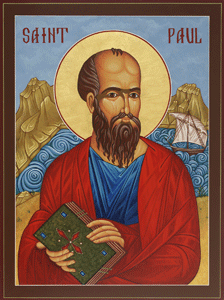
The New Testament reading from the Lectionary is taken from the Letter to the Ephesians.  Most scholars date this letter between 80 and 100 A.D., as the Church is maturing and struggling to practice a Christian life in community. The writer (perhaps Paul or perhaps one of his disciples) is deeply concerned with the notion of relationships, and the idea that our relationships with each other mirror our relationships with God.

The lesson begins with the notion of truth, of “putting away falsehoods.” Deception inhibits any chance for real love, and dealing with each other honestly provides the foundation for our relationship with God.  The call to the Christian life is more than a call to avoid lying or manipulation; God calls us to live our lives transparently.

Ephesians offers a unique theology behind this call to the truth–not simply that deception makes God angry or will keep us out of heaven.  Rather, Christ calls us into the truth because our lives are intertwined, because we are each other’s limbs. Deception infects the entire body, of which we are a part.  By setting aside falsehood and deception, therefore, we avoid self-mutilation, the destruction of the body of which we are a constituent part.

Ephesians then warns us against anger, and against allowing it to fester. The text cautions us against letting the sun go down on our anger because allowing resentment to build up makes “room for the devil.”  In my family, we used to joke about Irish Alzheimer’s:  that’s where you forget everything except the grudges.  Ephesians cautions us to work out our difficulties with our brothers and sisters quickly, before the infection of rage and resentment begins to spread.

The writer of Ephesians cautions us about our speech, warning us to avoid quarreling and slander.  The language of encouragement should provide the fundamental grammar of Christians. Rather than gossip, criticism or idle speech, we should immerse ourselves in the vocabulary of comfort and inspiration. We must all become wildly proficient in the language of blessing.

Ephesians then directs us:  “be kind to another.” There’s nothing new in this message; Jesus gave the same direction regularly. For the Christian, compassion and forgiveness are the fundamental currency of our economy. Grace must become our lingua franca: the basis of all our relationships. The text calls us to imitate God’s love in our dealings with each other.  We are called into a kind of profligate, extravagant love in Christ.  As the Dalai Lama has said:  “Be kind whenever possible.  It is always possible.”

The Letter to the Ephesians teaches us about the profound correlation between this new relationship the early Church had discovered with Christ and the everyday, concrete relationships in the world.  It teaches that we can never divorce the our spiritual lives from our workaday associations in our families and communities.  Authentic Christian spirituality is never simply ethereal or private: we live it out every single day, with every person we meet and with every word we speak.

Shabbat Shalom,

James R. Dennis, O.P.

© 2012 James R. Dennis