Category Archives: Anglican Dominican

The First Duty of Love


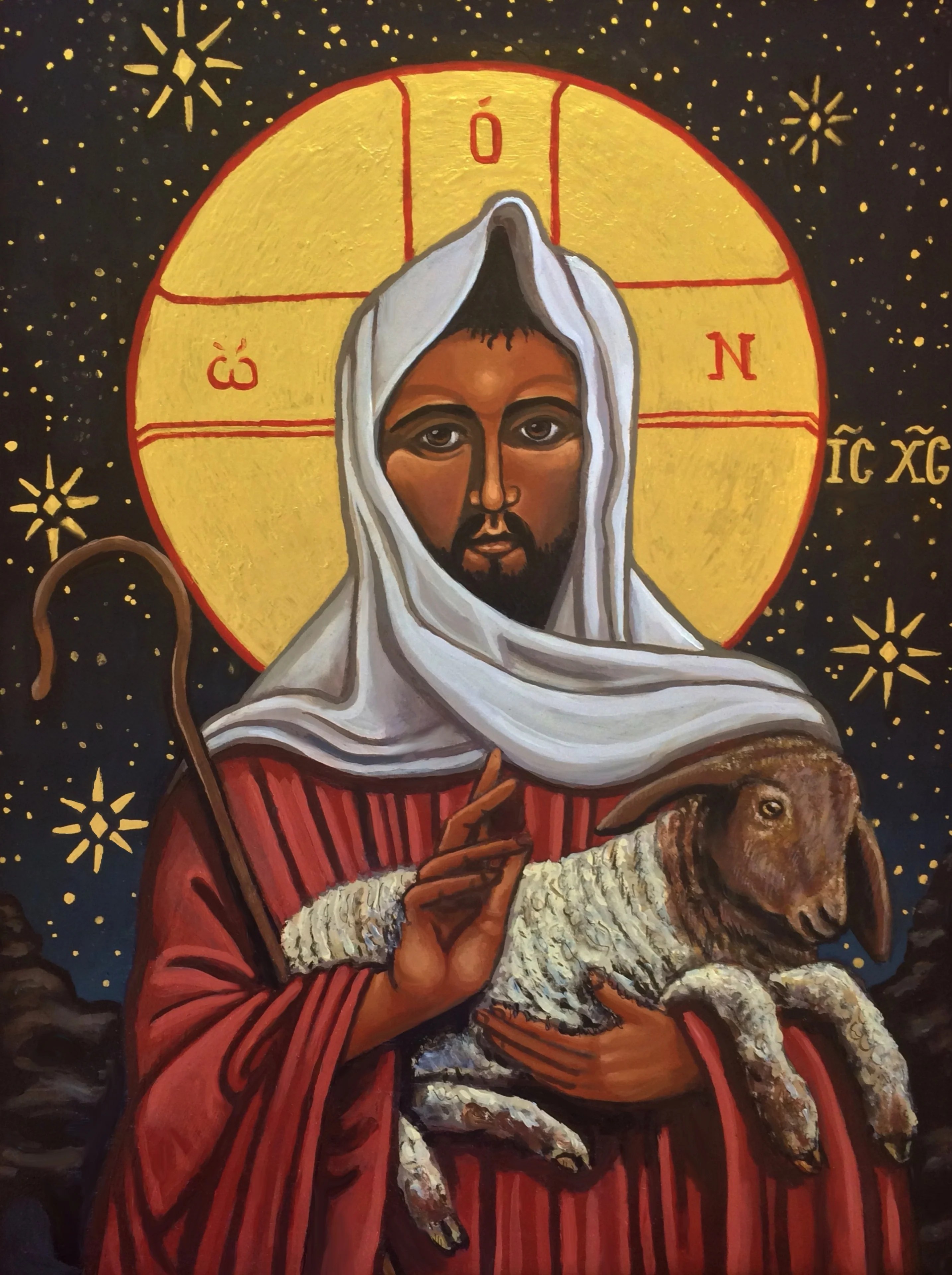
“I am the good shepherd. I know my own and my own know me, just as the Father knows me and I know the Father.” (The full readings for today can be found here.) In the name of the Living God, who is creating, redeeming, and sustaining us.

Well, good morning, everybody, good morning. You know, I’m not sure…no, I’m not sure at all. I’m not sure that I’m qualified to preach on this Good Shepherd Sunday. You see, my people were cattle people. They weren’t sheep people. And cattle people didn’t always get along with sheep people. By “not always,” I mean they never got along with each other.

And while there are a lot of differences between cattle and sheep, a couple of them come to mind. One of the biggest differences is that you can lead sheep, but you have to drive cattle. Unlike cattle, sheep will learn to follow. They build friendships and will stick up for one another. Like us, they are highly social animals, and when they are under stress or isolation, they become sad, and yes, even depressed. And they are very intelligent creatures; they recognize faces and voices. But like us, they will sometimes stray away from the herd, and need to be watched over.

In Jesus’ time, sheep were a mainstay of survival: they provided milk and cheese, and sometimes meat for the family and for sacrifices. They also provided wool for warm garments. But I think there’s something going on in John’s gospel than a discussion of first-century animal husbandry or livestock. I think this gospel reading is, at its core, about how we love, and how we are loved.

So, I think we should note a couple of things before we go on. And for this, I think we have to go all the way back to the beginning of John’s gospel, back to the very first time we meet this man called Jesus. You may remember that John was baptizing people in the river Jordan when he saw Jesus and shouted out: “Here is the lamb of God who takes away the sins of the world.” Now, lambs had been used as sacrificial animals for a long time by the Jewish people and were particularly associated with the holy feast of Passover.

We hear this same image, this same symbolic language in the last passage of John’s gospel, where the resurrected Jesus and Peter sit by a charcoal fire after breakfast.  And Jesus makes clear to Peter that Peter’s assurance of love carries with it a tender and sometimes difficult office, an obligation to feed his sheep. So, I want to suggest if we find this image being used in the beginning of John’s gospel, at the end of his gospel, and this morning pretty much in the middle of the gospel, we can probably safely assume that John thought this was important.

But as we read this, we might be forgiven if we have a moment of confusion. Is Jesus the lamb or the shepherd? Why is Peter feeding the sheep? Are we the sheep, or is Jesus the lamb? Quite frankly, it seems a bit complicated, and a little bewildering.

I think at least part of the answer lies, perhaps a bit veiled, in Jesus’ statement: “I am the good shepherd.” It’s one of what’s called the “I am” sayings of Jesus: you know, “I am the Bread of Life”, “I am the Light of the World”, “I am the vine,” and “I am the Good Shepherd.” In doing so, Jesus is aligning himself with a very old understanding of who God is. You remember the story from the Book of Exodus, when Moses asks God his name and God replies, “I am who I am.” For John, there is no difference between God and Jesus, the Word, the Logos. And for John, there is no difference between listening to Jesus and listening to God.

Jesus distinguishes his role from that of a hired hand. And at least part of the distinction has to do with how they react when the wolves come. Whether you’re a cattle person or a sheep person, you know about wolves. Lord have mercy, I believe we all know about wolves. You can find them in any walk of life—in business, in politics, and on our television screens. Sometimes those wolves come disguised as ambition or greed, sometimes as addictions, sometimes as failure, and sometimes as desperation.

You might argue that the distinction between the Good Shepherd and the hired hand is about their level of commitment. Perhaps the hired hand acts out of self-interest, while the Good Shepherd isn’t afraid of the wolves and understands his responsibilities. But I think there’s something more there. I think the Good Shepherd doesn’t run away when the wolves come because he acts out of something much more profound. Love, and only love, hangs around when the wolves come. Love, and only love, is willing to stand its ground when the situation gets risky. Only that kind of love is willing to lay down its life for the beloved.

Now, here’s the good news. We are the beloved. And Jesus is telling us that he loves us like that, that God loves us like that. And that kind of love doesn’t even ask what it costs, because it knows what it’s worth.
Later in this same Chapter of John, Jesus tells us “My sheep hear my voice. I know them, and they follow me.” I often wonder how well I’m listening for the voice of Jesus. When I get busy, when I get worried, or when I’m simply careless, it’s hard to hear.

You know, a very famous theologian named Paul Tillich said, “The first duty of love is to listen.” That’s worth repeating: “The first duty of love is to listen.” We have a lot of choices in this world as to which voices we’ll listen to. We can listen to the voices that tell us that our neighbors aren’t like us—voices that tell us that they’re not as smart as we are, or they’re freeloaders, or they’re dangerous. Or we can listen to the voices that tell us this world is full of risk and danger, that we might not have enough, or the voices that tell us that our lives will finally make sense if we just get that new car, that new outfit, that new iPhone, or earn enough to retire. We can listen to those voices that tell us that we’re not quite smart enough, not quite pretty enough, or not quite good enough.  

Or we can listen to the voice of the One who will never run away when the wolves come, the one who offers us forgiveness, the one who came to show us what an abundant life really looks like. We can listen to the One who laid down his life for us, who said he’d never leave us, who says he’s with us always, even to the end of time. That kind of voice, that kind of love, is hard to fathom; in fact, it’s one of life’s deepest mysteries.

We are sometimes told, “You are what you eat.” I think it’s equally true that we are what we listen to. The voices we hear can shape us in powerful ways. Genuine listening is an attitude of the heart, a vulnerability to the holy. If indeed the first duty of love is to listen, the choice we are compelled to make is which voice we are going to listen for. Maybe, just maybe, if we listen in love, we will hear the voice of the One who loves us limitlessly, who loves us fearlessly. Amen.

James R. Dennis, O.P. © 2024

Looking for the Light

While he was saying this, a cloud came and overshadowed them; and they were terrified as they entered the cloud. Then from the cloud came a voice that said, “This is my Son, my Chosen; listen to him!” (The full readings for today can be found here.)

            In the name of the Living God who creates, redeems, and sustains us. Well, good morning, everyone, good morning. First, I need to thank you all for your generous hospitality. It has been a joy and an honor to walk with you through this season of Epiphany. And I’m glad we could all be here together for this great feast day of the Church, the Feast of the Transfiguration.

            And we’ll get to the gospel for today, but before we do, I thought we might spend a few moments reviewing the magnificent kaleidoscope of images the Church has offered us during this season of Epiphany. We began with a crowd of people gathered around this strange prophet John who baptized Jesus by the river. And the sky broke open, and the Holy Spirit came down upon them like a dove, and God spoke: “I am well pleased with my Son, my beloved.” And I’m wondering if you good folk can ever hear God’s voice saying that about you, because I’m pretty sure that’s how God feels. And we wonder if that’s what a life with the Spirit is like—like being the favorite child.

            Now, turn that kaleidoscope just a little bit, and we find ourselves at a wedding. And we overhear Jesus’ mother, nudging him to do that God thing even though he says it’s not time yet. And we see this remarkable image: six stone jars, filled to the brim with astonishing wine. And we wonder if that’s what life with Jesus is like.

            The Church paints in a rich palette of wonder during epiphany—images of God manifest, God becoming clear to us in bright moments. If you sometimes go to church in the middle of the week, you found yourselves in Caesarea Philippi, considered a holy place for centuries, at the base of Mount Hermon, a place where springs of living water flowed out of nearby caves. And it’s there that Jesus asks that remarkable question: “But who do you say that I am?” Peter answers that he’s the Messiah, the son of the living God. But I think Epiphany is about each of us struggling to answer that question for ourselves. Who do you say that Jesus is? And we might wonder: Are we, too, the rocks upon which Jesus will build his church?

            And then, the next week we saw Jesus, back in his hometown, preaching his first sermon. And he told them about God setting the captives free, and blind people regaining their sight because this was the year of the Lord’s favor. And he rolled up the scroll, and he told them (and he’s still telling us): this is going on all around you. It’s happening now. And we ought to be looking around for it.

            And the next week, we heard the rest of that story. We heard how the congregation became angry because Jesus dared to suggest that God’s love wasn’t just for a select few, that it was available for everyone. And the people were so angry they wanted to throw Jesus off a cliff. And we might wonder about our place in that story.

            And then a week later, we saw these men out fishing on the lake, and they haven’t caught a thing all day until Jesus shows up and tells them to go out into the deep water. And when they do, they get so many fish that their nets are bursting with the catch. And I want you to try and imagine these boats, so full of fish that the boats are about to capsize. And when they return to shore, these men are compelled to follow Jesus wherever he goes, to follow him even to the Cross. And we begin to wonder if that’s what life with God is like—if it’s like going out into the deep water.

            And last week, we hear the story of a brother returning home and confronting his brothers who betrayed him, who almost killed him. And we heard how Joseph, the dreamer, and his brothers wept together. And many of us wept together. And we heard Jesus telling us that we had to forgive our enemies because that’s the kind of thing God does and we are God’s children. And we begin to understand what God is like and wonder if we too can act like that.

            All of this was kind of a long introduction to this morning’s Gospel, the story of the transfiguration. Now, transfiguration is a churchy word for change, but a particular kind of change: a change in which the light of God begins to shine through in a person’s life. And we began this morning with the story of Moses, coming down from the mountain having wandered for a long time in the desert, with the stone tablets. And the people saw that Moses’ encounter with God left his face shining because a genuine encounter with God will leave you changed.

            And we fast forward to the story of Jesus, who takes his friends up on the mountain to pray, and something remarkable happens. Suddenly, they see Jesus bathed in light, with Moses (who represents the law) and Elijah (who represents the prophets). And smack dab in the middle of them is Jesus, who’s about to make his last trip into Jerusalem. And a cloud comes over them and they’re terrified. You see, sometimes an encounter with the living God will do that: it’s not all unicorns and puppies and glitter.

And I want to make a suggestion. I’m not so sure that Jesus was changed at all. Maybe it was the disciples who had changed, and for the first time, they were able to see Jesus for who he really was. And we’ve come full circle, back to that first week of Epiphany, and we again hear God tell us that Jesus is God’s son, and we really need to listen to what he has to say.

            But the Church wants to leave us with one more image, one more tableau before we leave Epiphany. We see a father, begging Jesus for his help because his son is terribly ill with something like a seizure. And we think about those troubles in our own lives that will scarcely leave us. And we see the power of Jesus to heal us, even as he’s on his way to Jerusalem, even as he’s on his way to the Cross.

            Sometimes, we see God in these remarkable moments, like the Transfiguration. But more often, we see God in some very ordinary places and times: a crummy day of fishing, at a wedding, a troubled family reunion, a father frantically worried about a sick child, and yes, even a sermon that didn’t go so well. God has a funny habit of showing up when we don’t really expect it. God is kinda sneaky that way.

            Now, throughout this journey the Church has taken us on during the season of Epiphany, we’ve seen the stunning power of God, a light that enters into the darkness of our world. But in each of these passages, people saw the light of God because they were looking for it—sometimes, because they were desperate for it. It’s what one psychologist has referred to as the “scout mindset.”  Think of it like those puzzles you used to do when you were a child, where there were shapes of animals hidden in the trees or the landscape. And you could find them because you were looking carefully for them.

If we go looking for the problems or the trouble in this world, we will surely find thembecause they’re out there. On the other hand, if we are looking for the love of God and the ways it’s shown in the world, we’ll find that, too. Epiphany is about learning to look for the blinding incandescence of God in the world. We train our eyes to look for those moments in which the world is aglow with the burnished presence and love of Jesus. I have seen that light here, in this good Parish, and I know it’ll be here when I come back. Amen.


James R. Dennis, O.P. © 2022