Tag Archives: Theology

Laboring in the Soul’s Vineyard

All rational creatures have their own vineyard, their souls, their wills being the laborers appointed to work in them with freedom of choice, and in time, that is, for as long as they live.  Once this time is past they can work no more, whether well or ill, but while they live they can work at their vineyards in which I had placed them.  And these laborers in the soul have been given a strength no devil or any other creature can take from them unless they choose; for their baptism made them strong and equipped them with a knife of love and virtue and hatred of sin.

                              St. Catherine of Siena, from the Dialogue of Divine Providence

I found this wonderful little reflection in Fr. Robert Wright’s work, Readings for the Daily Office from the Early Church.  It’s particularly meaningful for me because Saint Catherine of Sienna was also a member of the Dominican Order.  She lived from 1347 until 1380, is one of the two patron saints of Italy, and has been named a Doctor of the Church.

Although a mystic, she was also a theologian and a Scholastic philosopher.  She lived during the time when the black death ravaged Europe.  Her parents had 25 children, although only about half of them survived to adulthood.  She worked very hard to bring unity and peace to the Roman Catholic Church, deeply loved the poor, and both befriended and occasionally chided Popes and clergy.  The Dialogue of Divine Providence treats the whole of our spiritual lives as a series of colloquies between the Father and the human soul.

In this profound passage, St. Catherine compares the soul to a vineyard.  We might immediately think of Jesus’ description of us as branches of a vine.  See John 15:5.  We might also think of the parable of the vineyard workers set out in Matt. 20:1-6.  With regard to this vineyard of the soul, Catherine observes that we have been given a specific time within which to complete our work.  Once our time is past, she observes, we “can work no more”.  St. Catherine reminds us that our time is relatively short, and that we must be about our spiritual work while we can.

To accomplish this work, our Father has provided us with powerful tools: the sacraments (and baptism in particular).  Catherine compares them to a knife (such as one might use to prune a vine), but this is no ordinary blade.  God has provided us with a “knife of love and virtue and hatred of sin.”  With these, the Almighty has equipped us to work in the soul’s vineyard.  Important work awaits you and me, and The Lord has given us tools that neither the devil nor anyone else can take away from us without our consent.  For the work of the soul, we have everything we need.

God watch over thee and me,

James R. Dennis, O.P.

© 2012 James R. Dennis
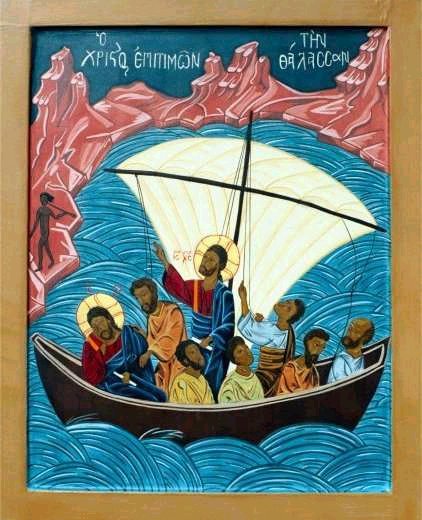
Peace! Be Still!

When evening had come, Jesus said to his disciples, “Let us go across to the other side.” And leaving the crowd behind, they took him with them in the boat, just as he was. Other boats were with him. A great windstorm arose, and the waves beat into the boat, so that the boat was already being swamped. But he was in the stern, asleep on the cushion; and they woke him up and said to him, “Teacher, do you not care that we are perishing?” He woke up and rebuked the wind, and said to the sea, “Peace! Be still!” Then the wind ceased, and there was a dead calm. He said to them, “Why are you afraid? Have you still no faith?” And they were filled with great awe and said to one another, “Who then is this, that even the wind and the sea obey him?”  Mark 4:35-41.

In the Gospel reading from today’s Lectionary, we find Jesus and the disciples after a long day of teaching and healing.  In fact, the crowds had swelled to such a point that Jesus had preached from the boat as the crowd listened on land.  Jesus devoted much of his teaching that day to explaining about the Kingdom of God.  I think we might interpret today’s Gospel in that context, although Jesus will now show the disciples what the Kingdom is like.

When a violent storm arises and threatens to swamp their boat, the disciples feel a genuine terror.  I have often asked the exact question that they raise:  “Do you not care that we are perishing?”  I have often asked God almost exactly the same question:  “Can you not see what’s going on down here?”  We wonder where God is while we struggle through our troubles, our danger, and our fears.  And yet, the disciples found that their rabbi was with them all along, sleeping in the stern of the boat.  So, this story suggests that while we are panicking in chaos and certain that we are perishing, Jesus remains right there with us, in the middle of the storm.

Mark tells us that Jesus rebuked the storm, telling the maelstrom:  “Peace!  Be still!” We all wish that we could give such instructions when chaos arrives.  What would happen if we could rebuke cancer, or automobile crashes, or church fights, telling them:  “Be still!”  Even the wind and the sea obeyed Jesus, but I suspect that’s mostly because Jesus had such a profound trust of the Father.

Earlier, I suggested that this Gospel passage, like those that immediately precede it, is about the Kingdom of God.  Jesus can sleep through the storm because He knows that God reigns over all, and wants to take care of, all creation.  While the control of meteorological events may seem beyond most of us, trusting God is well within our reach.  Perhaps then, we too can be still.

I wish you Sabbath peace,

James R. Dennis, O.P.

© 2012 James R. Dennis
Our Prayers

The idea of prayer is based upon the assumption of man’s ability to accost God, to lay our hopes, sorrows and wishes before Him.  But this assumption is not an awareness of a particular ability with which we are endowed.  We do not feel that we possess a magic power of speaking to the Infinite; we merely witness the wonder of prayer, the wonder of man addressing Himself to the Eternal.  Contact with Him is not our achievement.  It is a gift, coming down from on high like a meteor, rather than rising up like a rocket.  Before the words of prayer come to the lips, the mind must believe in God’s willingness to draw near to us, and in our ability to clear the path for His approach.  Such belief is the idea that leads us toward prayer. 

–Abraham Joshua Heschel, Man’s Quest for God.

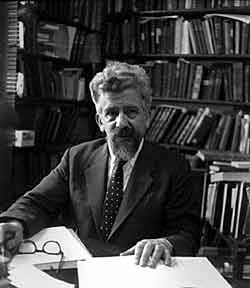
If you have been following this blog for very long, you know that I respect, admire and often refer to Rabbi A.J. Heschel.  I consider him one of the most profound spiritual thinkers and writers of the last century.  His thoughts are particularly compelling on the subject of prayer.

Too often, we think of prayer as something we initiate.  Rabbi Heschel suggests that, to the contrary, God continually invites us to partake in prayer with Him.  Sometimes we respond to that invitation; more often we do not.  As the Prayer Book observes, God remains “always more ready to hear than we to pray.”

We cannot list prayer as one of our achievements.  We answer the call to pray through grace; our prayer itself constitutes a gift from God.  We are not the Source of prayer, we merely respond to that Source.  Somehow, we have been given the audacity to address the Infinite.  We bring before the Eternal all our hopes and fears, our failures and our triumphs, our sorrows and our joys.

As Rabbi Heschel notes, our faith that God wants to share these things provides the conduit for prayer.  The bedrock of prayer lies in the bold presumption that the Almighty wants to draw us within Himself, to share in our lives so that we might share in His dreams for this world. Here, we encounter the great mystery of prayer.   In that single act of courage, we begin to clear a space for God’s entry into our lives.

God’s great peace on you and your house,

James R. Dennis, O.P.

© 2012 James R. Dennis

Christian Freedom


 For you were called to freedom, brothers and sisters; only do not use your freedom as an opportunity for self-indulgence, but through love become slaves to one another. For the whole law is summed up in a single commandment, “You shall love your neighbor as yourself.” If, however, you bite and devour one another, take care that you are not consumed by one another. Gal. 5:13-15.

Today’s reading from the Daily Office offers us a glimpse of St. Paul’s notion of Christian freedom.  Earlier in the passage, Paul says that Christ has set us free for freedom.  Gal. 5:1.  Paul notes that Christ has freed us, not only from the yoke of the Law, but also from sin itself. 

Generally, we think of being freed from some sort of difficulty (financial debt, addiction, or a broken heart).  Jesus has not only freed us from the law, He has freed us for a new relationship with the Father.  Thus, St. Paul tells us our new freedom does not liberate us for self-gratification.  If that were so, we would simply trade one set of chains for another.

St. Paul’s next move is somewhat surprising and offers us one of those paradoxes that we so often encounter in Christianity (a virgin birth, Jesus as fully divine and fully human, loving our enemies, etc.).  Paul tells us that Christ brought us liberty so that we might become “slaves to one another.”  We might well ask, “What kind of freedom is that?”   

St. Paul argues that the contrary view of freedom (absolute liberty devoted to selfish goals)  leads to an “eat or be eaten” way of living.  He says, “If, however, you bite and devour one another, take care that you are not consumed by one another.”  His language here conjures up images of wild animals tearing each other apart.  (I’ve certainly been present at dinner parties which would suggest that Paul was right.)  We have too often demonstrated the capacity for greed, humiliation, violence and making a way for ourselves on the backs of others.  Paul is right; we consume each other.

 St. Paul offers us another way: the Way of the Cross.  He tells us “the only thing that counts is faith working through love.”  Gal. 5: 6. Paul believes this new relationship with God compels us toward a life of charity and compassion. This new relationship with Christ draws us into a life of serving each other.  There, we will encounter the freedom to be the sort of people God intended us to be.  Stated another way, Jesus freed us to become the Church, His mystical body.  Beyond compliance with a set of rules and beyond the “righteousness trap”, St. Paul calls us to a life of devoted service to God’s children. 

That life of devotion, of self-denying love, constitutes the essence of the Christian life.  Saint Paul does not see a life in community, spent in the service of God’s children, as the best sort of Christian life.  Rather, he sees it as the only life than can authentically be called “Christian.”

God watch over thee and me,

James R. Dennis, O.P.

© 2012 James R. Dennis

In the Garden

The man and his wife heard the sound of the LORD God walking in the garden at the time of the evening breeze, and they hid themselves from the presence of the LORD God among the trees of the garden. But the LORD God called to the man, and said to him, “Where are you?” He said, “I heard the sound of you in the garden, and I was afraid, because I was naked; and I hid myself.” He said, “Who told you that you were naked? Have you eaten from the tree of which I commanded you not to eat?” The man said, “The woman whom you gave to be with me, she gave me fruit from the tree, and I ate.” Then the LORD God said to the woman, “What is this that you have done?” The woman said, “The serpent tricked me, and I ate.” The LORD God said to the serpent,

“Because you have done this,
       cursed are you among all animals
       and among all wild creatures;
upon your belly you shall go,
       and dust you shall eat
       all the days of your life.
I will put enmity between you and the woman,
       and between your offspring and hers;
he will strike your head,
       and you will strike his heel.”  Gen 3:8-15.

In today’s Lectionary reading, we encounter the third chapter of Genesis, taking us back to a time when God walked freely within His creation, a time before the separation of God and mankind, and before the separation of mankind and nature.  Yet through their disobedience, mankind has chosen to separate themselves.  I think that’s how it still works today.  We chose to move away from God, and find ourselves isolated and sometimes exiled.  

When God asks if they’ve eaten from the forbidden true, Adam’s response typifies our own response to being caught.  “It wasn’t my fault; you’re the one who made her, and she’s the one who gave the fruit to me.”  Eve joins in the fray, shifting the responsibility for these events to the serpent. 

The knowledge of good and evil leads, in a primordial sense, to our urge to compare ourselves to others.  Right from the outset, mankind is caught in a “worthiness trap”, in which we try to avoid the consequences of sin by comparing our tiny offenses to the far greater misdeeds of others.  Within this story, mankind discovers that it’s nakedness; we have learned shame.

I think the story also teaches us a bit about the nature of God.  God makes himself vulnerable to creation, endowing mankind with the free will to make choices, some of which are self-destructive.  This understanding of  God allowing Himself to be vulnerable to humanity will echo again in the story of Jesus, who suffers remarkable humiliation through His entry into human history.  It’s sometimes difficult for us to imagine an omicient, omnipotent God who somehow remains vulnerable to us, and yet, that seems to be exactly the sort of Father we have.

The third chapter of Genesis offers us an insightful examination into humanity’s instinctive habit of transgression, trespassing across the boundaries God has set for us.  Rather than depending upon God, mankind has sought its independence, we choose to discovery “good and evil” for ourselves.  The lynchpin upon which this story of the Fall turns is mankind’s refusal to trust God.  Our mistrust, not our sexuality and not our gender, places us on a path of separating ourselves from paradise and the Father.

For thousands of years, our stubborn insistence on our own ability to understand the nature of good and evil has resulted in a steady process of separation from the Source of our lives.  The story of Genesis teaches us about our remarkable ability to forget that this is God’s world, that we belong to His family, and our willingness to blind ourselves to the spiritual landscape that surrounds us. Genesis centers around a profound feeling of loss, the feeling that we have lost an intimacy with the Source of our lives.  The rest of the Bible examines the issue of how we might recover what we’ve lost.

Shabbat Shalom,

James R. Dennis, O.P.

© 2012 James R. Dennis
A Season For Everything

For everything there is a season, and a time for every matter under heaven: a time to be born, and a time to die; a time to plant, and a time to pluck up what is planted;  a time to kill, and a time to heal; a time to break down, and a time to build up;  a time to weep, and a time to laugh; a time to mourn, and a time to dance;  a time to throw away stones, and a time to gather stones together; a time to embrace, and a time to refrain from embracing;  a time to seek, and a time to lose; a time to keep, and a time to throw away; a time to tear, and a time to sew; a time to keep silence, and a time to speak; a time to love, and a time to hate; a time for war, and a time for peace.

What gain have the workers from their toil? I have seen the business that God has given to everyone to be busy with. He has made everything suitable for its time; moreover he has put a sense of past and future into their minds, yet they cannot find out what God has done from the beginning to the end. I know that there is nothing better for them than to be happy and enjoy themselves as long as they live; moreover, it is God’s gift that all should eat and drink and take pleasure in all their toil. I know that whatever God does endures forever; nothing can be added to it, nor anything taken from it; God has done this, so that all should stand in awe before him. That which is, already has been; that which is to be, already is; and God seeks out what has gone by.  Eccles. 3:1-15.

Today’s reading  from the Daily Office is taken from the book of Ecclesiastes.  We don’t know much about the writer of this book, who is generally referred to as Qoheleth, often translated as The Preacher or The Teacher.  Although the early Church attributed these writings to King Solomon, The Teacher probably lived much later, about 200-300 years before Jesus.

In the first section of the poem, The Teacher offers 14 pairs of events and their antipodes (keeping and throwing away, killing and healing, seeking and losing), which seem to offer a vision of a sort of balance within the universe.  Throughout the ancient world, the belief in specific, appropriate times ran very deep.  They looked for the right time to plant, to harvest, to build a house, or to begin a battle.  

Aligning one’s actions with divinely set times offered the best chance for success.  In a way, Jesus himself seems to have echoed this notion, having on one occasion told his mother “My hour has not yet come.”  John 2:4; see John 7:6. .  Later, in the Upper Room with the disciples, he said, “Father, the hour has come.”  John 17:1.  At a minimum, Jesus had a keen sense of divine time, and of working within God’s chronology.

The Teacher suggests that both within our lives, and within time itself, creation moves toward a kind of equilibrium.  The teacher also struggled, as many of us do, with questions about the real point of our existence, about the meaning of our sorrows and our joys.  Throughout all the seasons of our lives, God remains the only constant, and God alone remains sovereign.  Jesus announced that quite clearly when He told us, “The time is fulfilled, and the kingdom of God has come near ….”  Mark 1:15.  (Interestingly, these are the very first words the Savior speaks in Mark’s Gospel.) 

Although we struggle and strive, our efforts are mere vanities, as though we were “chasing after the wind.”  Eccles. 4: 16. None of our efforts will add to or subtract from God’s work.  As Rabbi Heschel taught, we will not be able to locate the meaning of our lives abstracted or apart from God.  As the Teacher observed, most of our work, and almost of all of the things we worry about, will pass away.  He tells us, however, that “whatever God does endures forever.”  Because we know that God loves us, we know that His love for us therefore will live forever.  In that, we find the good news, the Gospel.

May we feel that love today and throughout our time,

James R. Dennis, O.P.

© 2012 James R. Dennis

Holy, Holy, Holy

In the year that King Uzziah died, I saw the Lord sitting on a throne, high and lofty; and the hem of his robe filled the temple. Seraphs were in attendance above him; each had six wings: with two they covered their faces, and with two they covered their feet, and with two they flew. And one called to another and said:

“Holy, holy, holy is the LORD of hosts;
the whole earth is full of his glory.”

The pivots on the thresholds shook at the voices of those who called, and the house filled with smoke. And I said: “Woe is me! I am lost, for I am a man of unclean lips, and I live among a people of unclean lips; yet my eyes have seen the King, the LORD of hosts!”

Then one of the seraphs flew to me, holding a live coal that had been taken from the altar with a pair of tongs. The seraph touched my mouth with it and said: “Now that this has touched your lips, your guilt has departed and your sin is blotted out.” Then I heard the voice of the Lord saying, “Whom shall I send, and who will go for us?” And I said, “Here am I; send me!”  Isaiah 6:1-8.

In today’s reading from the Lectionary,  Isaiah describes the vision in which he received the call to his vocation as a prophet.  He locates this mystical moment at a very specific time,  “the year that King Uzziah died.”  King Uzziah had enjoyed a long reign (783-742 B.C.), during which Judah achieved the summit of its power.   The economic, agricultural, and military resources of the country increased substantially during his rule.    Like a Greek tragedy, however, Uzziah’s strength emerged as his great weakness.  He usurped the power of the priesthood, ultimately leading to an outbreak of leprosy on his forehead which precluded him from entering the Temple.  II Chron 26:18-21. 

The death of the King, especially under such metaphorical circumstances, placed the kingdom in a time of mourning and uncertainty. It was a time, as Shakespeare observed, to “sit upon the ground and tell sad stories of the death of kings”.   Richard II.  Upon entering the Temple during this troubling moment, Isaiah receives a mystical vision of God which sets the fledgling prophet on a unique path.  (It’s worth reminding ourselves that the prophets’ primary function was not foretelling the future.  They acted as the voice of the Lord, most often in the role of social critics.)

Isaiah has the remarkable experience of actually seeing the Lord (“Adonai”) in this vision.  Surrounding Adonai are seraphs who cry to each other, “Holy, holy, holy is the Lord of hosts, the whole earth is full of his glory.”  The threefold repetition of the Lord’s holiness should resonate with us particularly on Trinity Sunday.   

Like a number of Christian mystics, Isaiah’s initial response to this intense and personal encounter with the Almighty is one of profound humility, even inadequacy.  He says:  “I am a man of unclean lips, and I live among a people of unclean lips….” Overcome with a feeling of acute inadequacy, Isaiah expresses profound awe at this vision.

Rather than offering a word of consolation, one of the seraphs touches his lips with a burning coal, burning away his sin and freeing him to speak God’s word.  As a priest explained to me when I was a young boy, within this passage the seer is seared. I think for many of us this rings true:  our vocation does not always arise from a remarkably joyous event, nor does it occur without some pain. And yet, somehow this burning moment will both heal and enable Isaiah to become God’s voice.  Having been thus cleansed and healed, Isaiah can now hear God’s call and answer “Here I am; send me!”  In a very rich sense, that vision will provide the touchstone upon which the balance of Isaiah’s life and ministry will depend.

Too often, our world seems to have devolved into a pathology of the ordinary, where nothing is sacred.  For so many people, their experience of life and creation strikes them as commonplace, as profoundly ordinary.  This passage offers us a glimpse of something completely different.  Isaiah suggests a vision of creation brimming over with the divine, “full of his glory.”

For many of us in liturgical churches, the cry of the seraphs (“Holy, holy, holy”, known as the sanctus) now serves as a part of our weekly worship.  When we hear that wonderful hymn, I wonder if we also hear a call to our own vocation.  I wonder if we can hear the Lord asking, “Whom shall I send?” and whether we will answer that question. Isaiah’s encounter with the Living God changed him forever.  I pray that ours will, too.

Shabbat Shalom,

James R. Dennis, O.P.

© 2012 James R. Dennis

The Still Hour


So beautiful is the still hour of the sea’s withdrawal, as beautiful as the sea’s return when encroaching waves pound up the beach, pressing to reach those dark rumpled chains of seaweed which mark the last high tide.
     We have so little faith in the ebb and flow of life, of love, of relationships.  We leap at the flow of the tide and resist in terror its ebb.  We are afraid it will never return.  We insist on permanence, on duration, on continuity; when the only continuity possible, in life as in love, is in growth and fluidity–in freedom in the sense that dancers are free, barely touching as they pass, but partners in the same pattern.  The only real security is not in owning or possessing, not in demanding or expecting, not in hoping even.  Security in a relationship lies neither in looking back to what it was in nostalgia, nor forward to what it might be in dread, but living in the present relationship and accepting it as it is now.

Today’s reading from Celtic Daily Prayer suggests a problem many of us struggle with in our spiritual lives:  the gravitational pull of the past and present which distracts us from the current movement of the Spirit. I wonder if that’s not, in part, what Jesus had in mind when he said, “[I]f I do not go away, the Advocate will not come to you.”  John 16:7.  As long as Jesus remained physically with the apostles, they were trapped in the memory of their failures or lost in their Messianic expectations for the future.  God had something quite different in store for them.

The past and the future bind us in a kind of Pushmi-pullyu struggle.  We hear this in our churches regularly.  “I really liked the music before they changed it” or “I’m really worried about the direction our new minister is moving the church.”  I think we do something similar in our own lives.  “I was not brought up in a home where reading the Bible was important so that’s just not a big part of my spiritual life.”  “Maybe once the kids are gone we will go to church more regularly.”  We feel the gravitational pull of the past and the present, sometimes longingly, sometimes full of anxiety, but always distracting us from the present moment.

Sometimes, we encounter the diversion of longing for a time when we felt really close to God, or when church offered a more meaningful experience.   In Letters to Malcolm,  C.S. Lewis compared this to shouting “Encore!” to God.  We tell the Almighty things were better before, and want Him to make it like it used to be.  Lewis wrote, “It would be rash to say that there is any prayer which God never grants. But the strongest candidate is the prayer we might express in the single word encore. And how should the Infinite repeat Himself? All space and time are too little for Him to utter Himself in them once.”

Whether we find ourselves diverted by the past or the future, we confront the difficulty of locating God (and ourselves) in the present moment.  The movement away from the immediate always assumes that God’s presence today will not suffice.  We go chasing after a richer yesterday or running away from a distressing tomorrow, and run the risk of overlooking the presence of the Spirit today.  Perhaps we undervalue the advice of the psalmist:  “Be still and know that I am God.”

Pax Christi,

James R. Dennis, O.P.

© 2012 James R. Dennis

The Spirit of Truth

Jesus said to his disciples, “When the Advocate comes, whom I will send to you from the Father, the Spirit of truth who comes from the Father, he will testify on my behalf. You also are to testify because you have been with me from the beginning.

“I did not say these things to you from the beginning, because I was with you. But, now I am going to him who sent me; yet none of you asks me, `Where are you going?’ But because I have said these things to you, sorrow has filled your hearts. Nevertheless I tell you the truth: it is to your advantage that I go away, for if I do not go away, the Advocate will not come to you; but if I go, I will send him to you. And when he comes, he will prove the world wrong about sin and righteousness and judgment: about sin, because they do not believe in me; about righteousness, because I am going to the Father and you will see me no longer; about judgment, because the ruler of this world has been condemned.

“I still have many things to say to you, but you cannot bear them now. When the Spirit of truth comes, he will guide you into all the truth; for he will not speak on his own, but will speak whatever he hears, and he will declare to you the things that are to come. He will glorify me, because he will take what is mine and declare it to you. All that the Father has is mine. For this reason I said that he will take what is mine and declare it to you.”  John 15:26-27; 16:4b-15.

Today is the Feast of the Pentecost, which serves as the terminus of the cycle which marks and celebrates the life of Christ.  Easter has come and gone; Jesus has ascended to the Father. These events have filled the disciples’ hearts with sorrow.  Their Rabbi, their friend, is returning home and leaving them.

In other sense, however, we sometimes refer to as the birthday of the Church.    The Church must now learn to listen for the voice of God within the community of believers inspired by the Holy Spirit.  Jesus describes the Spirit as the Advocate (in Greek, parakletos).  The word parakletos connotes an advocate in a legal proceeding, who comes to the aid of a witness or a cause.  Just so, the Spirit will come to assist the disciples as they bear witness to the message of Jesus.  The term parakletos also connotes a comforter, an assistant and a companion.

Jesus has assured us of the presence of the Advocate, of the immediacy of the Spirit.  He promises that the Spirit will lead us into the truth. The Spirit will direct us through and to faith, a radical trust in the life and message of Jesus. Our Orthodox brothers and sisters refer to this process as theosis, a journey through which our lives become more and more deeply entwined with the life of the Father and the Son.  Remembering the image of Jesus as the vine, through the Spirit the life of the Father and the Son is grafted onto our lives, our history.

The reading today points also to the unity and interdependence of the Trinity.  Jesus teaches that “all that the Father has is mine” and that the Spirit will take what belongs to Jesus and declare it to us.  Jesus teaches that no member of the Trinity acts independently; similarly we need to learn to live interdependently. Pentecost involves learning to trust God as a companion, and learning to trust each other.

Henri Nouwen once wrote that “education to ministry is an education not to master God but to be mastered by God.”  Pentecost involves listening for the Trinitarian voice within the Church and in the world.  That voice will remain near us and within us.  Jesus promised us that the Spirit of Truth would offer us that sense of comfort, that sense of confidence, that sense of peace.

Pax Spiritus,

James R. Dennis, O.P.

© 2012 James R. Dennis

A Study of Wisdom

     Augustine said:      “The wise will shine like stars and those who can make others wise will be bright with eternal splendour.”      “Feed your soul on divine readings; they will prepare for you a spiritual feast.”  
Jerome said:
     “It is much better to speak the truth clumsily than to wax eloquently with a lie.”
Gregory said:      “Wisdom is to fear God and keep far from evil.”
“The beginning of wisdom is to avoid evil:  the second stage is to do good.”
     “Whoever wants to understand what he is hearing must hasten to translate what he has already heard into action.”
     Isadore said:      “Simplicity joined with ignorance is called stupidity: simplicity joined with prudence is called wisdom.”

Defensor Gramaticus Book of Sparkling Sayings, 18

Again, I found this piece in today’s readings from Drinking From the Hidden Fountain.  From a very early age, I have been attracted to the notion of wisdom, particularly as distinct (although not always separate) from intellect.  Wisdom seems to call for a special kind of “knowing”, and implies patience, simplicity, kindness, and carefulness.  In my experience, although intellect may be a personal quality, wisdom most often comes from community.

In the spiritual setting, that community involves listening creatively to the voices around us, including the voices of the past.  Holy Scripture, when read carefully, offers us the collective wisdom of the Church. That “great cloud of witnesses”, the saints who have gone before us, they get a vote, too.  Similarly, the we sometimes locate wisdom collective voice of the Church.

I particularly like the quotation from Gregory, suggesting that our notion of wisdom is always incomplete if we simply try and avoid evil.  Real wisdom lies in seeking out the good.  Rather than simply avoiding sin, we are called to make this world a better place:  alleviating suffering, helping out the poor, visiting those who are sick or in prison, and binding up the brokenhearted.  Perhaps there we will find wisdom, in the translation from a good idea to a committed heart.

God watch over thee and me,

James R. Dennis, O.P.

© 2012 James R. Dennis