Tag Archives: Moral Theology

There Once Was a Man

There was once a man in the land of Uz whose name was Job. That man was blameless and upright, one who feared God and turned away from evil.

One day the heavenly beings came to present themselves before the LORD, and Satan also came among them to present himself before the LORD. The LORD said to Satan, “Where have you come from?” Satan answered the LORD, “From going to and fro on the earth, and from walking up and down on it.” The LORD said to Satan, “Have you considered my servant Job? There is no one like him on the earth, a blameless and upright man who fears God and turns away from evil. He still persists in his integrity, although you incited me against him, to destroy him for no reason.” Then Satan answered the LORD, “Skin for skin! All that people have they will give to save their lives. But stretch out your hand now and touch his bone and his flesh, and he will curse you to your face.” The LORD said to Satan, “Very well, he is in your power; only spare his life.”

So Satan went out from the presence of the LORD, and inflicted loathsome sores on Job from the sole of his foot to the crown of his head. Job took a potsherd with which to scrape himself, and sat among the ashes.

Then his wife said to him, “Do you still persist in your integrity? Curse God, and die.” But he said to her, “You speak as any foolish woman would speak. Shall we receive the good at the hand of God, and not receive the bad?” In all this Job did not sin with his lips. Job 1:1; 2:1-10.

In the Old Testament reading, the Lectionary leads us to the Book of Job, a vastly rich and yet deeply challenging selection.  Virginia Woolf once famously said, “I read the book of Job last night. I don’t think God comes out of it well.” I have felt the same way on occasion, but we should remember a number of things as we reflect on this marvelous book.

First, the Book of Job offers us a parable, not a history.  Even the introductory line (“There was once a man in the land of Uz whose name was Job”) sounds a bit like a child’s fairy tale. We also get a hint that this is a parable in the notion the next line, with the notion that Job was “perfectly upright.” Thus, we’re dealing with an archetype here.  Job represents the best of our humanity in a narrative told to teach us a lesson. The parable muses on the theme “Why do the righteous suffer?”

Many of us have wondered why the wicked or the godless prosper, while good people sometimes seem to carry insurmountable burdens.  The Book of Job reflects on the latter issue. Jesus also addressed this issue when He said, “I say to you, Love your enemies and pray for those who persecute you, so that you may be children of your Father in heaven; for he makes his sun rise on the evil and on the good, and sends rain on the righteous and on the unrighteous.”  Matt: 5:44-45.

We should also remember that this book was written sometime between the 6th and 4th centuries before Christ.  By that time, the chosen people had already endured slavery under the Egyptians, the Assyrian exile and the Babylonian exile.  They had seen the destruction of the Temple, which for them constituted the intersection of heaven and earth.  Having suffered through slavery, famine, conquest and separation, they might rightly have wondered: chosen for what, exactly?

So, we have this text before us in which God appears to enter into a wager with Satan.  It’s also important to remember in Hebrew the word Satan isn’t a name; it’s a title or a function.  It meant something like the accuser, the prosecutor, or the adversary. If we read this work as a parable, rather than a history, it might have something to teach us about the kind of accusations that get tossed about when we (either as individuals or as a people) find ourselves engaged in spiritual warfare.  And we might take a little comfort from the idea that God seems to have a remarkable faith in Job’s (and perhaps our) ability to weather life’s storms.

When The Adversary strikes Job down with a hideous disease, and Job’s wife questions his “foolish” commitment to God, Job’s response resounds in our hearts.  He says “Shall we receive the good at the hand of God, and not receive the bad?” That question will echo throughout the rest of the book of Job. Job answers what some have called the Prosperity Gospel, the notion that “good things happen to good people” (and implicitly therefore, bad things happen to bad people).  We still hear the ruminations of that today in modern Christianity, and Job calls it what it is: balderdash.

I hope to come back to Job again soon.  I think the pearl is well worth the dive.  Despite it’s childlike opening, the Book of Job offers us anything but a fairy tale.  The book of Job sets out the struggle of faith, a struggle against faithlessness in the confrontation of pain and anguish. We find Jesus engaged in that same struggle on Golgotha as he cries out “Eli, Eli, lema sabachthani” (My God, My God, why have you forsaken me)? I think, at some time, most of us will find ourselves in that struggle, and we rightly pray to be saved from that time of trial.

Shabbat Shalom,

James R. Dennis, O.P.

© 2012 James R. Dennis
Have Salt in Yourselves

John said to Jesus, “Teacher, we saw someone casting out demons in your name, and we tried to stop him, because he was not following us.” But Jesus said, “Do not stop him; for no one who does a deed of power in my name will be able soon afterward to speak evil of me. Whoever is not against us is for us. For truly I tell you, whoever gives you a cup of water to drink because you bear the name of Christ will by no means lose the reward.

“If any of you put a stumbling block before one of these little ones who believe in me, it would be better for you if a great millstone were hung around your neck and you were thrown into the sea. If your hand causes you to stumble, cut it off; it is better for you to enter life maimed than to have two hands and to go to hell, to the unquenchable fire. And if your foot causes you to stumble, cut it off; it is better for you to enter life lame than to have two feet and to be thrown into hell., And if your eye causes you to stumble, tear it out; it is better for you to enter the kingdom of God with one eye than to have two eyes and to be thrown into hell, where their worm never dies, and the fire is never quenched.

“For everyone will be salted with fire. Salt is good; but if salt has lost its saltiness, how can you season it? Have salt in yourselves, and be at peace with one another.” Mark 9:38-50.

Jesus had a funny habit.  He often encountered those who would try to draw a boundary between the holy and the unholy, between the sacred and the profane, between the clean and the unclean.  Whenever he ran into these boundaries, Jesus would step on the other side.  He did it with lepers. He did it with tax collectors. He did it with prostitutes and those who were sick and lame and even the Gentiles.  He even crossed the boundaries drawn around the Sabbath. He did it so often that we begin to wonder if there’s a message in there.  And in today’s Gospel, He does it again.

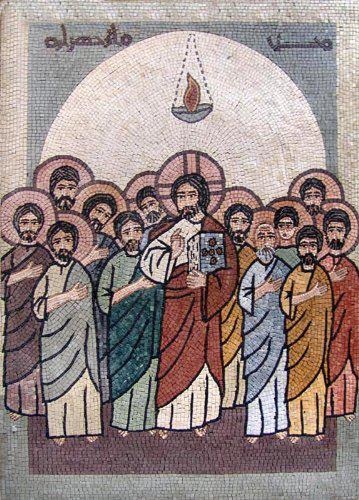
In the first section of this passage, the disciples express their concern that someone outside their circle has also engaged in the healing ministry. It’s at least worth noting that this passage in Mark follows the scene in which the disciples were squabbling among themselves about who was the greatest. Mark 9:32-34. That story ended with Jesus taking a small child (another outsider in that society) into his arms and explaining that those who welcome such a child actually welcome Jesus and his Father. In today’s reading, Jesus continues teaching his disciples about letting go of their sense of self-importance and widening the circle of holiness far beyond themselves.

We hear the echoes of John’s criticism (he was “not following us”) too often as we hear Christians speak of other believers, other denominations, and other faiths. Jesus wants to “welcome” the children; John is concerned with those who are “not following us.” Jesus affirms even the simplest act of kindness, a cup of water, done in His name.

Jesus sharply contrasts those who offer kindness, who encourage, with those who get in the way of someone’s journey to the Father. Those who scandalize these little ones or cause them to stumble, Jesus teaches that Gehenna awaits them. (Gehenna, the Valley of Hinnom, was a ravine south of Jerusalem where child sacrifices to Moloch had taken place.  Jeremiah 7:31; 32:35.)  After King Josiah destroyed the altar to Moloch, it became a continuously burning trash, used as a metaphor for the torment of the wicked.

Jesus teaches that we must rid ourselves of whatever causes us to stumble, even if it’s our hand, our foot, or our eye. I don’t think Jesus is advocating self-mutilation.  He’s telling His disciples to separate themselves from anything that interferes with their path to the Father. He advocates a clear focus on the things that bring us closer to the kingdom of God, even if we must shed ourselves of ourselves.

The closing paragraph may seem strange to our modern ears.  At the time, however, both salt and fire were used medicinally.  They were used to treat wounds; thus, Jesus is saying that everyone will find their healing, their wholeness. To “share salt” with someone, to share a meal, carried with it the implication of fellowship.  The expression “have salt in yourself” meant “be at peace with yourself.”  Salt was also used as a preservative and carried with it the implication of permanence. Jesus thus encourages His disciples (and us) to find our healing and reconciliation by making peace with ourselves, and with our brothers and sisters.

I pray we find that peace, not by excluding others from the circle of holiness, but my looking for God and His kingdom in all times and all places.

Shabbat Shalom,

James R. Dennis, O.P.

© 2012 James R. Dennis

Sown in Peace for Those Who Make Peace

Who is wise and understanding among you? Show by your good life that your works are done with gentleness born of wisdom. But if you have bitter envy and selfish ambition in your hearts, do not be boastful and false to the truth. Such wisdom does not come down from above, but is earthly, unspiritual, devilish. For where there is envy and selfish ambition, there will also be disorder and wickedness of every kind. But the wisdom from above is first pure, then peaceable, gentle, willing to yield, full of mercy and good fruits, without a trace of partiality or hypocrisy. And a harvest of righteousness is sown in peace for those who make peace.

Those conflicts and disputes among you, where do they come from? Do they not come from your cravings that are at war within you? You want something and do not have it; so you commit murder. And you covet something and cannot obtain it; so you engage in disputes and conflicts. You do not have, because you do not ask. You ask and do not receive, because you ask wrongly, in order to spend what you get on your pleasures.

Submit yourselves therefore to God. Resist the devil, and he will flee from you. Draw near to God, and he will draw near to you. James 3:13-4:3, 7-8a.

Within today’s Lectionary, the New Testament offers us this wonderful passage from the Epistle of St. James.  We think, but are not certain, that this letter was written sometime around 48-50 A.D. In many ways, James is one of the most “Jewish” books of the New Testament, and echoes with themes and language of the Wisdom literature. Clearly, at this time, Christians were being persecuted by the Gentiles (including the Romans), the Jewish authorities, and sometimes by others within the Christian community.

As to the conflicts within the Church, James observed that many who boastfully claimed to have the authority of truth were motivated by “bitter envy and selfish ambition.” Real wisdom and understanding, writes James, manifest themselves through gentleness and peace.

Many of us today find ourselves embroiled in conflict and controversy within our churches.  James doesn’t suggest we resolve that the way the world does, through power and banging a few heads together until people learn how to behave. Rather than the wisdom that comes from the Father, James calls that way of resolving conflict earthly, unspiritual,  and devilish.

James offers a vision of God that suggests a gentle Lord, the good shepherd, the Prince of Peace. Reading James, we might think of the Agnus Dei, the Lamb of God. He outlines the attributes of divine wisdom: first purity, “then peaceable, gentle, willing to yield, full of mercy and good fruits, without a trace of partiality or hypocrisy.” James 3:17. That’s the kind of wisdom which might pray “Forgive them, Father, for they know not what they do.” Luke 23:34.

What would our churches look like if we recognized the willingness to yield as real wisdom?  How would our churches operate differently if we saw gentleness as a quality of Christian leadership?

In The Cost of Discipleship, Bonhoeffer wrote: “The followers of Christ have been called to peace .… And they must not only have peace but also make it.” James suggests that, as Christians, we must not only live in peace; we must create peace. When we decide to live without a trace of hypocrisy, we can no longer preach Christ while engaging in conflict. He calls us to set aside some of our personal righteousness, choosing divine righteousness instead.

If we surrender to God and resist the devil, James tells us, the devil will flee from us.  Our ancient enemy always calls us toward the idea of our own merit, our own righteousness.  In the Book of Genesis, the serpent told Eve that if she ate of the forbidden fruit she would not die.  Rather, “‘God knows that when you eat of it your eyes will be opened, and you will be like God, knowing good and evil.’”  Gen. 3:5. In the temptation in the desert, Satan offered Jesus the glory and authority of all the earth’s kingdoms.  Luke 4:6.

James suggests quite a different path:  surrendering to God.  Walking with God in all humility may lead us to a quite different destination than that to which the world points. If we follow it, the world may yet see a sign of hope in the Church, a sign of hope in those who call themselves the friends of God.  And if we draw ourselves closer to the Living God, James tells us that God will draw Himself closer to us.

My Dominican brother Thomas Aquinas instructed us that we were created for just such a purpose: we were made for intimacy with God.  We cannot achieve that kind of intimacy while we are bickering with each other. And we might just discover that a pure love of God leads to an unmixed love of His children.

Shabbat Shalom,

James R. Dennis, O.P.

© 2012 James R. Dennis

Evidence of Our Inhumanity

It is folly, it is madness, to fill our wardrobes full of clothes and to regard the indifference a human being, a being made in the image and likeness of God, who is naked, trembling with cold and almost unable to stand.
You say, “But that fellow there is pretending to tremble and not to have any strength.” So what?  If that poor fellow is putting it on, he is doing it because he is trapped between his own wretchedness and your cruelty.  Yes, you are cruel and guilty of inhumanity.  You would not have opened your heart to his destitution without his play-acting.
If it were not for necessity compelling him, why should be behave in such a humiliating way just to get a bit of bread?
The made-up take of a beggar is evidence of your inhumanity.  His prayers, his begging, his complaints, his tears, his wandering all day long round the city did not secure for him the smallest amount to live on.
That perhaps is the reason why he thought of acting a part. But the shame and the blame for his made-up tale falls less on him than on you.
He has in fact a right to be pitied, finding himself in such an abyss of destitution.  You, on the other hand, deserve a thousand punishments for having brought him to such humiliation.
John Chrysostom, On the First Letter to the Corinthians, 21, 5.

I found this passage in today’s reading from Drinking from the Hidden Fountain: a Patristic Breviary.  The passage is taken from St. John Chrysostom, the Archbishop of Constantinople who lived from around 347 through 407 A.D. He was a marvelous preacher and public speaker, who was given the nickname chrysostomos, meaning “golden mouthed.” He regularly spoke out against the abuse of authority by both political and church leaders. Because of this, he was arrested, exiled and banished several times.

In today’s reading, St. Chrysostom criticizes our lack of charity, our lack of concern and love for the poor among us.  He characterizes this as “madness.” He teaches that our treatment of the poor, our indifference toward them, reflects an indifference toward God. While our wardrobes are full, we ignore these images of God who are naked and shivering in the cold.

Regarding the suggestion that the poor might be exaggerating their plight, Chrysostom turns that argument back on us.  He suggests that the poor would not do so but for our cold-heartedness.  (We still hear a related version of this suggestion today: that the poor do not merit our help because they are lazy or comfortable and have chosen their life.) St. Chrysostom responds that it’s unlikely that people voluntarily chose to surrender their dignity.  More likely, he says, any exaggeration is simply meant to overcome our natural indifference.

On occasion, I’m at the my church kind of late.  Now and then, someone will come in asking for money.  I have to admit that I sometimes confront a voice in my head that says, “You’re being played for a sucker here.”  But I think St. Chrysostom would remind me that even if that’s true, that’s none of my affair.  That’s between them and God.  The choice before me, rather, is whether I want to overcome that skepticism with charity.  I hope I’m willing to run the risk that, when I die, someone might write in my obituary that I sometimes loved foolishly. I hope you are willing to take that risk too.

God watch over thee and me,

James R. Dennis, O.P.

© 2012 James R. Dennis

The Spiritual Danger of Loose Talk

Not many of you should become teachers, my brothers and sisters, for you know that we who teach will be judged with greater strictness. For all of us make many mistakes. Anyone who makes no mistakes in speaking is perfect, able to keep the whole body in check with a bridle. If we put bits into the mouths of horses to make them obey us, we guide their whole bodies. Or look at ships: though they are so large that it takes strong winds to drive them, yet they are guided by a very small rudder wherever the will of the pilot directs. So also the tongue is a small member, yet it boasts of great exploits.

How great a forest is set ablaze by a small fire! And the tongue is a fire. The tongue is placed among our members as a world of iniquity; it stains the whole body, sets on fire the cycle of nature, and is itself set on fire by hell. For every species of beast and bird, of reptile and sea creature, can be tamed and has been tamed by the human species, but no one can tame the tongue– a restless evil, full of deadly poison. With it we bless the Lord and Father, and with it we curse those who are made in the likeness of God. From the same mouth come blessing and cursing. My brothers and sisters, this ought not to be so. Does a spring pour forth from the same opening both fresh and brackish water? Can a fig tree, my brothers and sisters, yield olives, or a grapevine figs? No more can salt water yield fresh. James 3:1-12.

In the Gospel reading two weeks ago, Jesus warned us that we are defiled, not by the things we put in our bodies, but by the things that come from within.  Mark 7: 20-23. In the Epistle reading from last week, James cautioned us to be quick to listen and slow to speak. James 1: 19. Today, St. James amplifies on the grave dangers of our speech, especially for preachers and teachers.  We can almost hear the echo of Isaiah, who spoken of himself as lost, “a man of unclean lips and I live among a people of unclean lips….”  Isaiah 6:5.

St. James uses three powerful metaphors to describe the power our speech possesses.  He compares it to a bridle which can take control of a powerful horse, a rudder which can set the course for a large ship, and a tiny spark that can consume an entire forest.  He calls our tongues “a restless evil, full of deadly poison.”

James particularly abhors our duplicity. He notes the scandal of using our tongues to praise God and yet curse the children made in His image. In the following chapter, James describes this dangerous deceit as being “two souled” (dipsychos).  James 4:8. Elsewhere, he calls this being “double-minded”. James 1:8. We find examples of this in Christians (perhaps ourselves) who use speech to malign, to gossip, to attack, to humiliate and to condemn. In recent events in the Middle East, we have all seen the consequences of hateful speech, and counted the costs associated with it.

Rather than such duplicity, James calls us into “the word of truth.”  James 1:18. Such words (words of healing, encouragement, forgiveness and reconciliation) call us back from the brink, and back to a sacramental style of living. The Epistle to the Ephesians called this speaking “the truth in love.” Eph. 4:15.

We need to be aware of the toxic power of speech to separate us from God’s children and from the Source of all holiness.  It’s worth noting that, in the Book of Genesis, God spoke the world into creation.  We might wonder what sort of world we are speaking into existence.  Those who follow Christ must immerse themselves in the vocabulary of grace and the grammar blessing.

Shabbat Shalom,

James R. Dennis, O.P.

© 2012 James R. Dennis

Our Common Prayer

We have stressed the fact that prayer is an event that begins in the human soul.  We have not dwelled upon how much our ability to pray depends upon our being a part of a community of prayer.
It is not safe to pray alone.  Tradition insists that we pray with, and as a part of community; that public worship is preferable to private worship.  Here we are faced with an aspect of the polarity of prayer. There is a permanent union between individual worship and community worship, each of which depends for its existence upon the other.  To ignore their spiritual symbiosis will prove fatal to both….
[The] truth is that private prayer will not survive unless it is inspired by public prayer.  The way of the recluse, the exclusive concern with personal salvation, piety in isolation from the community is an act of impiety….Our relationship to [God] is not as an I to a Thou, but as a We to a Thou.

If you’ve been following this blog for any length of time, you know that I’m a devotee of Rabbi Abraham Joshua Heschel.  One of the most profound thinkers on prayer and spirituality in the last century, perhaps in any century, Heschel always leaves me with a sense of wonder. I took this reading from his wonderful book, Man’s Quest for God. He observed that prayer constituted “our humble answer to the inconceivable surprise of living.”

In this reading, Rabbi Heschel suggests that our spiritual lives depend on our common prayer, and our prayers remain somehow incomplete when we restrict ourselves to private prayer. That good rabbi argues that private prayer and prayer actually depend upon each other.  He calls this a spiritual symbiosis; private prayer and prayer in community need each other for either to be able to thrive.

This offers an answer for both those whose prayer life consists merely of attending church on Sunday morning, and for many (if not most) of those who consider themselves “spiritual, but not religious.” (In my experience, many of the latter are those who’ve been wounded or hurt by the Church at some point, and have simply decided that their spirituality is safer in private.)

In the final section, Heschel clearly offers a gloss to Martin Buber’s classic work, I and Thou. Rabbi Heschel suggests that the really important relationship is We and Thou. Most of us belong to many communities of faith. We’re members of churches or parishes, prayer groups, study groups, families, religious orders or just people who gather together for prayer, study and accountability.  Each of these support, enhance, complete and inform our private prayer and our spiritual lives.

In one sense, our collective prayer and our private prayer are like the two levers on a pair of pliers.  Neither of them have a great deal of utility alone; together, they combine to achieve their purpose.

We not only enrich each other; we come to depend upon each other.  And somewhere in that process, we discover that these relationships are icons for the relationship which really sustains us: our relationship with the Living God.

Be blessed today, and be a blessing,

James R. Dennis, O.P.

© 2012 James R. Dennis
Interpreting the Law

How must we interpret this law of God?  How, if not by love? The love that stamps the precepts of right-living on the mind and bids us put them into practice. Listen to Truth speaking of this law: “This is my commandment, that you love one another.”  Listen to Paul:  “The whole law,” he declares, “is summed up in love”; and again: “Help one another in your troubles, and you will fulfill the law of Christ.” the law of Christ–does anything other than love more fittingly describe it?  Truly we are keeping this law when, out of love, we go to the help of a brother or sister in trouble.

But we are told that this law is manifold.  Why?  Because love’s lively concern for others is reflected in all the virtues.  It begins with two commands, but soon embraces many more.  Paul gives a good summary of its various aspects.  “Love is patient,” he says, “and kind; it is never jealous or conceited; its conduct is blameless; it is not ambitious, not selfish, not quick to take offense; it harbors no evil thoughts, does not gloat over other people’s sins, but is gladdened by an upright life.” Moral Reflections on Job by Gregory the Great.

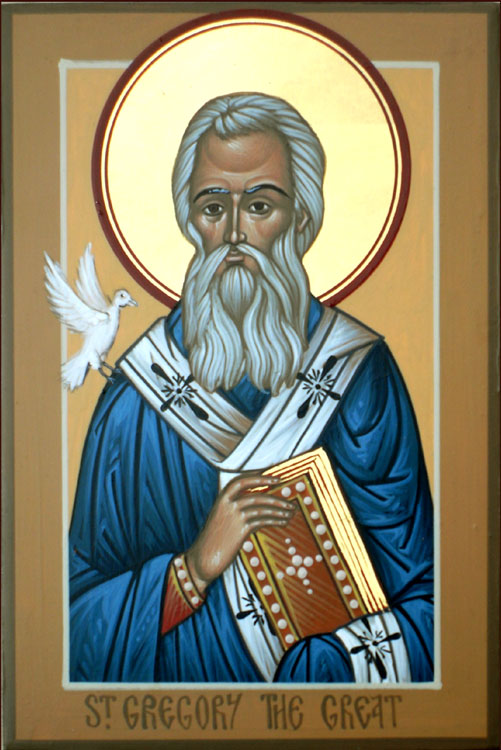
I ran across this passage earlier this week in the Readings for the Daily Office from the Early Church. St. Gregory makes a number of powerful observations that help us understand Holy Scripture.  Principally, he enjoins us to read the Torah (the Law) through the lens of love.  Jesus taught that all of the law and all of the prophets hung on the commandments to love God and love our neighbors. Matt. 22:40.

In Jesus’ day (just as in ours), some argued that the scriptures should be read as an exclusionary document.  Thus, many (lepers, those with physical infirmities, women, and outsiders) were excluded from the Temple.  Jesus asked the Pharisees, “What have you done to help them inside?” Through acts of love and mercy, Jesus brought many back within the circle of faith.  The Pharisees used the scriptures as a club to beat people away from the gates of the church.  Jesus, interpreting the scriptures through the template of love, showed us how to welcome God’s children back home.

We see this same tension played out in the book of Job.  Job endures calamity upon catastrophe without blaming God for what’s happened to him.  His three “friends” (Eliphaz, Bildad, and Zophar) arrive to convince him that God always punishes evil and rewards good, so somehow, Job must’ve sinned. Job’s friends do have a superficial understanding of the scriptures; they just don’t understand much about love, or God for that matter.  (A very good friend of mine observes that Job’s friends did everything right: until they open their mouths.)

Those who follow Christ know that all scripture, the Old Testament and the New, must be read with eyes of love. If we love God and His children, we cannot leave those in need behind.  And once we recognize that love provides the Rosetta Stone by which we interpret all the teachings of Scripture, we find ourselves compelled to love more broadly and more deeply.  We find ourselves breathing in a climate of grace, and we begin to  learn the language of blessing.

God watch over thee and me,

James R. Dennis, O.P.

© 2012 James R. Dennis

Doing the Word

Every generous act of giving, with every perfect gift, is from above, coming down from the Father of lights, with whom there is no variation or shadow due to change. In fulfillment of his own purpose he gave us birth by the word of truth, so that we would become a kind of first fruits of his creatures.

You must understand this, my beloved: let everyone be quick to listen, slow to speak, slow to anger; for your anger does not produce God’s righteousness. Therefore rid yourselves of all sordidness and rank growth of wickedness, and welcome with meekness the implanted word that has the power to save your souls.

But be doers of the word, and not merely hearers who deceive themselves. For if any are hearers of the word and not doers, they are like those who look at themselves in a mirror; for they look at themselves and, on going away, immediately forget what they were like. But those who look into the perfect law, the law of liberty, and persevere, being not hearers who forget but doers who act-they will be blessed in their doing.

If any think they are religious, and do not bridle their tongues but deceive their hearts, their religion is worthless. Religion that is pure and undefiled before God, the Father, is this: to care for orphans and widows in their distress, and to keep oneself unstained by the world. James 1:17-27.

I have always loved today’s Lectionary reading from James, for a number of reasons. He reminds us that following Jesus requires living into our beliefs, rather than merely accepting certain concepts or propositions. I love good, challenging theology, but that’s not James’ purpose. This is deep, richly practical Christianity.

James begins with the remarkable statement that all our works of love come down from the Father of lights. All of our charity, all of our generosity, all of our love: James tell us these come from heaven. This means, of course, that God constantly works to better this world.

James then cautions the believers to be quick to listen, although slow to speak and slow to anger. As I listen to squabbles within my own denomination, or heaven forbid read the flaming posts that carry on religious debates on the blogosphere, I understand why the Church thought James’ epistle needed to be in the Bible.

James advises us all to stop and think a few moments before we respond with a quick anger and find ourselves regretting patiently. Mother Teresa once made a powerful observation about the genuine function of Christian speech.  She said, “I am a little pencil in the hand of a writing God who is sending a love letter to the world.”

He warns us against fooling ourselves: all our piety, if we can’t bridle our tongues and live into the life of Christ, is nothing more than self-deception. At that time, the most vulnerable members of society were widows and orphans. They lived on the margins of first century Palestine.  James cautions the Church: real religion consists of taking care of God’s children when they can’t take care of themselves and avoiding the stain if sin.  James calls that the “pure religion,”and everything else is just holy smoke.

Shabbat Shalom,

James R. Dennis, O.P.

© 2012 James R. Dennis

Letting Go of Fear

If someone really does not care whether they live or die it is hard to threaten them.  If our identity lies in whose we are, and not just who we are, then even loss of reputation will only be a temporary setback.  The need to be someone, to have clout, to command respect, to have prestige or position, these are shackles every bit as strong as those of materialism.
To be seen as holy, or spiritually mature, someone of depth, having a quiet authority: are these not also ambitions, or bolsters of our status?
If we can only reach the true poverty and yieldedness of not “needing to be” anything (even a humble nothing), then we will be truly invisible.  We will be unable to be bought by any pressure.

–Celtic Daily Prayer

Today’s reading from Celtic Daily Prayer offers us several lessons about our spiritual lives. I taught a class Sunday on one of the primary threats to our relationship with God: fear.  When we turn onto the highway of fear, we find that it’s full of toll roads.  Fear may be our Ancient Enemy’s most powerful weapon.  When I look back on the worst mistakes I’ve made in my life, I find that they were motivated by a common denominator:  I was afraid.

Fear can manifest itself in a number of ways.  The more our wealth increases, the more we fear that we might lose it: through thieves, market fluctuations, taxation, or that it just might not be enough. Thus, Jesus regularly cautioned us about letting go of our wealth.

Today’s reading, however, cautions us about another kind of fear: the need to be well thought of, to command respect, and achieve spiritual advancement.  It’s a caution that I take to heart.  From a very early age, I wanted to be “the smartest guy in the room.”  And for those of us in the religious life, our fear can push us into a fear of spiritual disrespect.  It’s a very special kind of pride, which can manifest itself in a particular type of fear.  We wonder, “What if they don’t listen? What if they think I’m shallow?”

And yet, Jesus taught us that the kingdom of heaven would belong to the poor in spirit. Matt. 5:3. What does spiritual poverty mean to us?  The notion reminds me of Job, who lost everything there was to lose. (Coincidentally, the readings from the Daily Office are focussing on Job. The icon above is a very old icon of Job.)  Every last bit of pride was stripped from him. And yet, Job never abandoned the Source of his life. In many ways, I think the Book of Job is one of the most Christian books of the Old Testament.

The trick, I think, lies in remembering (as Celtic Daily Prayer reminds us) not so much who we are as whose we are. We are beloved children of God and we belong only to Him.  Nothing else matters so much as that.  And when we come to that realization, like Job, we find comfort in the knowledge that “my Redeemer lives.”  Job 19:25.

May the peace of Christ disturb you profoundly,

James R. Dennis, O.P.

 © 2012 James R. Dennis

The Feast of the Holy Mother

*Welcome, Mary, sister in faith;
the Lord has surely chosen you.
The life leaps within me
to herald the fruit of your womb
which is Jesus!
Who am I
that the mother of my Lord
should come to me?
Pray with me now,
and always.
Amen.

*Weep, Mary, a mother’s tears.
Your son must die,
thrust high in agony.
Alone in suffering
separated from His Father’s smile
by sin we laid upon Him.
Blessed in He
who comes in the name of the Lord.
Now, Mary, be mother to John
and all who will lean, like him,
close to the heart of Christ,
and watch with Him in the hour of death.
Amen.

*You, Mary, who knew His grace,
now you’re with the Lord.
Blessed is any who walks with God,
then is not here, but taken–to Jesus!
Hold us, Mary, at peace with God;
join with the prayers of the penitent,
now and at the gate to life.
Amen.

I found this prayer, this little liturgy, in the Celtic Book of Daily Prayer.  It seemed appropriate, because today is the Feast of the Blessed Virgin Mary, the Holy Mother of Our Lord. Mary has always held a special place for members of the Dominican Order, dating back to very early in the Order’s history. So, I thought I’d make a few observations about Mary.

First, Mary seems to offer a special place of devotion for those who’ve had their hearts broken.  One can’t look at the Pieta without immediately recognizing Mary’s special understanding of heartache and sorrow. The Holy Mother also  speaks gently to those who understand the risk of faith.

When Mary answered “Yes” to God’s call, she laid aside her plans for her life and undertook the risk of an unwed pregnancy.  In first century Palestine, that kind of thing could get you in trouble; it could get you killed. Mary (who would have been known as Miriam) thus teaches us about allowing God to interrupt your plans, and willingly accepting the cost of becoming God’s instrument. She showed us how to trust God and how to live without fear.

For many of us, Mary serves as the gateway to, and the icon of, the Incarnation.  If God’s decision to walk among us as a man was indeed the pivotal point of human history, it was Mary who cleared that path.  She offers us the key to Jesus’ full humanity.  Her tears on Golgotha demonstrate that this was no metaphor and no mere spiritual apparition.  Hanging on that Cross was Mary’s little boy whom she had raised from His birth in a stable.

The Holy Mother also teaches us a good deal about the faithful response to mystery.  When Gabriel told her of God’s plans, she didn’t ask a lot of questions.  She didn’t need to understand what happened at Cana; she simply witnessed it.  I’m fairly confident Mary didn’t understand the need for the crucifixion or how the Resurrection changed the world. I doubt she had a firm grasp of the Pentecost.  And yet, there she stood: a witness (martyr in the Greek) staring across the precipice of the greatest mysteries of our faith.

Our Orthodox brothers and sisters refer to Mary as the Theotokos (the God-bearer).  Mary teaches us all about the importance of bringing Christ into the world, of being pregnant with the message of the Kingdom.  I pray we all can bring God into a world which needs Him now as much as it ever has. I know she will join in that prayer.

God watch over thee and me,

James R. Dennis, O.P.

© 2012 James R. Dennis