
During this interstice between the 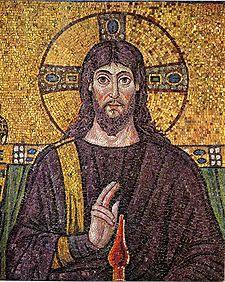 High Holy Days of Rosh Hashanah and Yom Kippur, I thought we’d examine the Sh’ma Yisrael, or Shema. For many observant Jews, the Shema offers the central prayer service of Judaism. The recitation of this prayer twice daily is a commandment. As a good Jew, Jesus would certainly have followed this practice. Deuteronomy instructs us that we shall say this prayer upon lying down and rising up. Deut. 6-7. Some have suggested that the Shema functions less as a prayer than as a creed, a statement of the binding principles of the Jewish faith.
The first section of the prayer begins: “Hear, oh Israel, the Lord our God is One. You shall love the Lord your God with all your heart, and with all your soul and with all your might.” We might examine those two sentences more closely.
The opening line of the Shema reminds God’s people of God’s oneness. This sometimes seems counterintuitive to us. God created the universe in all its complexity, hears the prayers of billions and billions of people and knows their needs. God authored gravity and the immense power of the stars. Surely, that God is incredibly complex. Sometimes, God seems like such a decent fellow, when all is going well and our bellies are full. At other times, when life isn’t going so well, we perceive God as uncaring, or perhaps even vengeful. Yet the Shema reminds us that of the simplicity of God, despite the complexity we might perceive.
St. Thomas wrote often of the simplicity of God. Summa Theologiae 1.3.7; Summa contra Gentiles 1.22.9-10. In fact, Aquinas described God as “infinitely simple.” The Oneness, or simplicity of God, provides the unifying power, the unifying event and idea for our disparate perceptions. No other ideology or vision or philosophy can replace God as the single, ultimate ground of meaning. The Shema expresses God’s sovereignty, God’s kingship, over all creation and creatures.
St. John comments on God’s oneness when he observes quite simply that “God is love.” 1 John 4:8. This leads us directly to the second passage of the Shema which continues: “And you shall love the Lord your God with all your heart, and with all your soul and with all your might.” This passage suggests that our love of the Lord must be single-minded: there is no room here for duplicity. If we truly loved unambiguously, there would be little space in our hearts for the separation of sin. Learning to love God this way requires a great deal of us. Great love always does. The Shema provides the central focus of our spirituality: loving God. But it also teaches that where we encounter love, we encounter the divine center of things.
Jesus clearly understood the central nature of the Shema. A scribe asked Christ, “Which is the greatest commandment?” Jesus answered directly from the Shema:
Jesus answered, ‘The first is, ‘Hear, O Israel: the Lord our God, the Lord is one; you shall love the Lord your God with all your heart, and with all your soul, and with all your mind, and with all your strength.’”
Mark 12: 29-30. Jesus then added a gloss to the Shema, taking his reference from Leviticus:
“The second is this, ‘You shall love your neighbour as yourself.’ There is no other commandment greater than these.”
Mark 12:32. Jesus teaches that these two commandments provide the framework, the scaffolding, for the balance of the Scriptures. Matt. 22:40. Because “our neighbors” are made in the image of God, our love of them reveals the depth of our love of the Almighty. Our capacity to love God is bounded by our capacity to love “our neighbors.”
Understanding the Shema, then, isn’t something clever or broad-minded Christians can discuss at cocktail parties. It provides us with a deep and profound understanding of who Jesus was and what he thought was important. Praying the Shema at morning and in the evening, then, helps us to understand Christ. We have a great deal to learn from our Jewish brothers and sisters. Jesus thought so, anyway.
Shabbat Shalom,
James R. Dennis, O.P.
© 2011 James R. Dennis


