Tag Archives: Forgiveness

Laying Down Our Arms

“Father, I have sinned against heaven and before you; I am no longer worthy to be called your son; treat me like one of your hired hands.” Luke 15: 18-19.

Without a doubt, the story of the Prodigal Son is one of my favorite passages of Scripture, in part because it provides a well from which I can always drink.

In the last post, we considered the many ways we try to bargain with God. I believe our sin provides one of the clearest examples of this. We try and dicker with the Almighty: “Well, I may have fudged on my taxes, but look at how often I’ve gone to church.” Or, “I may have driven my car when I was drunk, but no one got hurt, and that’s not something you really care about, is it God?” Part of the problem here is that we’ve begun to see sin as doing something naughty, or as a minor punch list item that we need to tend to before we can consider our lives complete. That vision of sin overlooks its fundamental nature: sin separates us from God. We need to re-think the nature of sin, regarding it as something that moves us further away from the source of our lives, making it harder and harder to return home.

The story of the prodigal son teaches exactly that lesson. The son wrongfully asks his father for inheritance while the father is still living. (In the culture of that day, such a request would amount to telling your father, “I wish you were dead.”) The son then goes to “a distant country.” I don’t think that’s a coincidence, nor do I think Jesus is just using a narrative device. I think Jesus is teaching us something fundamental about the nature of sin. Our sin always drives us away from our heavenly Father. And one of the truly horrific things about sin lies in how easy it is, once we’ve taken that first step, to keep moving further and further away. We find ourselves in places where it seems truly impossible to ever get back home.

But Jesus teaches us about the way home in the story of the Prodigal Son. It starts with his recognition, while still in that distant country, that he nothing about his life works anymore, and that he has become a stranger even to himself. He tells himself to get up and return to his father and tell him: “Father, I have sinned against heaven and before you; I am no longer worthy to be called your son….” The recognition of his own betrayal of his father leads the prodigal to a humility and a recognition of broken bonds. He makes no excuses for himself; he offers no defenses for what he has done.

The parable teaches us that the path back home begins with the recognition that our sins aren’t minor flaws that require a few slight adjustments. Rather, as Newman observed, through the sins which separate us from God, we have become rebels and must “lay down [our] arms.” As Newman also noted, “The most noble repentance (if a fallen being can be noble in his fall), the most decorous conduct in a conscious sinner, is an unconditional surrender of himself to God—not a bargaining about terms, not a scheming (so to call it) to be received back again, but an instant surrender of himself in the first instance.” J.H. Newman, Parochial & Plain Sermons (vol. 3, Sermon 7).

There’s nothing easy about this. None of us wants to give up on the notion of defending ourselves, of building a case for what we did and why. We want to convince God that it wasn’t so bad or that we had good reasons for what we’ve done: that we really are good people. That’s part of the reason why the Church has stressed the virtue of humility for centuries. It’s the only way we’ll learn to trust God, and trust that He will always take us back. The Psalmist noted that we can’t bargain or dicker with God; we can’t earn our way back into our home with our sacrifices. “The sacrifice acceptable to God is a broken spirit; a broken and contrite heart, O God, you will not despise. ” Ps. 51.

My prayer for you and for me is that we learn to trust God and lay down our arms. What would the world look like if we did that? I suspect it would look a lot more like the Kingdom.

Pax,

James R. Dennis, O.P.

© 2011 James R. Dennis
 

September 11

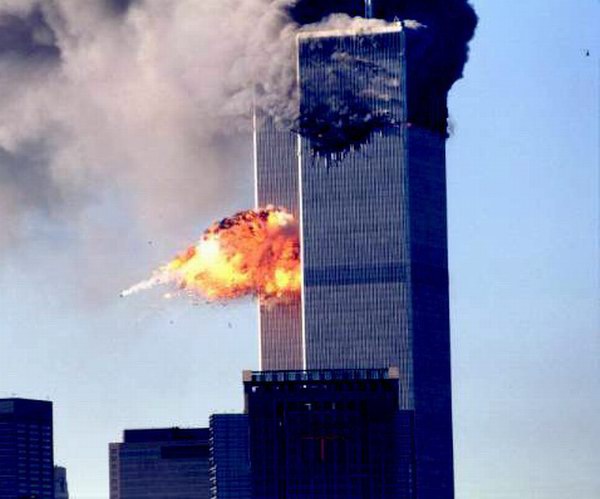
It was, by all accounts, a beautiful late summer morning.  The temperatures were in the upper sixties, and the sun shone brightly against a brilliant blue sky.  At 8:46, American flight 11 traveling from Boston to Los Angeles crashed into the North Tower.  There were 91 passengers aboard.  At 9:03, United Airlines flight number 175 flew into the South Tower.  It carried 65 passengers, as it travelled from Logan Airport to  Los Angeles.  Then, at 9:30, American Airlines flight 77, which carried 64 passengers, crashed into the Pentagon. A total 2,996 people died, including the 19 hijackers.  At 10:10 a.m., United Airlines flight 93 crashed in rural Shanksville, Pennsylvania killing all 44 passengers aboard.

I thought we might consider those events ten years ago, about the consequences of that day, and particularly the changes in our spiritual lives as a result of that morning.  Among those consequences, our nation has been at war for the last ten years.  4,442 soldiers gave their lives in Operation Iraqi Freedom, and over 1,600 died in Operation Enduring Freedom.  It is extremely difficult to estimate the number of civilian casualties of these wars, but most calculations range somewhere between 150,000 and 1.2 million.  Estimates of the costs of these wars range between one and three trillion dollars, and they continue to mount.

We mourn the deaths of the 2,996 Americans who lost their lives ten years ago, and we may also mourn the hundreds of thousands of Iraqis and Afghans who have died since then.  We might also mourn the shameless treatment of prisoners in Abu Ghraib, and the wisdom of a place like Guantanamo Bay.  We might mourn the loss of our civil liberties in the Patriot Act and the Foreign Intelligence Services Act, which now authorizes searches of emails and wiretapping without judicial review.  We actually engaged in a national debate about whether torture was acceptable, and somehow that debate seemed to hinge on a cost-benefit analysis.

The September 11 attacks led to a remarkable resurgence of faith, or at least faithful activity.  People across the nation filled our churches and rediscovered a need for a spiritual answer to a very worldly problem.  We are right to wonder why people turn to God in times of crisis, but cannot sustain that conversion.  The biblical witness, however, teaches that we have been doing that for thousands of years.  Somehow, as our fears are calmed and our wounds are bound, our spiritual indifference resumes.  While time has healed some of those wounds, we have also acquired a sort of national amnesia about how sorrowful, broken and vulnerable we felt.

One of the other consequences of that day is our national fear, and perhaps prejudice, of those who practice the Muslim faith.  I’m not sure who the boogeyman was on September the 10th, but after September 11, he clearly had a middle-eastern face.  Somehow, these men became “Muslim terrorists,” although we did not use the term “Christian terrorists” to describe the Ku Klux Klan.  As Kofi Anan, has observed so wisely, the problem lies “not with the faith but with the faithful.”

We might look to the reflection of the Archbishop of Washington on this subject.  He said:

All violent acts of injustice, acts of destruction, and the taking of innocent life find their origin in the attitudes of the human heart. Evil dwells within. Jesus told us it is not what enters in from outside that defiles a person but the things that come from within are what defile. (Mark 7:15).

The great cosmic struggle between good and evil, between light and darkness, between peace and war, between harmony and violence, between love and hatred, begins first in each human heart, is waged there – and true peace depends on the outcome.

I am deeply troubled by the observation of Archbishop Desmond Tutu, who said: “We failed the biggest test posed by the 9/11 outrage: In our anger and dismay we failed to recognize our common humanity, that we are made for love and that acts such as those committed on that day are an aberration.”

There’s a certain irony in the name of the massive bureaucracy we created in the wake of September 11:  the Department of Homeland Security.  To create that department and fund our wars, we have incurred a national debt of trillions of dollars.  We might well ask about the security risks posed by that debt.  I suspect the people of Jericho felt very secure behind their walls, and the Philistines probably felt very safe with Goliath on their side.  The Egyptians probably rightly thought of themselves as a superpower as they approached the Red Sea.

I wonder if we really ever will achieve security, and I think the Scriptural witness suggests that our only security, our only real safety, lies in God.   Our spiritual efforts to move forward and get past that day may require us to take a great many risks.  Then again, the Cross is full of just such risks.

Pax,

James R. Dennis, O.P.

© 2011 James R. Dennis