Tag Archives: Bible

Let It Be

Annunciation

In the sixth month the angel Gabriel was sent by God to a town in Galilee called Nazareth, to a virgin engaged to a man whose name was Joseph, of the house of David. The virgin’s name was Mary. And he came to her and said, “Greetings, favored one! The Lord is with you.” But she was much perplexed by his words and pondered what sort of greeting this might be. The angel said to her, “Do not be afraid, Mary, for you have found favor with God. And now, you will conceive in your womb and bear a son, and you will name him Jesus. He will be great, and will be called the Son of the Most High, and the Lord God will give to him the throne of his ancestor David. He will reign over the house of Jacob forever, and of his kingdom there will be no end.” Mary said to the angel, “How can this be, since I am a virgin?” The angel said to her, “The Holy Spirit will come upon you, and the power of the Most High will overshadow you; therefore the child to be born will be holy; he will be called Son of God. And now, your relative Elizabeth in her old age has also conceived a son; and this is the sixth month for her who was said to be barren. For nothing will be impossible with God.” Then Mary said, “Here am I, the servant of the Lord; let it be with me according to your word.” Then the angel departed from her. Luke 1: 26-38.

“The Holy Spirit will come upon you, and the power of the Most High will overshadow you; therefore the child to be born will be holy; he will be called Son of God. Then Mary said, “Here am I, the servant of the Lord; let it be with me according to your word.” In the name of the living God: Father, and the Son, and the Holy Spirit.

          She was just a little Jewish girl, not from a particularly important family. Not especially well-educated, almost certainly not wealthy in any sense to which anyone would pay attention. And she didn’t live in an important place, or hang around with the “important” people. She was just a teenage girl, living on the corner of a dead end street, in an occupied country at the outer edge of the Roman empire. She came from Nowheresville, and she was a nobody.

          In this final week of Advent, the Church invites us to reflect on something miraculous: a virgin being pregnant, God becoming human, the infinite becoming finite. In one sense, we shouldn’t be surprised by it, this is the sort of thing that God’s been doing all along: creating life where there was nothing: women too old to give birth (like Sarah and Hannah, like Mary’s cousin Elizabeth), life springing up where there where it was barren, where it was dead.

          The angel tells Mary that she is favored by God, that she is full of grace. This nobody, this teenage girl on the edge of nowhere, mattered to God. And the angel Gabriel called her “full of grace.”  You see, Mary found a place where all of her, and all of God, could dwell. A place deep within her life where her life and God’s life would be joined together in a bond that neither time nor trouble could ever break. Love was coming to dwell in her: to make a home there, to abide there. And I wonder if we can hear Gabriel saying that to us, telling us that we are also favored. God chose a very ordinary girl, in a very ordinary place, because God sees the grace in ordinary people and ordinary places. For all of us, that’s got to be good news.

          And there’s something remarkable about God coming to dwell among us, making an appearance, not on a fiery chariot or with bolts of lightning descending in some really cool special effects, but coming to us as a baby. Babies offer the bright, shining hope of something new, something full of promise, something noisy. And most importantly, something vulnerable. And Mary, in that moment, was remarkably vulnerable. Because you see, in first century Palestine, being an unwed mother wasn’t just something a little embarrassing, a little shameful. That was the kind of thing that could get you killed. So, Mary, took a risk. The risk of embarrassment and shame, humiliation and scandal. Well, that would mark her Son’s life, too. And that day, just like this morning, God took a risk, too.

          A lot depended on her response to God. For thousands of years, we had been mired in sin, separated from God, wallowing in our disobedience. A great chasm had opened up, long ago, in that garden, and we couldn’t get back across to the other side. Something had to change. We needed a miracle.

         Back in the 12th century, an important Saint of the church, a French Cistercian monk named Bernard, gave a really important sermon on the Annunciation and Mary’s response. And he wrote that for that brief instant, while waiting on Mary’s reply, time itself stood still.

          For that brief moment, all creation waited on her answer. In heaven, the angels and seraphim and cherubim stopped their singing. And in hell, for a moment, the screeching stopped. The principalities and the powers came to a halt. And even God leaned over the banister, waiting to hear Mary’s reply. You could’ve heard a pin drop, and then she said, ” “Fiat mihi secúndum verbum tuum.” Let it be with me according to your word. And a great music arose and the angels and all the host of heaven broke into shouts of joy, and in hell all the demonic forces cried in anguish because Lucifer’s plans for this world had been overthrown and God’s creation would be restored. But in a very real sense, Mary’s “yes” to God was simply an echo of God’s “yes” to humankind, the God who said “yes” to us time and time again, and is still saying that to you and me today.

          And in the 14th century, Meister Eckhart, one of my Dominican brothers, asked a very important question. He noted, “We are all meant to be mothers of God. But what good is it to us if this eternal birth of the divine Son takes place unceasingly, but does not take place within us? And, what good is it to us if Mary is full of grace if we are not also full of grace? What good is it to us for the Creator to give birth to his Son if we do not also give birth to him in our time and our culture? This, then, is the fullness of time: When the Son of Man is begotten in us.”

          So, I think we have to confront the question, are we willing to carry the Christ child, and bring Him into the world? Are we willing to risk God coming alive in us, here and today? Are we willing to answer yes to God, and share in God’s dreams for the world? You see, Mary’s story teaches us that very ordinary people (people like us), can do extraordinary, miraculous things when they are vulnerable to God’s choices in the world.

          This life is not always easy, but during this Holy Season of Advent, we might reflect on the words of St. John of Liverpool, who said:

 When I find myself in times of trouble
Mother Mary comes to me
And in my hour of darkness
She is standing right in front of me
Speaking words of wisdom, let it be.

          Let us cut a path through the noise and chaos and pain of this world. Let us make straight the way of the Lord, let it be.

          Let us build a temple in our hearts and make room for the Christ child in a world that still says there’s no room for God’s children. Let it be.

          In a world that is obsessed be power and wealth and stuff, let us turn to a woman who risked everything and a God who risked everything for the life of the world. Let it be.

          Let the lame walk, let the blind see, let us feed the hungry, and let the captives go free. Let the whole world look through that beautiful window and let them see nothing less than the kingdom of God in our hearts.

         Let us set aside for the moment our commitment to human justice, and live lives full of mercy. And from the springs of that mercy, let God’s justice rain down like a mighty river. Let it be.

          Let us turn away from racism, from our disrespect for God’s people and his world, and from treating some lives as more important than others. Let it be.

          Let it be that we beat our swords, our aircraft carriers and our drones, into ploughshares, turning away from violence and struggle and war. Let there be peace on earth and let it begin with us. Let it be.

          Let it be that those who are hopeless, living in fear and those tormented by illness and darkness find the Light of the World, and come to know compassion in a world that’s simply tired of caring. Let it be.

         Let us turn in love to those who are forgotten, those who are broken, those who are down on their luck, and share the good news of God’s love with a world that’s forgotten what love looks like. Let us set aside our own ambitions and share in God’s dreams. Let it be.

Let it be with you, let it be with me. Amen.

James R. Dennis, O.P.

© 2014 James R. Dennis
The Feast of St. Ignatius of Loyola: A Homily

Ignatius of Loyola

The readings for the Feast of St. Ignatius of Loyola can be found here:

 
Jesus said to him, ‘Let the dead bury their own dead; but as for you, go and proclaim the kingdom of God.’

In the name of the living God: Father, Son and Holy Spirit.

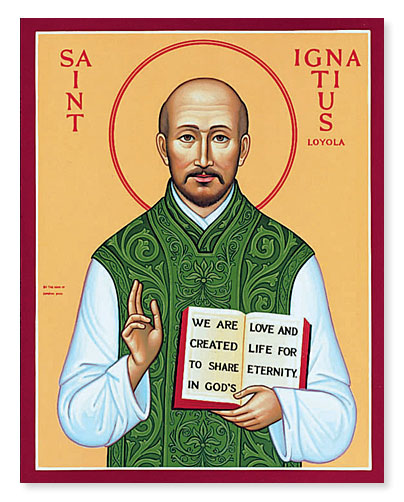
          Good morning, and welcome as we come together to celebrate the feast of St. Ignatius of Loyola, who founded the Society of Jesus, which most of us know as the Jesuit Order. I feel especially close to him, because many of my first teachers were Jesuits.

          You know, I’ve been thinking a lot about the modern Christian Church, and it seems to me one of the central problems we have today is that many of us view our faith like a drunkard views a street lamp. We use it for support, rather than illumination.

          It was not always so. In fact, St. Ignatius of Loyola was one of the brightest lights in the history of Christianity. He was born in 1491, and in his former life he was a Spanish knight from a Basque noble family. When he was seriously wounded in battle around the age of 30, however, he underwent a significant religious conversion. Ignatius became a mystic, spending many hours a day in prayer and also working in a hospice.

          During that time, he had a remarkable spiritual experience. He had a vision in which he said that he learned more than he did in the rest of his life. This vision seems to have involved a direct encounter with God, so that all creation was seen in a new light and took on a new meaning and relevance, an experience that allowed Ignatius to find God in all things. This grace, finding God in all things, serves as one of the central characteristics of Jesuit spirituality.

          At the age of thirty-three, he began to study for the priesthood, although he was so poor at the time he found himself begging for food and shelter. He was also jailed by the Inquisition at this time. Around then, he and six companions made solemn vows to continue their lifelong work of following Christ. He founded what would become the Jesuit Order.

          While he was living as a hermit, Ignatius began to develop a set of exercises, designed to help believers discern the movement of the Spirit. One of the crucial notions in these exercises is the idea of “indifference,” of being indifferent to the concerns of the world—not in the sense of caring about people or things less, but in the sense of not letting our ego and our attachments get in the way of our relationship with God. As Christians, we are called to be indifferent to whether we’re well-known and influential or obscure, whether we’re rich or poor, or even healthy or sick. Our focus must be on whether God is present in our lives—and God is always present, is right there with us, closer than we are to ourselves.

          And I think that’s part of what Luke is trying to explain in today’s passage from the Gospel. It’s a harsh passage, a shocking thing: hearing Jesus tell a man to disregard the burial of his father, and it doesn’t give way to easy explanations. But sometimes we have to ignore a good thing to pursue a holy thing: our highest calling to follow God single-mindedly. I think Jesus is explaining that being a disciple sometimes requires us to make hard choices: to decide if we really do love the Lord our God with all our hearts, all our souls, and all our strength. In the kingdom of God, traditional loyalties are going to be rearranged.

          If we want to follow Jesus, to be disciples, we’re going to have to learn to seek the kingdom of God first, and not let anything get in our way. Once our hand is on that plough, we cannot turn back. And we might find some help in this little prayer, the prayer of St. Ignatius:

“Lord Jesus Christ, take all my freedom, my memory, my understanding, and my will. All that I have and cherish, you have given me. I surrender it all to be guided by your will. Your grace and your love are wealth enough for me. Give me these, Lord Jesus, and I ask for nothing more.”

Amen.

Pax Christi,

James R. Dennis, O.P.

© 2014 James R. Dennis

St. Boniface: A Homily

Boniface

Then he said to them, ‘These are my words that I spoke to you while I was still with you—that everything written about me in the law of Moses, the prophets, and the psalms must be fulfilled.’ Then he opened their minds to understand the scriptures,and he said to them, ‘Thus it is written, that the Messiah is to suffer and to rise from the dead on the third day, and that repentance and forgiveness of sins is to be proclaimed in his name to all nations, beginning from Jerusalem.You are witnesses of these things. And see, I am sending upon you what my Father promised; so stay here in the city until you have been clothed with power from on high.’ Then he led them out as far as Bethany, and, lifting up his hands, he blessed them.While he was blessing them, he withdrew from them and was carried up into heaven. And they worshipped him, and returned to Jerusalem with great joy;and they were continually in the temple blessing God. Luke 24: 44-53.

He said to them, ‘Thus it is written, that the Messiah* is to suffer and to rise from the dead on the third day, 47and that repentance and forgiveness of sins is to be proclaimed in his name to all nations, beginning from Jerusalem. 48You are witnesses* of these things.

In the name of the living God, Father, Son and Holy Spirit.

          Good morning, good morning. And welcome to you all as we celebrate the feast of St. Boniface, a great saint of the Church. He was born somewhere around 675 A.D. in Wessex. At birth, he was given the name of Winfred, but later took the name of Boniface, probably when he was ordained a bishop. In 716, he set out as a missionary for Frisia, in modern-day Germany.

          There’s a wonderful old legend about St. Boniface. They say that one winter he came across some men who were about to offer up a child sacrifice to the pagan god Thor. Boniface stopped the murder of this child by going over to an oak tree and striking it. The tree fell to the ground. When all the snow, they saw a small fir-tree there. Boniface pointed to the tree, which was green in the dead of winter and announced, “That is the tree of life and this boy is to live not die.” He then pointed at the tree again and said, “This tree does not die in winter like others but lives and it symbolizes the eternal life offered to you through Jesus Christ.” He then noted that the shape of the fir-tree is triangular and thus represents the Trinity of God. Upon this declaration, the men repented and gave their hearts to Jesus and they spared the boy’s life.

          So, what’s the point of that story? You know, neuro-psychologists have described something called a perception bias. It’s sometimes called selective perception. It’s the tendency of the brain to seek out what it’s looking for, and to disregard all the other noise around it. It explains how we do those Where’s Waldo puzzles, and how the brain finds what it’s looking for and sets aside everything else. It explains why we see the good in people if we’re looking for it and why, if we go searching out the ways in which people can be selfish and cruel, we’ll find that, too.

          What does that have to do with the story about St. Boniface? I think it explains the reason St. Boniface saw eternal life in Christ when he looked at the evergreen fir-tree. And it explains why he saw the life of the Trinity when he noticed the triangular shape of the tree. He saw those things because he was looking for them. And that’s why St. Chrysostrom observed that unless you can see Christ in the face of the beggar on the street, you’ll never find Him in the chalice.

          And so, we come to today’s Gospel reading. This reading comes right after the story of the road to Emmaus. And we wonder, “Why didn’t the disciples recognize Jesus? How could they not see him, right beside them?” I think part of the answer is that they didn’t see Him because they weren’t looking for him. They thought he was dead; there was no reason to look for him. But in today’s Gospel, Jesus tells the disciples, tells us, that we are to be his witnesses. We are to see and hear, and speak of what we’ve seen and heard: that Jesus is risen, that he preached repentance, and promised forgiveness. And that He’s still with us.

          So, what are we supposed to be looking for? He told us: “Seek ye first the kingdom of God.” If we follow Jesus, that’s our perception bias. I pray that we’ll look for it, because He promised that if we did, we’ll find it. Amen.

James R. Dennis, O.P.

© 2014 James R. Dennis
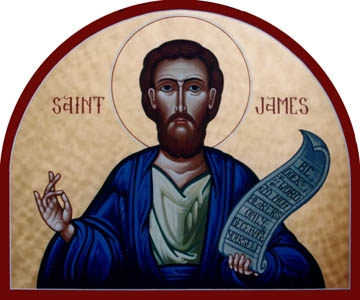
James of Jerusalem: A Homily

St. James

All the apostles and elders kept silence, and listened to Barnabas and Paul as they told of all the signs and wonders that God had done through them among the Gentiles. After they finished speaking, James replied, “My brothers, listen to me. Simeon has related how God first looked favorably on the Gentiles, to take from among them a people for his name. This agrees with the words of the prophets, as it is written,
`After this I will return, and I will rebuild the dwelling of David, which has fallen; from its ruins I will rebuild it, and I will set it up, so that all other peoples may seek the Lord– even all the Gentiles over whom my name has been called. Thus says the Lord, who has been making these things known from long ago.’
Therefore I have reached the decision that we should not trouble those Gentiles who are turning to God, but we should write to them to abstain only from things polluted by idols and from fornication and from whatever has been strangled and from blood. For in every city, for generations past, Moses has had those who proclaim him, for he has been read aloud every sabbath in the synagogues.”

Then the apostles and the elders, with the consent of the whole church, decided to choose men from among their members and to send them to Antioch with Paul and Barnabas. Acts 15:12-22a.

In the name of the living God: Father, Son and Holy Spirit. Well, good morning, good morning. It’s good to be with you all this morning as we observe the Feast of James of Jerusalem, sometimes called James the Just and sometimes called the brother of our Lord.
When we look at the Gospel for this morning, we see James (along with the rest of Jesus’ family) being used as an argument against Jesus’ authority. Having heard Jesus teach and seen his deeds of power, Jesus’ family is used to make the argument that he’s nothing special. We know his mother, we know his brother, he’s the son of a working man. It’s so difficult for us to recognize holiness in our everyday lives. But that’s how God works: he makes the everyday holy. But it’s hard to see sometimes. Even James, we think, did not accept Jesus as messiah, as his Lord, until he witnessed the resurrection.
So, the reading this morning, from the Book of Acts, puts St. James in a place many of us know something about: he is smack dab in the middle of a church fight.  Very often in church fights, as is sometimes true in marriages, the fight isn’t really about what the fight is about. The fight isn’t about how messy and chaotic the drawers in the desk are; the fight is about how messy and chaotic our lives are. Or the fight isn’t about the style of worship; it’s about people feeling like they’re losing the church they grew up in. But sometimes a church fight can clarify doctrine, or can offer the Church what we now call a teaching moment.
One of my Jesuit brothers said, “Unity in the essential things, liberty in the nonessential things, and charity in all things.” This fight was about essential things—about the essentials of becoming a Christian and following Jesus and about salvation. So, James is caught up in a fight, and it’s a doozy.
Luke says, “certain individuals” were teaching that circumcision and following the law was necessary for salvation. Now, these folks were Pharisees. And they had heard what was happening with the Gentiles down in Antioch. And they were certainly right: they were correct about what had been the custom of the Jews in Jerusalem. But, like we so often do, they had confused those things that are customary with those things that are necessary.
And on the other side of this fight were Peter and Paul and Barnabas. And Peter, in the verse immediately before this passage we read today, argued that none of those things in the Mosaic law were necessary anymore. He said, “We believe that they will be saved through the grace of the Lord Jesus, just as we will.”
It’s an important lesson for us today as well. Don’t try and out-God God. We so often underestimate the Holy Spirit—underestimate the power of grace. And when it comes time to make a decision, James (the head of the church in Jerusalem) speaks for the whole Church. He hears the voice of the prophet Amos in what’s been happening with the Gentiles. And he concludes, we shouldn’t trouble those who are turning to God. He knows that grace is enough; grace alone suffices to sustain us, to save us. Now, he does caution them about abstaining from food offered to idols, and otherwise acting like pagans. In other words, he advises them not to abuse their liberty.
So, the story of my namesake, St. James, is not a story about a guy who knows the truth in an instant. It’s a story about a guy who makes a couple of mistakes before he finally gets it right. We all need to hear the story of St. James, because it’s a story about the only necessary thing: God’s grace in our lives. And it’s a story about second chances. And, after all, ours is a religion of second chances.

Pax Christi,

James R. Dennis, O.P.

© 2013 James R. Dennis

Can You Drink From the Cup?

James and John, the sons of Zebedee, came forward to Jesus and said to him, “Teacher, we want you to do for us whatever we ask of you.” And he said to them, “What is it you want me to do for you?” And they said to him, “Grant us to sit, one at your right hand and one at your left, in your glory.” But Jesus said to them, “You do not know what you are asking. Are you able to drink the cup that I drink, or be baptized with the baptism that I am baptized with?” They replied, “We are able.” Then Jesus said to them, “The cup that I drink you will drink; and with the baptism with which I am baptized, you will be baptized; but to sit at my right hand or at my left is not mine to grant, but it is for those for whom it has been prepared.”

When the ten heard this, they began to be angry with James and John. So Jesus called them and said to them, “You know that among the Gentiles those whom they recognize as their rulers lord it over them, and their great ones are tyrants over them. But it is not so among you; but whoever wishes to become great among you must be your servant, and whoever wishes to be first among you must be slave of all. For the Son of Man came not to be served but to serve, and to give his life a ransom for many.” Mark 10:35-45.

Today’s Gospel reading follows Jesus’ third announcement that He will go to Jerusalem and meet his death.  Mark 10:32-34. As these teachings progress, Jesus and the disciples travel further and further south, toward Jerusalem.

We have the sense that the disciples are really having trouble understanding Jesus’ message.  In response to Jesus’ teaching, they want to have some assurance of their primary role in Jesus’ kingdom. In some very real sense, they’re worrying about rearranging the deck chairs on the Titanic. You don’t have to spend very long in the Church to see this kind of behavior. They’re concerned about their own position, their own authority and welfare.

Jesus challenges them with a critical question, a question He asks you and me as well:  “Can you drink from the cup from which I drink?”  In other words, “Just exactly how much are you willing to share in my life?”  How much are we willing to let go of our own self-image, our authority, and the stuff that makes up the content of our lives in following Jesus? In last week’s Gospel, we met a rich young man who just couldn’t let go.  I wonder if we can. Letting go of our fears may be the hardest part.

Jesus introduces the disciples to the topsy-turvy hierarchy of Christianity.  He tells them, “whoever wishes to be first among you must be slave of all.”  I wonder how we’d impact the ranks of our church leadership if we used that particular job description.  Think of how many terms in our language are associated with primacy: first-place, first-class, and first-rate.  The Gospel is about the losers, about becoming a nobody.

In the world, the hierarchical structure achieves its goals through  power and domination.  In the Kingdom, we must learn to abandon these and accomplish through love, and love alone. Jesus’ call to become servants isn’t necessarily about the tasks we perform; it’s about the kind of people we are to become.  Jesus radically redefines “greatness” as servanthood. That’s a hard road. It leads straight to the Cross.

Shabbat Shalom,

James R. Dennis, O.P.

© 2012 James R. Dennis

There Once Was a Man

There was once a man in the land of Uz whose name was Job. That man was blameless and upright, one who feared God and turned away from evil.

One day the heavenly beings came to present themselves before the LORD, and Satan also came among them to present himself before the LORD. The LORD said to Satan, “Where have you come from?” Satan answered the LORD, “From going to and fro on the earth, and from walking up and down on it.” The LORD said to Satan, “Have you considered my servant Job? There is no one like him on the earth, a blameless and upright man who fears God and turns away from evil. He still persists in his integrity, although you incited me against him, to destroy him for no reason.” Then Satan answered the LORD, “Skin for skin! All that people have they will give to save their lives. But stretch out your hand now and touch his bone and his flesh, and he will curse you to your face.” The LORD said to Satan, “Very well, he is in your power; only spare his life.”

So Satan went out from the presence of the LORD, and inflicted loathsome sores on Job from the sole of his foot to the crown of his head. Job took a potsherd with which to scrape himself, and sat among the ashes.

Then his wife said to him, “Do you still persist in your integrity? Curse God, and die.” But he said to her, “You speak as any foolish woman would speak. Shall we receive the good at the hand of God, and not receive the bad?” In all this Job did not sin with his lips. Job 1:1; 2:1-10.

In the Old Testament reading, the Lectionary leads us to the Book of Job, a vastly rich and yet deeply challenging selection.  Virginia Woolf once famously said, “I read the book of Job last night. I don’t think God comes out of it well.” I have felt the same way on occasion, but we should remember a number of things as we reflect on this marvelous book.

First, the Book of Job offers us a parable, not a history.  Even the introductory line (“There was once a man in the land of Uz whose name was Job”) sounds a bit like a child’s fairy tale. We also get a hint that this is a parable in the notion the next line, with the notion that Job was “perfectly upright.” Thus, we’re dealing with an archetype here.  Job represents the best of our humanity in a narrative told to teach us a lesson. The parable muses on the theme “Why do the righteous suffer?”

Many of us have wondered why the wicked or the godless prosper, while good people sometimes seem to carry insurmountable burdens.  The Book of Job reflects on the latter issue. Jesus also addressed this issue when He said, “I say to you, Love your enemies and pray for those who persecute you, so that you may be children of your Father in heaven; for he makes his sun rise on the evil and on the good, and sends rain on the righteous and on the unrighteous.”  Matt: 5:44-45.

We should also remember that this book was written sometime between the 6th and 4th centuries before Christ.  By that time, the chosen people had already endured slavery under the Egyptians, the Assyrian exile and the Babylonian exile.  They had seen the destruction of the Temple, which for them constituted the intersection of heaven and earth.  Having suffered through slavery, famine, conquest and separation, they might rightly have wondered: chosen for what, exactly?

So, we have this text before us in which God appears to enter into a wager with Satan.  It’s also important to remember in Hebrew the word Satan isn’t a name; it’s a title or a function.  It meant something like the accuser, the prosecutor, or the adversary. If we read this work as a parable, rather than a history, it might have something to teach us about the kind of accusations that get tossed about when we (either as individuals or as a people) find ourselves engaged in spiritual warfare.  And we might take a little comfort from the idea that God seems to have a remarkable faith in Job’s (and perhaps our) ability to weather life’s storms.

When The Adversary strikes Job down with a hideous disease, and Job’s wife questions his “foolish” commitment to God, Job’s response resounds in our hearts.  He says “Shall we receive the good at the hand of God, and not receive the bad?” That question will echo throughout the rest of the book of Job. Job answers what some have called the Prosperity Gospel, the notion that “good things happen to good people” (and implicitly therefore, bad things happen to bad people).  We still hear the ruminations of that today in modern Christianity, and Job calls it what it is: balderdash.

I hope to come back to Job again soon.  I think the pearl is well worth the dive.  Despite it’s childlike opening, the Book of Job offers us anything but a fairy tale.  The book of Job sets out the struggle of faith, a struggle against faithlessness in the confrontation of pain and anguish. We find Jesus engaged in that same struggle on Golgotha as he cries out “Eli, Eli, lema sabachthani” (My God, My God, why have you forsaken me)? I think, at some time, most of us will find ourselves in that struggle, and we rightly pray to be saved from that time of trial.

Shabbat Shalom,

James R. Dennis, O.P.

© 2012 James R. Dennis

Have Salt in Yourselves

John said to Jesus, “Teacher, we saw someone casting out demons in your name, and we tried to stop him, because he was not following us.” But Jesus said, “Do not stop him; for no one who does a deed of power in my name will be able soon afterward to speak evil of me. Whoever is not against us is for us. For truly I tell you, whoever gives you a cup of water to drink because you bear the name of Christ will by no means lose the reward.

“If any of you put a stumbling block before one of these little ones who believe in me, it would be better for you if a great millstone were hung around your neck and you were thrown into the sea. If your hand causes you to stumble, cut it off; it is better for you to enter life maimed than to have two hands and to go to hell, to the unquenchable fire. And if your foot causes you to stumble, cut it off; it is better for you to enter life lame than to have two feet and to be thrown into hell., And if your eye causes you to stumble, tear it out; it is better for you to enter the kingdom of God with one eye than to have two eyes and to be thrown into hell, where their worm never dies, and the fire is never quenched.

“For everyone will be salted with fire. Salt is good; but if salt has lost its saltiness, how can you season it? Have salt in yourselves, and be at peace with one another.” Mark 9:38-50.

Jesus had a funny habit.  He often encountered those who would try to draw a boundary between the holy and the unholy, between the sacred and the profane, between the clean and the unclean.  Whenever he ran into these boundaries, Jesus would step on the other side.  He did it with lepers. He did it with tax collectors. He did it with prostitutes and those who were sick and lame and even the Gentiles.  He even crossed the boundaries drawn around the Sabbath. He did it so often that we begin to wonder if there’s a message in there.  And in today’s Gospel, He does it again.

In the first section of this passage, the disciples express their concern that someone outside their circle has also engaged in the healing ministry. It’s at least worth noting that this passage in Mark follows the scene in which the disciples were squabbling among themselves about who was the greatest. Mark 9:32-34. That story ended with Jesus taking a small child (another outsider in that society) into his arms and explaining that those who welcome such a child actually welcome Jesus and his Father. In today’s reading, Jesus continues teaching his disciples about letting go of their sense of self-importance and widening the circle of holiness far beyond themselves.

We hear the echoes of John’s criticism (he was “not following us”) too often as we hear Christians speak of other believers, other denominations, and other faiths. Jesus wants to “welcome” the children; John is concerned with those who are “not following us.” Jesus affirms even the simplest act of kindness, a cup of water, done in His name.

Jesus sharply contrasts those who offer kindness, who encourage, with those who get in the way of someone’s journey to the Father. Those who scandalize these little ones or cause them to stumble, Jesus teaches that Gehenna awaits them. (Gehenna, the Valley of Hinnom, was a ravine south of Jerusalem where child sacrifices to Moloch had taken place.  Jeremiah 7:31; 32:35.)  After King Josiah destroyed the altar to Moloch, it became a continuously burning trash, used as a metaphor for the torment of the wicked.

Jesus teaches that we must rid ourselves of whatever causes us to stumble, even if it’s our hand, our foot, or our eye. I don’t think Jesus is advocating self-mutilation.  He’s telling His disciples to separate themselves from anything that interferes with their path to the Father. He advocates a clear focus on the things that bring us closer to the kingdom of God, even if we must shed ourselves of ourselves.

The closing paragraph may seem strange to our modern ears.  At the time, however, both salt and fire were used medicinally.  They were used to treat wounds; thus, Jesus is saying that everyone will find their healing, their wholeness. To “share salt” with someone, to share a meal, carried with it the implication of fellowship.  The expression “have salt in yourself” meant “be at peace with yourself.”  Salt was also used as a preservative and carried with it the implication of permanence. Jesus thus encourages His disciples (and us) to find our healing and reconciliation by making peace with ourselves, and with our brothers and sisters.

I pray we find that peace, not by excluding others from the circle of holiness, but my looking for God and His kingdom in all times and all places.

Shabbat Shalom,

James R. Dennis, O.P.

© 2012 James R. Dennis

The Spiritual Danger of Loose Talk

Not many of you should become teachers, my brothers and sisters, for you know that we who teach will be judged with greater strictness. For all of us make many mistakes. Anyone who makes no mistakes in speaking is perfect, able to keep the whole body in check with a bridle. If we put bits into the mouths of horses to make them obey us, we guide their whole bodies. Or look at ships: though they are so large that it takes strong winds to drive them, yet they are guided by a very small rudder wherever the will of the pilot directs. So also the tongue is a small member, yet it boasts of great exploits.

How great a forest is set ablaze by a small fire! And the tongue is a fire. The tongue is placed among our members as a world of iniquity; it stains the whole body, sets on fire the cycle of nature, and is itself set on fire by hell. For every species of beast and bird, of reptile and sea creature, can be tamed and has been tamed by the human species, but no one can tame the tongue– a restless evil, full of deadly poison. With it we bless the Lord and Father, and with it we curse those who are made in the likeness of God. From the same mouth come blessing and cursing. My brothers and sisters, this ought not to be so. Does a spring pour forth from the same opening both fresh and brackish water? Can a fig tree, my brothers and sisters, yield olives, or a grapevine figs? No more can salt water yield fresh. James 3:1-12.

In the Gospel reading two weeks ago, Jesus warned us that we are defiled, not by the things we put in our bodies, but by the things that come from within.  Mark 7: 20-23. In the Epistle reading from last week, James cautioned us to be quick to listen and slow to speak. James 1: 19. Today, St. James amplifies on the grave dangers of our speech, especially for preachers and teachers.  We can almost hear the echo of Isaiah, who spoken of himself as lost, “a man of unclean lips and I live among a people of unclean lips….”  Isaiah 6:5.

St. James uses three powerful metaphors to describe the power our speech possesses.  He compares it to a bridle which can take control of a powerful horse, a rudder which can set the course for a large ship, and a tiny spark that can consume an entire forest.  He calls our tongues “a restless evil, full of deadly poison.”

James particularly abhors our duplicity. He notes the scandal of using our tongues to praise God and yet curse the children made in His image. In the following chapter, James describes this dangerous deceit as being “two souled” (dipsychos).  James 4:8. Elsewhere, he calls this being “double-minded”. James 1:8. We find examples of this in Christians (perhaps ourselves) who use speech to malign, to gossip, to attack, to humiliate and to condemn. In recent events in the Middle East, we have all seen the consequences of hateful speech, and counted the costs associated with it.

Rather than such duplicity, James calls us into “the word of truth.”  James 1:18. Such words (words of healing, encouragement, forgiveness and reconciliation) call us back from the brink, and back to a sacramental style of living. The Epistle to the Ephesians called this speaking “the truth in love.” Eph. 4:15.

We need to be aware of the toxic power of speech to separate us from God’s children and from the Source of all holiness.  It’s worth noting that, in the Book of Genesis, God spoke the world into creation.  We might wonder what sort of world we are speaking into existence.  Those who follow Christ must immerse themselves in the vocabulary of grace and the grammar blessing.

Shabbat Shalom,

James R. Dennis, O.P.

© 2012 James R. Dennis

Be Opened

Jesus set out and went away to the region of Tyre. He entered a house and did not want anyone to know he was there. Yet he could not escape notice, but a woman whose little daughter had an unclean spirit immediately heard about him, and she came and bowed down at his feet. Now the woman was a Gentile, of Syrophoenician origin. She begged him to cast the demon out of her daughter. He said to her, “Let the children be fed first, for it is not fair to take the children’s food and throw it to the dogs.” But she answered him, “Sir, even the dogs under the table eat the children’s crumbs.” Then he said to her, “For saying that, you may go– the demon has left your daughter.” So she went home, found the child lying on the bed, and the demon gone.

Then he returned from the region of Tyre, and went by way of Sidon towards the Sea of Galilee, in the region of the Decapolis. They brought to him a deaf man who had an impediment in his speech; and they begged him to lay his hand on him. He took him aside in private, away from the crowd, and put his fingers into his ears, and he spat and touched his tongue. Then looking up to heaven, he sighed and said to him, “Ephphatha,” that is, “Be opened.” And immediately his ears were opened, his tongue was released, and he spoke plainly. Then Jesus ordered them to tell no one; but the more he ordered them, the more zealously they proclaimed it. They were astounded beyond measure, saying, “He has done everything well; he even makes the deaf to hear and the mute to speak.” Mark 7:24-37.

In today’s lectionary readings from Mark’s Gospel, we find a number of challenges.  In the first passage, on our initial reading, Jesus seems a bit stingy, argumentative, and a little off His game. A few years ago, reading this passage, I was struck by the idea that it seemed like Jesus had to be coaxed into being charitable. At first, we may wonder if this is the same Jesus we know. I want to suggest that this passage presents exactly the Jesus we know.

We should begin with the observation that this first passage contains a number of unusual characteristics.  First, it’s located in Tyre, which is not an ordinary place for Jesus to be roaming around. That’s Gentile country, and no place for a good Jewish boy to be.  Secondly, he’s approached by a Syrophoenecian woman.  At that time, it would be unusual for any woman to approach a Jewish rabbi, let alone a Gentile woman. (Further, the identification  of this woman as “pheonician” implies an association with the Canaanites. In fact, Matthew’s Gospel describes this woman as a Canaanite.)  Unlike many of the Gospel stories, in this story Jesus’ disciples (his regular companions) are absent. Finally, her daughter has a demon, and so we know we’re encountering a spiritual battle here.

I think part of the answer lies in the original Greek text.  When the woman comes and asks Jesus to cast the demon from her “little daughter” (thygatrion in Greek), He replies that the children should be fed first before the “little dogs” (kynariois). In one sense, I think we can read this story, picturing Jesus with a twinkle in his eye as He draws from this woman an affirmation of the faith which He knew was present in her. In another sense, I think St. Mark uses this story to contrast Jesus with the Jewish authorities of the day, who would certainly have rejected this woman and her concerns.

Mark uses this as a narrative device.  It’s worth noting that Jesus doesn’t tell the woman “no”; rather, he says, “not yet.”  I don’t think Mark uses this story to portray Jesus as ambivalent or wishy-washy on the subject of ministering to the Gentiles. Rather, I think he’s telling this story to portray the difference between Jesus and the religious authorities of His day.

Jesus expels the demon from this woman’s child “because of this reasoning” (dia touton ton logon). We therefore ask, what was it that she said?  She told Jesus that even the crumbs He had to offer would suffice to heal her daughter. We hear an echo of this in the old 1928 Book of Common Prayer, and I’m not so sure we shouldn’t still be praying this: “We are not worthy so much as to gather up the crumbs under Thy table.” From this Gentile woman we hear a remarkable affirmation of trust, of need, and of faith.

Mark’s second story similarly challenges the traditional notion of holiness of that time.  Jesus travels toward the region of the ten cities (the Decapolis).  Again, He remains deep in the territory of the Gentiles. The crowd brings a deaf man with a speech impediment to Jesus.  Jesus’ offers a deeply intimate act of healing this man.  He thrusts his hands into the man’s ears, spits and then touches the man’s  tongue. These things would have clearly violated the purity codes of that time, which viewed saliva as unclean.

As Jesus looks to heaven, he groans.  (Groans offers a far better translation of the Greek word estenaxen than “sighs.”)  In other words, this healing involves Jesus’ identification with the suffering and distress of this man.  Mark tells the story of an earthy (incarnational) healing, rather than a purely metaphysical event.  Mark reports Jesus speaking in the Aramaic language:  Ephphatha (which means “be opened.”)

The passage rings with the echo of Isaiah’s promise:  “Then the eyes of the blind shall be opened, and the ears of the deaf unstopped….” Isaiah 35:5-6. In one sense, it’s the deaf man’s ears that are opened.  In other sense, it’s the Gentile woman who is opened to the ministry of Jesus.  Viewed in another light, it’s about Jesus being open to the pain of the world. In yet another sense, it’s the entire world (and not just the people of Israel) to whom Jesus opens a new way of holiness.  I pray that we will be open to his healing ministry as well.

Shabbat Shalom,

James R. Dennis, O.P.

© 2012 James R. Dennis

Interpreting the Law

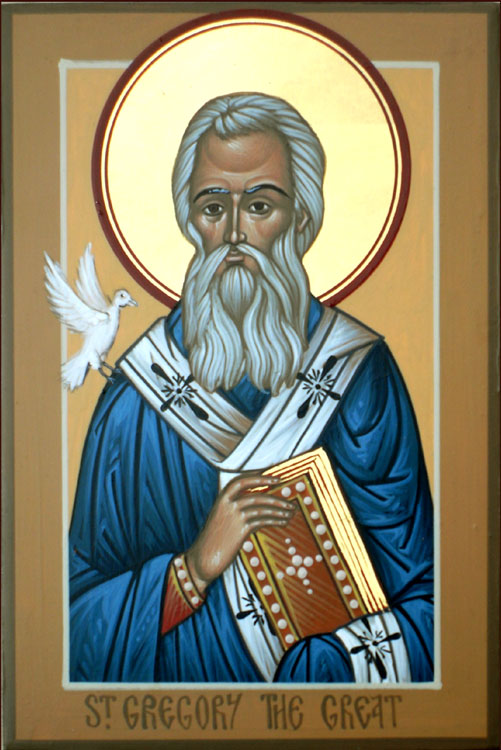
How must we interpret this law of God?  How, if not by love? The love that stamps the precepts of right-living on the mind and bids us put them into practice. Listen to Truth speaking of this law: “This is my commandment, that you love one another.”  Listen to Paul:  “The whole law,” he declares, “is summed up in love”; and again: “Help one another in your troubles, and you will fulfill the law of Christ.” the law of Christ–does anything other than love more fittingly describe it?  Truly we are keeping this law when, out of love, we go to the help of a brother or sister in trouble.

But we are told that this law is manifold.  Why?  Because love’s lively concern for others is reflected in all the virtues.  It begins with two commands, but soon embraces many more.  Paul gives a good summary of its various aspects.  “Love is patient,” he says, “and kind; it is never jealous or conceited; its conduct is blameless; it is not ambitious, not selfish, not quick to take offense; it harbors no evil thoughts, does not gloat over other people’s sins, but is gladdened by an upright life.” Moral Reflections on Job by Gregory the Great.

I ran across this passage earlier this week in the Readings for the Daily Office from the Early Church. St. Gregory makes a number of powerful observations that help us understand Holy Scripture.  Principally, he enjoins us to read the Torah (the Law) through the lens of love.  Jesus taught that all of the law and all of the prophets hung on the commandments to love God and love our neighbors. Matt. 22:40.

In Jesus’ day (just as in ours), some argued that the scriptures should be read as an exclusionary document.  Thus, many (lepers, those with physical infirmities, women, and outsiders) were excluded from the Temple.  Jesus asked the Pharisees, “What have you done to help them inside?” Through acts of love and mercy, Jesus brought many back within the circle of faith.  The Pharisees used the scriptures as a club to beat people away from the gates of the church.  Jesus, interpreting the scriptures through the template of love, showed us how to welcome God’s children back home.

We see this same tension played out in the book of Job.  Job endures calamity upon catastrophe without blaming God for what’s happened to him.  His three “friends” (Eliphaz, Bildad, and Zophar) arrive to convince him that God always punishes evil and rewards good, so somehow, Job must’ve sinned. Job’s friends do have a superficial understanding of the scriptures; they just don’t understand much about love, or God for that matter.  (A very good friend of mine observes that Job’s friends did everything right: until they open their mouths.)

Those who follow Christ know that all scripture, the Old Testament and the New, must be read with eyes of love. If we love God and His children, we cannot leave those in need behind.  And once we recognize that love provides the Rosetta Stone by which we interpret all the teachings of Scripture, we find ourselves compelled to love more broadly and more deeply.  We find ourselves breathing in a climate of grace, and we begin to  learn the language of blessing.

God watch over thee and me,

James R. Dennis, O.P.

© 2012 James R. Dennis