Category Archives: Uncategorized

The Bread That Came Down From Heaven

Jesus said, “I am the living bread that came down from heaven. Whoever eats of this bread will live forever; and the bread that I will give for the life of the world is my flesh.”

The Jews then disputed among themselves, saying, “How can this man give us his flesh to eat?” So Jesus said to them, “Very truly, I tell you, unless you eat the flesh of the Son of Man and drink his blood, you have no life in you. Those who eat my flesh and drink my blood have eternal life, and I will raise them up on the last day; for my flesh is true food and my blood is true drink. Those who eat my flesh and drink my blood abide in me, and I in them. Just as the living Father sent me, and I live because of the Father, so whoever eats me will live because of me. This is the bread that came down from heaven, not like that which your ancestors ate, and they died. But the one who eats this bread will live forever.” John 6:51-58.

This week, the Lectionary’s Gospel passage offers us Jesus’ assurance, an assurance linking the Eucharist to eternal life.  Before we get there, however, it’s worth putting this text in a bit of context.

First, let’s look at the historical context.  In first century Palestine, bread wasn’t simply one of the four basic food groups, something nice to eat with a hearty meal.  More often than not, bread was the meal.  In other words, bread generally stood between a person a starvation; bread was the difference between living and dying.

If we turn to the textual context, we find earlier in the same chapter that Jesus fed the five thousand with a meal of bread and fish. I think John uses this passage to explore the truth and the mystery of the loaves and the fishes.  In the midst of want and hunger, Jesus used bread to teach the crowd about God’s abundance and love for them. Within the same chapter, Jesus appears to the disciples who are terrified when they see him walking on water. So, within this chapter, we see Jesus taking away our hunger and our fear.  Now, we come to today’s reading.

Jesus assures the crowd that he will “abide in” those who partake of his flesh and his blood. It’s pretty clear that the Christian community in which John dwelt had an established Eucharistic tradition, and John’s Gospel links the Eucharist to  Jesus making a permanent home with those who share in that great feast. Through the bread and the wine, we invite Jesus into our lives and take comfort in His promise that He will remain with us through all the things that frighten us: hunger, frailty, and even death.

Six times within this chapter St. John uses Greek word καταβαινω, which we translate as “came down” or “descend.” John’s Gospel presents us with a deeply incarnational narrative:  the story of God coming down to dwell with us in the flesh. That incarnational theology is deeply tied to the Eucharist:  Jesus said “This is body.  This is my blood.”  This isn’t philosophical or ethereal; Jesus invites us to share in a real feast. He invites us to feast on His life.

Jesus invites us to share in a deep sacramental mystery.  Somehow, our new life (abiding with Him) lies in that bread and that wine. I don’t pretend to understand how this works but as C.S. Lewis observed in Letters to Malcolm, “The command, after all, was Take, eat: not Take, understand.” I pray we all take and eat of the Living God who came down and dwelt among us, and who abides with us still.

Shabbat Shalom,

James R. Dennis, O.P.

 © 2012 James R. Dennis

The Feast of the Holy Mother

*Welcome, Mary, sister in faith;
the Lord has surely chosen you.
The life leaps within me
to herald the fruit of your womb
which is Jesus!
Who am I
that the mother of my Lord
should come to me?
Pray with me now,
and always.
Amen.

*Weep, Mary, a mother’s tears.
Your son must die,
thrust high in agony.
Alone in suffering
separated from His Father’s smile
by sin we laid upon Him.
Blessed in He
who comes in the name of the Lord.
Now, Mary, be mother to John
and all who will lean, like him,
close to the heart of Christ,
and watch with Him in the hour of death.
Amen.

*You, Mary, who knew His grace,
now you’re with the Lord.
Blessed is any who walks with God,
then is not here, but taken–to Jesus!
Hold us, Mary, at peace with God;
join with the prayers of the penitent,
now and at the gate to life.
Amen.

I found this prayer, this little liturgy, in the Celtic Book of Daily Prayer.  It seemed appropriate, because today is the Feast of the Blessed Virgin Mary, the Holy Mother of Our Lord. Mary has always held a special place for members of the Dominican Order, dating back to very early in the Order’s history. So, I thought I’d make a few observations about Mary.

First, Mary seems to offer a special place of devotion for those who’ve had their hearts broken.  One can’t look at the Pieta without immediately recognizing Mary’s special understanding of heartache and sorrow. The Holy Mother also  speaks gently to those who understand the risk of faith.

When Mary answered “Yes” to God’s call, she laid aside her plans for her life and undertook the risk of an unwed pregnancy.  In first century Palestine, that kind of thing could get you in trouble; it could get you killed. Mary (who would have been known as Miriam) thus teaches us about allowing God to interrupt your plans, and willingly accepting the cost of becoming God’s instrument. She showed us how to trust God and how to live without fear.

For many of us, Mary serves as the gateway to, and the icon of, the Incarnation.  If God’s decision to walk among us as a man was indeed the pivotal point of human history, it was Mary who cleared that path.  She offers us the key to Jesus’ full humanity.  Her tears on Golgotha demonstrate that this was no metaphor and no mere spiritual apparition.  Hanging on that Cross was Mary’s little boy whom she had raised from His birth in a stable.

The Holy Mother also teaches us a good deal about the faithful response to mystery.  When Gabriel told her of God’s plans, she didn’t ask a lot of questions.  She didn’t need to understand what happened at Cana; she simply witnessed it.  I’m fairly confident Mary didn’t understand the need for the crucifixion or how the Resurrection changed the world. I doubt she had a firm grasp of the Pentecost.  And yet, there she stood: a witness (martyr in the Greek) staring across the precipice of the greatest mysteries of our faith.

Our Orthodox brothers and sisters refer to Mary as the Theotokos (the God-bearer).  Mary teaches us all about the importance of bringing Christ into the world, of being pregnant with the message of the Kingdom.  I pray we all can bring God into a world which needs Him now as much as it ever has. I know she will join in that prayer.

God watch over thee and me,

James R. Dennis, O.P.

© 2012 James R. Dennis
Living In Love

Putting away falsehood, let all of us speak the truth to our neighbors, for we are members of one another. Be angry but do not sin; do not let the sun go down on your anger, and do not make room for the devil. Thieves must give up stealing; rather let them labor and work honestly with their own hands, so as to have something to share with the needy. Let no evil talk come out of your mouths, but only what is useful for building up, as there is need, so that your words may give grace to those who hear. And do not grieve the Holy Spirit of God, with which you were marked with a seal for the day of redemption. Put away from you all bitterness and wrath and anger and wrangling and slander, together with all malice, and be kind to one another, tenderhearted, forgiving one another, as God in Christ has forgiven you. Therefore be imitators of God, as beloved children, and live in love, as Christ loved us and gave himself up for us, a fragrant offering and sacrifice to God.  Ephesians 4:25-5:2.

The New Testament reading from the Lectionary is taken from the Letter to the Ephesians.  Most scholars date this letter between 80 and 100 A.D., as the Church is maturing and struggling to practice a Christian life in community. The writer (perhaps Paul or perhaps one of his disciples) is deeply concerned with the notion of relationships, and the idea that our relationships with each other mirror our relationships with God.

The lesson begins with the notion of truth, of “putting away falsehoods.” Deception inhibits any chance for real love, and dealing with each other honestly provides the foundation for our relationship with God.  The call to the Christian life is more than a call to avoid lying or manipulation; God calls us to live our lives transparently.

Ephesians offers a unique theology behind this call to the truth–not simply that deception makes God angry or will keep us out of heaven.  Rather, Christ calls us into the truth because our lives are intertwined, because we are each other’s limbs. Deception infects the entire body, of which we are a part.  By setting aside falsehood and deception, therefore, we avoid self-mutilation, the destruction of the body of which we are a constituent part.

Ephesians then warns us against anger, and against allowing it to fester. The text cautions us against letting the sun go down on our anger because allowing resentment to build up makes “room for the devil.”  In my family, we used to joke about Irish Alzheimer’s:  that’s where you forget everything except the grudges.  Ephesians cautions us to work out our difficulties with our brothers and sisters quickly, before the infection of rage and resentment begins to spread.

The writer of Ephesians cautions us about our speech, warning us to avoid quarreling and slander.  The language of encouragement should provide the fundamental grammar of Christians. Rather than gossip, criticism or idle speech, we should immerse ourselves in the vocabulary of comfort and inspiration. We must all become wildly proficient in the language of blessing.

Ephesians then directs us:  “be kind to another.” There’s nothing new in this message; Jesus gave the same direction regularly. For the Christian, compassion and forgiveness are the fundamental currency of our economy. Grace must become our lingua franca: the basis of all our relationships. The text calls us to imitate God’s love in our dealings with each other.  We are called into a kind of profligate, extravagant love in Christ.  As the Dalai Lama has said:  “Be kind whenever possible.  It is always possible.”

The Letter to the Ephesians teaches us about the profound correlation between this new relationship the early Church had discovered with Christ and the everyday, concrete relationships in the world.  It teaches that we can never divorce the our spiritual lives from our workaday associations in our families and communities.  Authentic Christian spirituality is never simply ethereal or private: we live it out every single day, with every person we meet and with every word we speak.

Shabbat Shalom,

James R. Dennis, O.P.

© 2012 James R. Dennis
St. Dominic’s Day

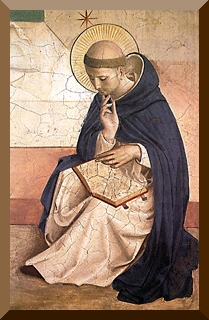
A man who governs his passions is master of his world. We must either command them, or be enslaved by them. It is better to be a hammer than an anvil.
–St. Dominic

Dominic was born in 1170 in Caleruega which is located in Spain. When he was older he studied the arts and theology in a Spanish university. When he was 25 years old he became a priest and followed the rule of Saint Benedict. In 1215 he and six followers founded a monastery in Toulouse. In 1217 he got the Pope’s permission to start the “Order of Preachers” (now known as the Dominican Order). Dominic made his headquarters in Rome in the year 1215. He then moved to the Church of San Nicolo Bologna on December 12. He later died on August 6, 1221 when he was 41 years old. Saint Dominic was canonized on June 12, 1954 by Pope Pius XII.

When Saint Dominic started the new order he must have had a lot of trust. He had to have trust in God because He has a plan for everyone. He also needed trust in his followers because when you work on creating a new order you become a family. He teaches us that you should have trust in others around you and in God. Dominic also preached about the rosary and made it popular in his time. He taught us to pray the rosary. “Arm yourself with prayer rather than a sword; wear humility rather than fine clothes,” he said.
— Mariana Haghighat

Today is the feast day of the patron saint of my Order, Dominic de Guzman. He founded a religious order based upon four pillars: prayer, study, community and ministry. Having just taken vows of simplicity, purity and obedience, I’ve promised to build my life around these four columns of spirituality. In doing so, I’ve joined a long line of my Dominican brothers and sisters, a line that would include St. Catherine of Sienna, St. Rose of Lima, St. Thomas Aquinas, and Meister Eckhart. As Spain moved into the New World, it was a Dominican friar (Bartolomé de las Casas), who fought against the atrocities committed against the Native Americans by the Spanish colonists.

So, I’ve joined into this Order with a wonderful tradition and a foundation built upon those things I hold dear. What, in the name of heaven, do I do now?

God’s peace,

James R. Dennis, O.P.

© 2012 James R. Dennis
Post Scriptum:  For all of you who have offered up your prayers and support, I am eternally grateful.  I thank God, and I thank you.

While I’m Away

My dear friends,

I will be away for a while meeting with my brothers and sisters in the Dominican Order.  While I’m away, through God’s grace, I will hopefully take my life vows within the Order.  At that point, theoretically, I won’t be a Novice anymore, although I suspect I’ll always be a bit of a novice.

While I’m away, I’d ask that you keep me in your prayers.  You will certainly be in mine.  May the Lord bless you and keep you, and make His face to shine upon you, and keep you strong in the knowledge of His love.

This is a bit like rafting down a river in a canoe and hearing the sound of the falls grow louder and louder.  A dear friend told me yesterday to put away the paddles and just enjoy the ride.  I think I’ll do just that.

God watch over thee and me,

James R. Dennis, O.P.

© 2012 James R. Dennis

Exit Wounds

In the spring of the year, the time when kings go out to battle, David sent Joab with his officers and all Israel with him; they ravaged the Ammonites, and besieged Rabbah. But David remained at Jerusalem.

It happened, late one afternoon, when David rose from his couch and was walking about on the roof of the king’s house, that he saw from the roof a woman bathing; the woman was very beautiful. David sent someone to inquire about the woman. It was reported, “This is Bathsheba daughter of Eliam, the wife of Uriah the Hittite.” So David sent messengers to get her, and she came to him, and he lay with her. (Now she was purifying herself after her period.) Then she returned to her house. The woman conceived; and she sent and told David, “I am pregnant.”

So David sent word to Joab, “Send me Uriah the Hittite.” And Joab sent Uriah to David. When Uriah came to him, David asked how Joab and the people fared, and how the war was going. Then David said to Uriah, “Go down to your house, and wash your feet.” Uriah went out of the king’s house, and there followed him a present from the king. But Uriah slept at the entrance of the king’s house with all the servants of his lord, and did not go down to his house. When they told David, “Uriah did not go down to his house,” David said to Uriah, “You have just come from a journey. Why did you not go down to your house?” Uriah said to David, “The ark and Israel and Judah remain in booths; and my lord Joab and the servants of my lord are camping in the open field; shall I then go to my house, to eat and to drink, and to lie with my wife? As you live, and as your soul lives, I will not do such a thing.” Then David said to Uriah, “Remain here today also, and tomorrow I will send you back.” So Uriah remained in Jerusalem that day. On the next day, David invited him to eat and drink in his presence and made him drunk; and in the evening he went out to lie on his couch with the servants of his lord, but he did not go down to his house.

In the morning David wrote a letter to Joab, and sent it by the hand of Uriah. In the letter he wrote, “Set Uriah in the forefront of the hardest fighting, and then draw back from him, so that he may be struck down and die.”  2 Samuel 11:1-15.

The story of David and Bathsheba offers us an insight into our nature and the abuse of power.  Moreover, it offers us an insight into the nature of sin and the things that separate us from the Living God.  It illustrates a theory I have about the nature of sin.

I think many of us find, as David found, that sin operates much like an exit wound in the forensic sciences.  Often, when one is shot with a firearm, the exit wounds are much larger than the entrance wounds.  That happens because as the round moves through the body of the victim it slows down and explodes within the tissue and surrounding muscle.  I think sin works much the same way.

The story begins with David remaining behind while his armies are at war.  He sees a beautiful woman, which leads to lust and envy, which this leads to an adulterous encounter, which leads to rape, which leads to an embarrassing pregnancy, which leads to deception and ultimately to the intent to have Uriah (Bathsheba’s husband) killed.  So, that one glance off from the rooftop spiralled out of control, tearing through the spiritual lives of three people and ultimately, a kingdom.

I think we miss the point if we simply conclude “David was a really bad guy” or “Look what a pickle he got himself into.” I don’t think sin operates any differently in your life, or mine, that it did in David’s.  Yes, David exploited and abused his power.  Yes, I have, too.  While we might for a moment get a chuckle at what a damn fool David was, it will fade quickly when we take a look at some of the foolish things we’ve done ourselves.

While we may not intend the consequences, or even foresee them, we can pretty much rest assured that sin will leave a much larger hole going out than it did on the way in. And although we’d like to think that the guilty, and only the guilty will suffer the consequences, we know that’s just not true.  In the story of David, as in many of our own stories, lots of innocent people get hurt, get their hearts broken, and are destroyed.

On occasion, Scripture doesn’t leave us any room for pretense, doesn’t leave us any room for the little self-justifying illusions to which we become so accustomed.  Sometimes, as in today’s Old Testament reading Scripture gives us a box of darkness.  It takes a good long while, sometimes a lifetime, to recognize that this, too, is a gift.

Shabbat Shalom,

James R. Dennis, O.P.

© 2012 James R. Dennis

Imagining Heaven

The only preparation which multitudes seem to make for heaven is for its judgment bar.  What will they do in its streets?  What have they practised of love?  How like are they to its Lord?  Earth is the rehearsal for heaven.  The eternal beyond is the eternal here.  The street-life, the home-life, the business-life, the city-life in all the varied range of its activity, are an apprenticeship for the city of God.  There is no other apprenticeship for it.

I found this wonderful reflection in today’s reading from Celtic Daily Prayer.  While our churches do a wonderful job of many things, I think they often neglect a critical aspect of their role: the Church must prepare God’s children for their death.  Our lives here are very short, some far too short, and the Church must not overlook the essential function of bracing people to spend eternity in the presence of the Eternal.

In part, I think the Church has allowed people to carry on with several deeply flawed paradigms.  When we think about our deaths, if we think about them at all, many have a sort of childish view of paradise.  We might imagine an antiseptic place where everyone sits around on clouds, playing harps and admiring our bright, shining white robes.  Or we sometimes picture a sort of Big Rock Candy Mountain, like recess in elementary school with lots of playing and big mounds of ice cream.  While these metaphors are culturally ingrained, we won’t get very far travelling down those roads and they don’t really compel us to do very much.

Part of the reason these images don’t impel us toward conversion is another paradigm we have worked with for so long that it has lost its impact.  Too often, the Church has viewed our lives here on earth as a sort of pass/fail examination. We have tacitly approved an understanding that upon our deaths we will face God’s judgment, and will then be directed to either Door Number One or Door Number Two. By the time we face the examination, however, it’s already too late to do anything about it.

If we have been “good” we will go to heaven, and if we have been “bad” God will consign us to the fiery lake for all time.  The trick, therefore, lies in avoiding the really bad sins, and trying to rack up enough bonus points so that the Lord will (perhaps reluctantly) give us a room in His eternal home.  In certain quarters, the Church has really stressed this vision of the afterlife, particularly focussing on that conduct which will result in our banishment to Hell. This paradigm, of course, rests upon a foundation of fear rather than genuine conversion of our hearts.  (My father used to refer to that sort of faith as a kind of “fire insurance”.)

Now, there’s nothing that’s stunningly wrong with any of these traditional metaphors.  I think, however, we may treat them too simplistically, and may have overlooked the metaphorical nature of this truth.  It’s kind of like an icon, which may offer us a genuine pathway into a spiritual reality.  But when we’ve become too attached to the icon itself rather than the spiritual insight it offers, the icon can become an idol.

The reading today suggests another approach.  Rather than our lives being a kind of mine-field we must avoid to pass the test, the reading suggests that we view this life as a place to learn how to live in heaven.  Today, we are each rehearsing for eternity: we are learning how to love, how to give fearlessly, learning compassion, learning forbearance, and learning how to imitate Christ.

There’s a wonderful old spiritual exercise in which we try to imagine our time with the Father in paradise.  What parts of our lives just don’t seem to fit there?  What attachments or addictions will I have to release for my life in heaven to make sense? Will that bit of gossip I found so interesting in the lunchroom move me closer to God’s presence or further away? That old resentment I held onto, will that stick out like a sore thumb when I’m bathed in the light of God’s presence?

The passage teaches:  “The eternal beyond is the eternal here.”  Jesus put it a little differently, saying “The kingdom of God is within you now.” Luke 17:21.  Both passages reveal a deep, spiritual relationship between how we live today and the reality we’ll encounter in the afterlife.  Mother Teresa noted that relationship when she said, “Our life of poverty is as necessary as the work itself.  Only in heaven will we see how much we owe to the poor for helping us to love God better because of them.”

The Church must again take seriously its role in preparing us for our deaths, and we must take that preparation of ourselves as our sacred and solemn work.  Paraphrasing Billy Graham, our home is in heaven; we’re just travelling through this world to get there.

May the peace of Christ disturb you profoundly,

James R. Dennis, O.P.

© 2012 James R. Dennis
Building a House

When David, the king, was settled in his house, and the LORD had given him rest from all his enemies around him, the king said to the prophet Nathan, “See now, I am living in a house of cedar, but the ark of God stays in a tent.” Nathan said to the king, “Go, do all that you have in mind; for the LORD is with you.”

But that same night the word of the LORD came to Nathan: Go and tell my servant David: Thus says the LORD: Are you the one to build me a house to live in? I have not lived in a house since the day I brought up the people of Israel from Egypt to this day, but I have been moving about in a tent and a tabernacle. Wherever I have moved about among all the people of Israel, did I ever speak a word with any of the tribal leaders of Israel, whom I commanded to shepherd my people Israel, saying, “Why have you not built me a house of cedar?” Now therefore thus you shall say to my servant David: Thus says the LORD of hosts: I took you from the pasture, from following the sheep to be prince over my people Israel; and I have been with you wherever you went, and have cut off all your enemies from before you; and I will make for you a great name, like the name of the great ones of the earth. And I will appoint a place for my people Israel and will plant them, so that they may live in their own place, and be disturbed no more; and evildoers shall afflict them no more, as formerly, from the time that I appointed judges over my people Israel; and I will give you rest from all your enemies. Moreover the LORD declares to you that the LORD will make you a house. When your days are fulfilled and you lie down with your ancestors, I will raise up your offspring after you, who shall come forth from your body, and I will establish his kingdom. He shall build a house for my name, and I will establish the throne of his kingdom forever. I will be a father to him, and he shall be a son to me.  2 Samuel 7:1-14a.

Today’s Lectionary reading from the Old Testament provides us with a pivotal and grace-filled passage.  David has bested the Philistines, conquered Jerusalem, and established his royal court. Having overcome his enemies, David seems posed to work on his legacy.  He seeks to consolidate political power and religious authority in this new capital city. To further that goal, David wants to raise a temple, and within its Holy of Holies, to create a repository for the ark of the covenant.  He wants to ensure the availability of God and divine power in the midst of the people of Israel.

David turns for approval to the prophet Nathan, who initially agrees that this would be a grand idea.  (Nathan does so, however, without consulting the Almighty.)  That night, however, Nathan receives “the word of the Lord”:  God doesn’t think much of this idea.  Since the beginning of time, God has accompanied his people freely, without being subjected to a location of human choosing.

In the Chronicles of Narnia, Mr. Tumnus tells Lucy that she will see Aslan again.  When she asks when, Mr. Tummus replies:  “In time.  One day he’ll be here and the next he won’t.  But you must not press him.  After all, he’s not a tame lion.”  Like Lucy, David would discover that God would not be domesticated.  Perhaps we, and our churches, should remember that lesson.

God’s refusal to be contained, however, does not suggest that He is abandoning David (nor us).  Rather, the Lord notes, “I have been with you wherever you went, and have cut off all your enemies from before you; and I will make for you a great name, like the name of the great ones of the earth.”  I wonder if we can hear God saying that to us today?

Rather than David erecting a house for the Lord, God promises that He will build a house for David.  From David’s offspring, the Lord will raise up a kingdom.  And speaking of this offspring, God offers David a rich abundance of good news:  “I will be a father to him, and he shall be a son to me.”  We Christians read this to speak of the one we call Savior, and boldly claim that we are His body.  While David was concerned with architecture, God was concerned with His people and raising up their Redeemer.  Holiness cannot and will not be contained; despite our efforts, we cannot tame the Spirit.

I think the message remains the same for us today.  Despite our reductionist impulses, God will not fit into the benign structures we create.  The more important question, is will we make room for God among His people?  Will we structure our lives so as to accommodate God’s immense capacity to create and recreate?  I pray we will.  And I also pray we may have the wisdom to recognize that God’s “No” usually contains a hidden blessing beyond our imagination.  We call that “grace.”

Shabbat Shalom,

James R. Dennis, O.P.

© 2012 James R. Dennis

No Hands But Ours

“God aids the valiant…both to you and to me He will give the help needed.”

–St. Teresa of Avila

Not all that long ago, I went through a very dispiriting week.  Three of my friends had been struggling with cancer.  The husband of my oldest friend in the world was being treated for bladder cancer at M.D. Anderson.  Another very close friend had just been diagnosed with stage 4 throat cancer.  That same week, my cousin was treated for the fourth reoccurrence of thyroid cancer.

Each of them had endured that ghastly, medieval horror we so unhelpfully call a “treatment”: chemotherapy.  Two had adopted children and taken them into their homes.  One of them is a single parent.  One of them had no insurance, so I had a little skin in the health care debate and I was terrified about what this might mean for my friend and the family.

I’m not sure why, but way too often the people I love and terminal illness have intersected.  All of that provides the backdrop for the week I was telling you about.  That Thursday morning I got a call that a friend of mine, a law school classmate with whom I played lots of golf and lots of 42 (a poor man’s bridge played with dominos), had been killed while riding his bicycle with his 17-year-old son.  The son had gotten winded and stopped to rest, while Larry rode ahead.  A few moments later, his son rode up on the scene of the accident where his father lay dying.  My friend Larry was struck by a car driven by a 22-year-old girl, and we’re not sure why she veered out of her lane of traffic.  Then on that Friday morning, I got another early morning phone call.  Another law school classmate of mine lost his 27-year-old son in a bizarre accident.

I reached a couple of thoughts about the gut wrenching kaleidoscope of these events.  The first of these is that I may be a bit of a Jonah, and would understand perfectly if folks were to scootch away or avert their eyes when they see me walking toward them.  Second, I think being a friend, being a Christian, is a contact sport.

As Teresa of Avila said, “Christ has no body on earth but yours, no hands, no feet on earth but yours.”  Nothing in this world is harder, or more essential to the Christian life, than being present while someone you love suffers and bearing witness to their pain with them.  I think that’s part of the power of the image of Mary at the Cross, watching and aching as her son gave up his life.  Seeing these events unfold around me, I’m reminded of something the Tin Man said in the Wizard of Oz: “Now I know I have a heart, because it’s breaking.”

Third, when I heard about my friend Larry’s accident, I actually found the strength, through God’s grace alone and no achievement of mine, to immediately say a prayer for the young woman who had struck him.  I have no idea how this accident will change her life or the life of her family, but I know she needs God’s presence through this.  And somehow, I felt better myself after praying for her.

A couple of years ago, I was asked if I was involved in pastoral care at the church, and I answered that no, I was not.  While my answer was honest, I’m not sure that it was accurate.  I think all of us are called upon, regardless of what we consider to be our ministry, to be the hands and face of Christ from time to time.  Maybe these events were just some sort of coincidence.  Or maybe, as Einstein once said, “Coincidence is God’s way of remaining anonymous.”

I think that what might pass in the secular world for caring and compassion is, for us Christians, a statement of our faith.  It is our way of cursing the darkness with which this world confronts us, and speaking to the love of Christ and the promise of Easter.  As the chaplain of Austin College recently observed, “Easter is not about denial, it’s about defiance.” Our caring for one another speaks to the power of love to overshadow pain.

Depending on the circumstance, as I have confronted these events, I may not have even mentioned Jesus or faith or prayer.  I tend to follow St. Francis’ advice in these circumstances, that we should preach the gospel in all times and in all places, but only use the words when necessary.  I hope that I won’t hear Jesus telling me someday that I did it wrong, that he won’t recognize me because I didn’t recognize him in this context.  I know that it is only through my faith that I can stand to watch people I love suffer, and that I can go on living without making sense of these events.  I’ve begun to believe that, for those of us who follow Jesus, the work of bearing witness to the love of God through moments of pain may be the real cost of taking up the cross.

God’s great peace on you and your house,

James R. Dennis, O.P.

© 2012 James R. Dennis

The Prophet Amos: Speaking Truth to Power

This is what the Lord God showed me: the Lord was standing beside a wall built with a plumb line, with a plumb line in his hand. And the LORD said to me, “Amos, what do you see?” And I said, “A plumb line.” Then the Lord said,

“See, I am setting a plumb line in the midst of my people Israel; I  will  never again pass them by; the high places of Isaac shall be made desolate,
      and the sanctuaries of Israel shall be laid waste,
      and I will rise against the house of Jeroboam with the sword.”

Then Amaziah, the priest of Bethel, sent to King Jeroboam of Israel, saying, “Amos has conspired against you in the very center of the house of Israel; the land is not able to bear all his words. For thus Amos has said,

`Jeroboam shall die by the sword,
      and Israel must go into exile
      away from his land.'”

And Amaziah said to Amos, “O seer, go, flee away to the land of Judah, earn your bread there, and prophesy there; but never again prophesy at Bethel, for it is the king’s sanctuary, and it is a temple of the kingdom.”

Then Amos answered Amaziah, “I am no prophet, nor a prophet’s son; but I am a herdsman, and a dresser of sycamore trees, and the LORD took me from following the flock, and the LORD said to me, `Go, prophesy to my people Israel.'”  Amos 7:7-15.

One of today’s Old Testament readings in the Lectionary comes from the Book of the Prophet Amos.  Amos came from the southern kingdom of Judah, and began his prophetic work  around 750 B.C.  (A few years later, the Northern Kingdom would fall to the Assyrians in 722 B.C.)

During this time, under the rule of Jeroboam II, the Northern Kingdom enjoyed great power and wealth.  As is so often the case during such times, they neglected the poor and the downtrodden. They divorced their religious observance divorced from their sense of social justice and ethics. Although Amos came from Judah, he directed most of his prophetic message at the Northern Kingdom of Israel.

In this passage, God tells Amos that He will measure the people of Israel according to a plumb line.  (The plumb line was an ancient engineering device, using a string, a weight and the force of gravity to determine whether a wall was straight.)  Never a popular strategy, Amos brought the message of God’s disapproval.  He announces the destruction of the Kingdom, the death of the king, and the desolation of their high places. In an apparent reference to the Passover (the meta-narrative of God’s salvation of the Jewish people), Amos reports that God will never pass by them again.

The priest Amaziah reports Amos’ dire warnings to the king.  Rejecting Amos’ message, Amaziah apparently assumes Amos is a professional prophet, and tells him to go back home.  The priest directs Amos to return to the southern kingdom and prophesy there, but Amos continues to proclaim his message of God’s disfavor with the king and the priestly caste.

Amos answers that he does not come from a line of prophets, rather, he makes his living as a shepherd and from agriculture.  Thus, as opposed to the sanctioned, professional prophets of his day (who suggested that Israel’s prosperity was a sign of God’s blessing), Amos claims prophetic authenticity.  Amos claims legitimacy through his status as an outsider.  His message comes from God, rather than from the recognized human authority.

I wonder sometimes how willing we are today to have God’s plumb line held up to our country, or our churches.  Would we be willing to listen to the prophetic voice, or like Amaziah would we tell him to go preach someplace else?  Are we so addicted to the smooth and pleasing words of blessing that we cannot listen to God’s call for things to change?

It’s worth considering the notion that today’s religious authorities may be too closely allied with power.  As Amaziah told Amos while shooing him away, “This is the king’s sanctuary and a temple of the kingdom.”  Those words should terrify us, as we look at the perhaps too easy alliance between empire and ecclesia.  I worry that too many of our churches have “Do Not Disturb” signs on their doors. Rather than cathedrals of conversion, have we erected sanctuaries of the status quo? Amos reminds us that God comes to comfort those who are disturbed, and to disturb those who are comfortable.

Shabbat Shalom,

James R. Dennis, O.P.

© 2012 James R. Dennis